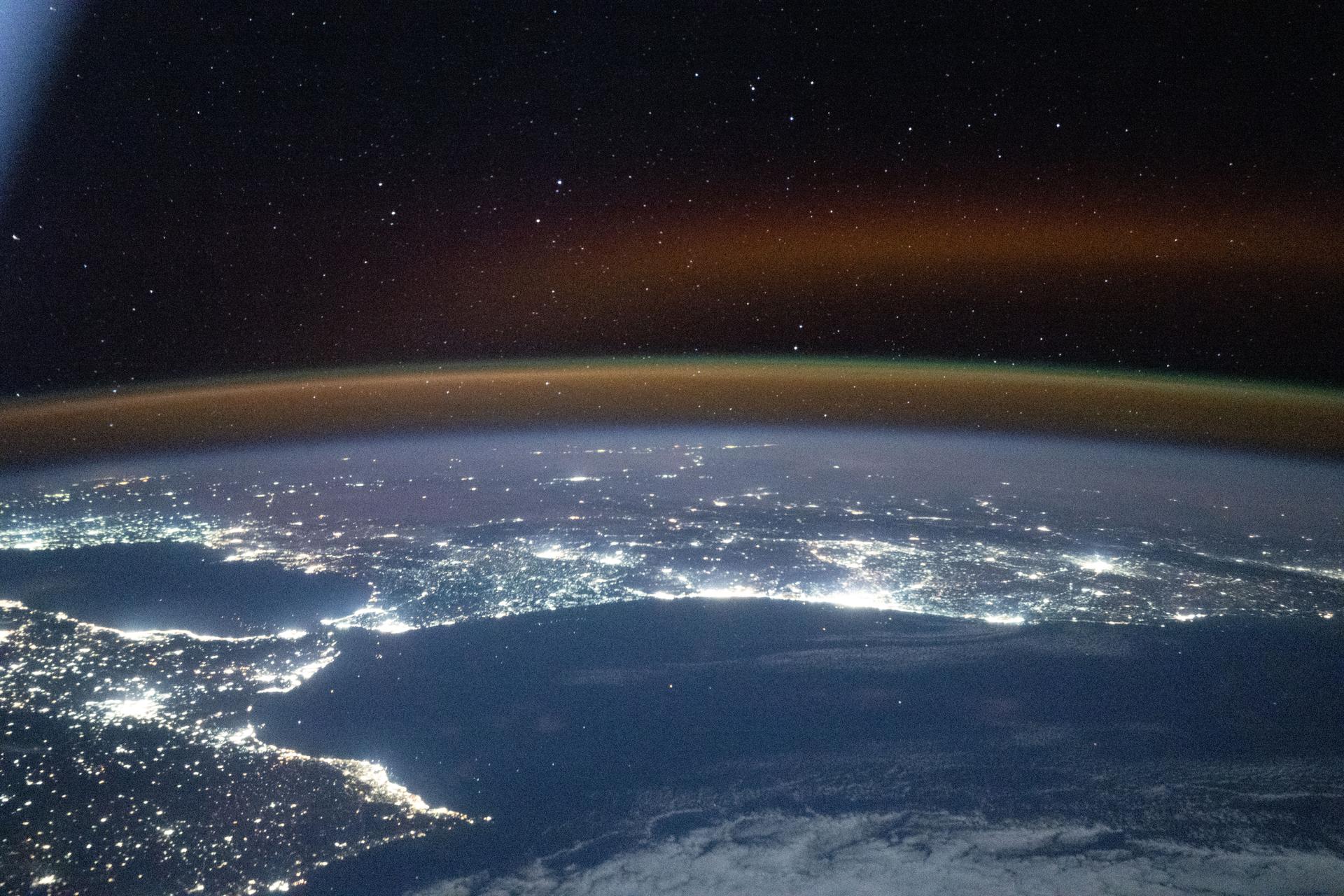
A red-yellow airglow blankets Earth's horizon as the city lights of southwestern Europe and North Africa sparkle in contrast to the Atlantic Ocean and the Mediterranean Sea that separates the two continents. The International Space Station was orbiting 262 miles above the Atlantic at approximately 7:47 p.m. local time when this photograph was taken. · 点击图片查看原图查看原文全部插图(8 幅)
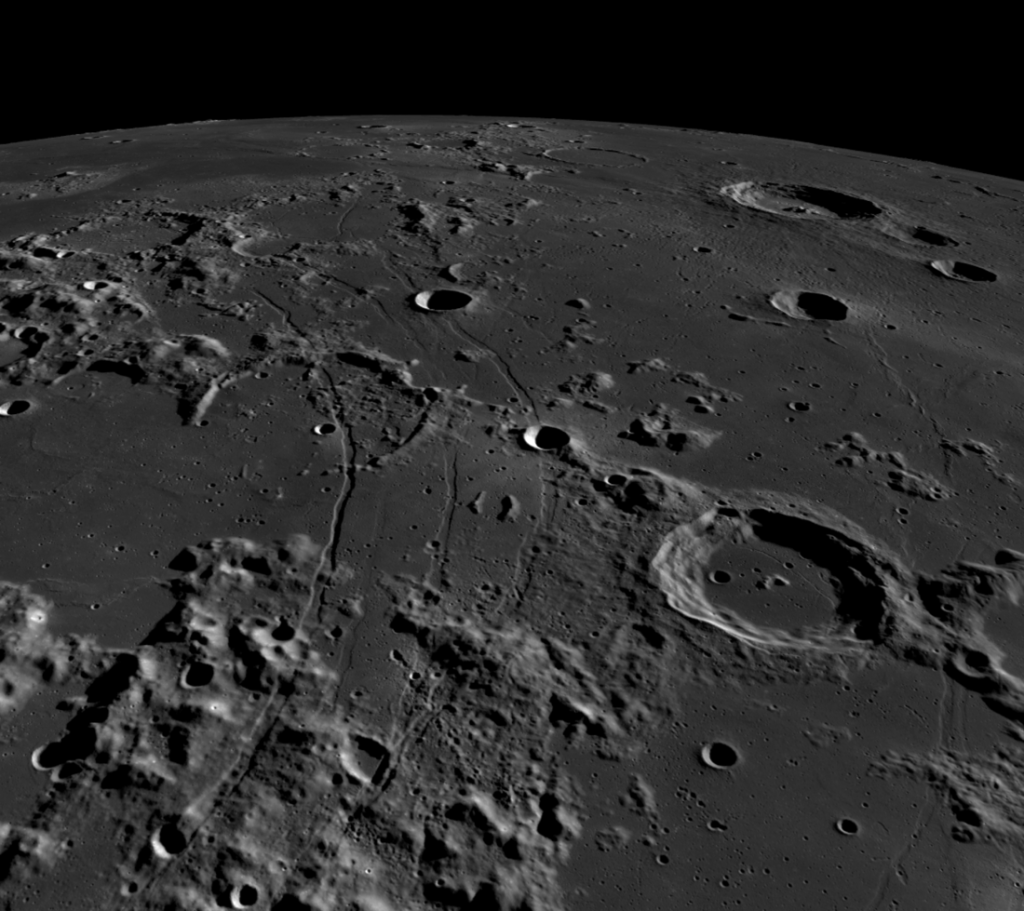
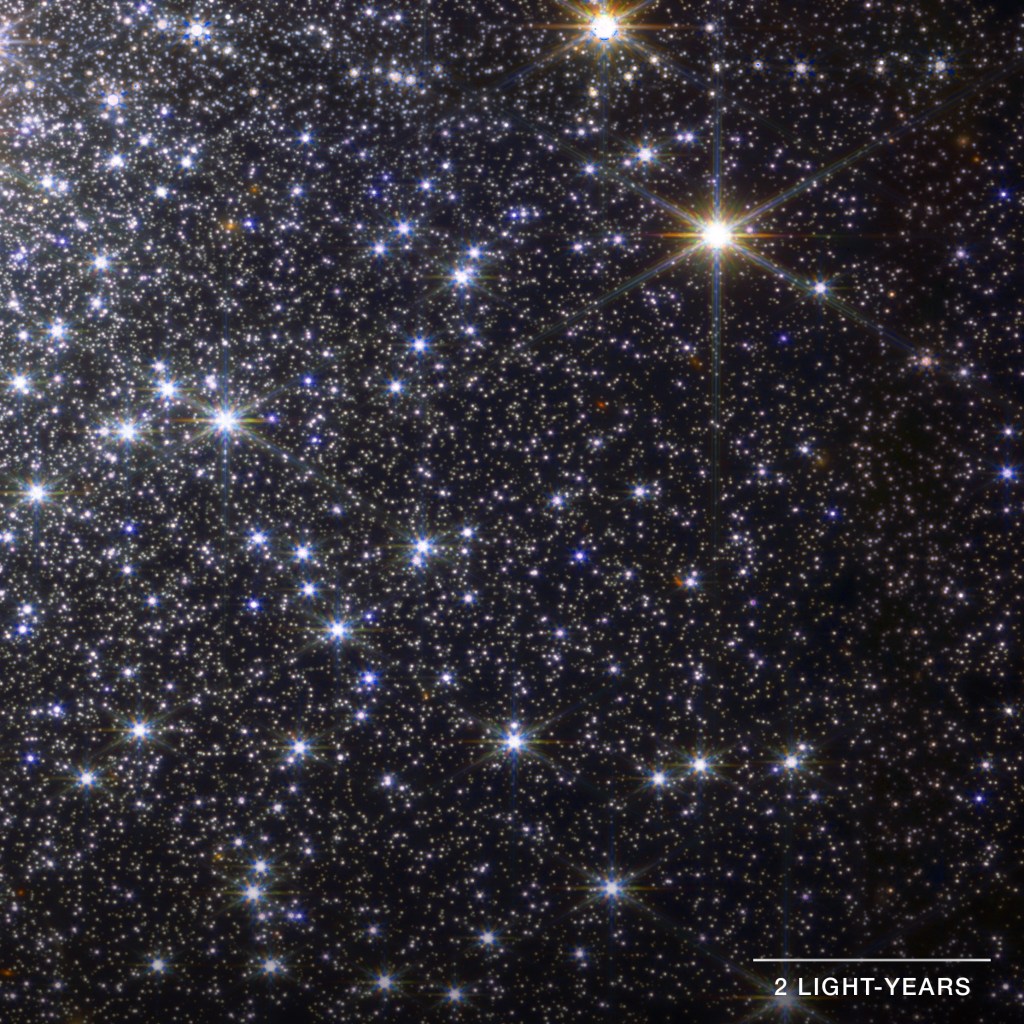
Lunar surface imageSquare image filled with blue, white, yellow, and red points of light of different size and brightness, most of which are stars. The larger and brighter stars show Webb’s distinctive diffraction pattern consisting of eight spikes radiating from the center. At the lower right is a scale bar labeled 2 light-years. The scale bar is two-ninths the width of the image, and shows that throughout the image, the distance between adjacent stars is a fraction of one light-year. The density of stars and brightness of the image is greatest in the upper left portion of the image where the stars are much closer together, and decreases gradually toward the bottom right where they are farther apart. The number of larger, brighter stars also appears to decrease from the upper left toward the lower right.
It is strongly recommended that care be taken when using the results of the simulation and the output should be weighted appropriately for its level of credibility with respect to informing any decision making.