查看原文全部插图(2 幅)
内容提要
美国国家航天局(NASA)的南希·格雷丝·罗曼空间望远镜(Nancy Grace Roman Space Telescope)已在肯尼迪空间中心完成整流罩封装。该望远镜计划由猎鹰重型火箭发射,旨在探索系外行星、暗物质及暗能量。此次任务将助力科学家深入研究宇宙的演化与结构。
原文全文译文
美国国家航天局(NASA)的罗曼望远镜已封装入SpaceX猎鹰重型火箭整流罩
NASA’s Roman Telescope Enclosed in SpaceX Falcon Heavy Rocket Fairing
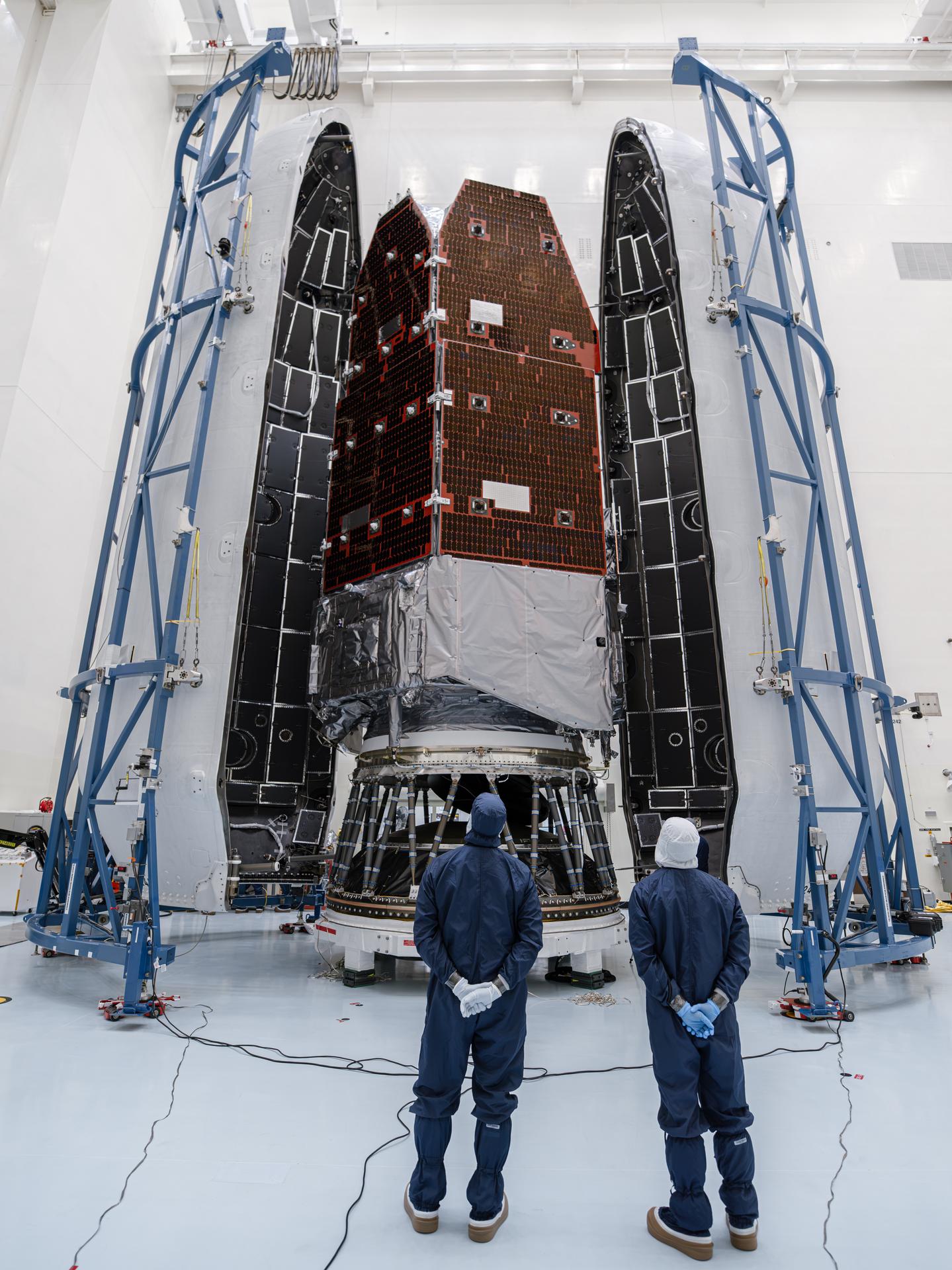
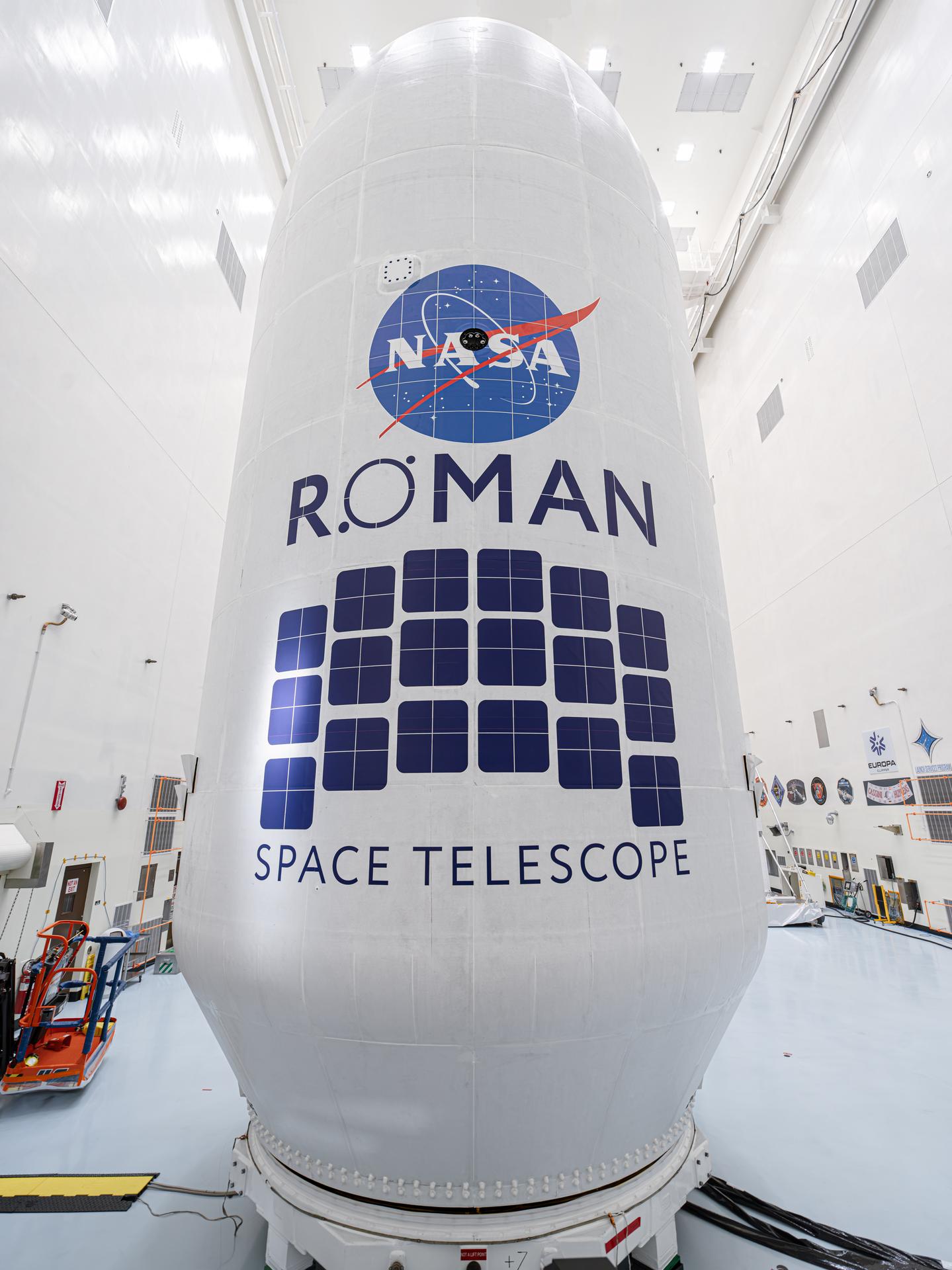
团队已完成美国国家航天局(NASA)的南希·格雷丝·罗曼空间望远镜(Nancy Grace Roman Space Telescope)的发射准备工作。8月21日,团队在位于佛罗里达州美国国家航天局(NASA)肯尼迪空间中心(Kennedy Space Center)的有效载荷危险维护设施内,将该天文台封装在SpaceX猎鹰重型火箭的整流罩内。
Teams have finished preparing NASA’s Nancy Grace Roman Space Telescope for launch. On Aug. 21, the team encapsulated the observatory inside the SpaceX Falcon Heavy rocket’s fairing in the Payload Hazardous Servicing Facility at NASA’s Kennedy Space Center in Florida.
这座43英尺高的整流罩包裹着航天器,并安装在猎鹰重型火箭顶部。在地面上,整流罩及其地面支持设备为罗曼望远镜维持了一个安全、受控的环境,并允许团队将其运出设施。
The 43-foot-tall fairing encloses the spacecraft and is mounted atop the Falcon Heavy rocket. On the ground, the fairing and its ground support equipment maintain a safe, controlled environment for Roman and allow the team to transport it out of the facility.
在上升过程中,当火箭穿过地球(Earth)大气层时,整流罩保护罗曼望远镜免受声学振动、空气动力压力和加热的影响。飞行几分钟后,一旦条件安全,整流罩将分离,使罗曼望远镜能够继续前往其目的地——日地拉格朗日点2(L2)。与此同时,两半整流罩将返回地球并由SpaceX回收。
During ascent, the fairing protects Roman from acoustic vibrations, aerodynamic pressure, and heating as the rocket travels through Earth’s atmosphere. A few minutes into the flight, once conditions are safe, the fairing separates, allowing Roman to continue its journey toward its destination at Sun-Earth Lagrange Point 2 (L2). Meanwhile, the two fairing halves will return to Earth and be recovered by SpaceX.
团队很快将把罗曼望远镜运送到位于39A发射台(Launch Pad 39A)的SpaceX机库,在那里,封装好的有效载荷将与猎鹰重型火箭对接,随后被运往39A发射综合体(Launch Complex 39A)的发射台。NASA和SpaceX计划罗曼望远镜的发射时间不早于美国东部时间8月30日星期日上午7:26。
Teams soon will transport Roman to SpaceX’s hangar at Launch Pad 39A, where the encapsulated payload will be mated to Falcon Heavy before rollout to the pad at Launch Complex 39A. NASA and SpaceX are targeting no earlier than 7:26 a.m. EDT Sunday, Aug. 30, for Roman’s launch.
研究人员渴望研究罗曼望远镜将发现的数千颗系外行星(exoplanet),希望了解其中一些行星与我们太阳系(solar system)中的行星有多么相似。他们还将利用罗曼望远镜研究暗物质(dark matter)和暗能量(dark energy)的奥秘,探测推动宇宙(universe)随时间加速膨胀的力量。
Researchers are eager to study thousands of exoplanets Roman will discover, hoping to understand how closely some may resemble planets in our solar system. They also will use Roman to study the mysteries of dark matter and dark energy, probing the forces driving the universe’s accelerated expansion over time.
来源与许可
原文来自公共领域来源;译文由机器生成,请以原文为准。 原作者:Elyna Niles-Carnes。 原始页面