查看原文全部插图(9 幅)

内容提要
在结束对侵蚀表面的考察后,Curiosity 火星车恢复了攀登夏普山的常规任务。随着盖尔撞击坑进入秋季,团队正密切监测大气中的尘暴活动,并继续开展地质探测与环境监测。
原文全文译文
作者:Allison Dries-Padilla,马林空间科学系统公司(Malin Space Science Systems)任务操作专家
By Allison Dries-Padilla, Missions Operations Specialist at Malin Space Science Systems
地球(Earth)规划日期:2026 年 8 月 14 日,星期五
Earth planning date: Friday, Aug. 14, 2026
本周的 Curiosity 火星(Mars)车任务让我们回到了“常规任务规划”中。在对“侵蚀表面”进行了一次小小的绕道考察后,我们重新回到了攀登夏普山的航线上。随着盖尔撞击坑(Gale Crater)进入秋季,气温和发生尘暴(dust storm)的可能性开始下降,但 Curiosity 仍在警惕晚季局部和区域性尘暴的最后余波。
This week of Curiosity Mars rover operations takes us back to our “regularly scheduled programming.” After taking a slight detour to investigate the “erosional surface” we are back on course to ascend Mount Sharp. As we transition into fall in Gale Crater, temperatures and the likelihood of dust storms begins to drop, but Curiosity is still on the lookout for the last gasp of late-season local and regional dust storms.
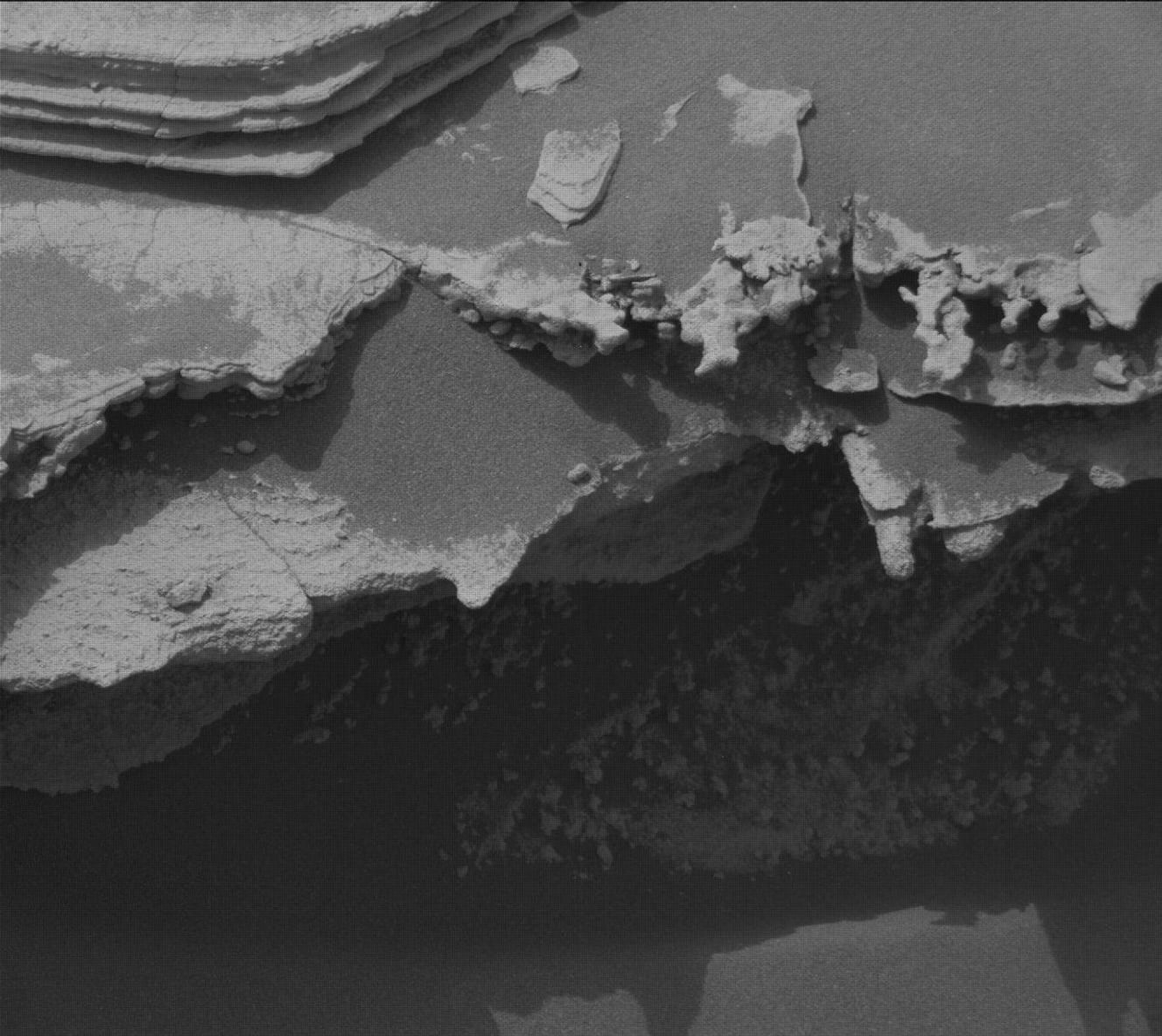
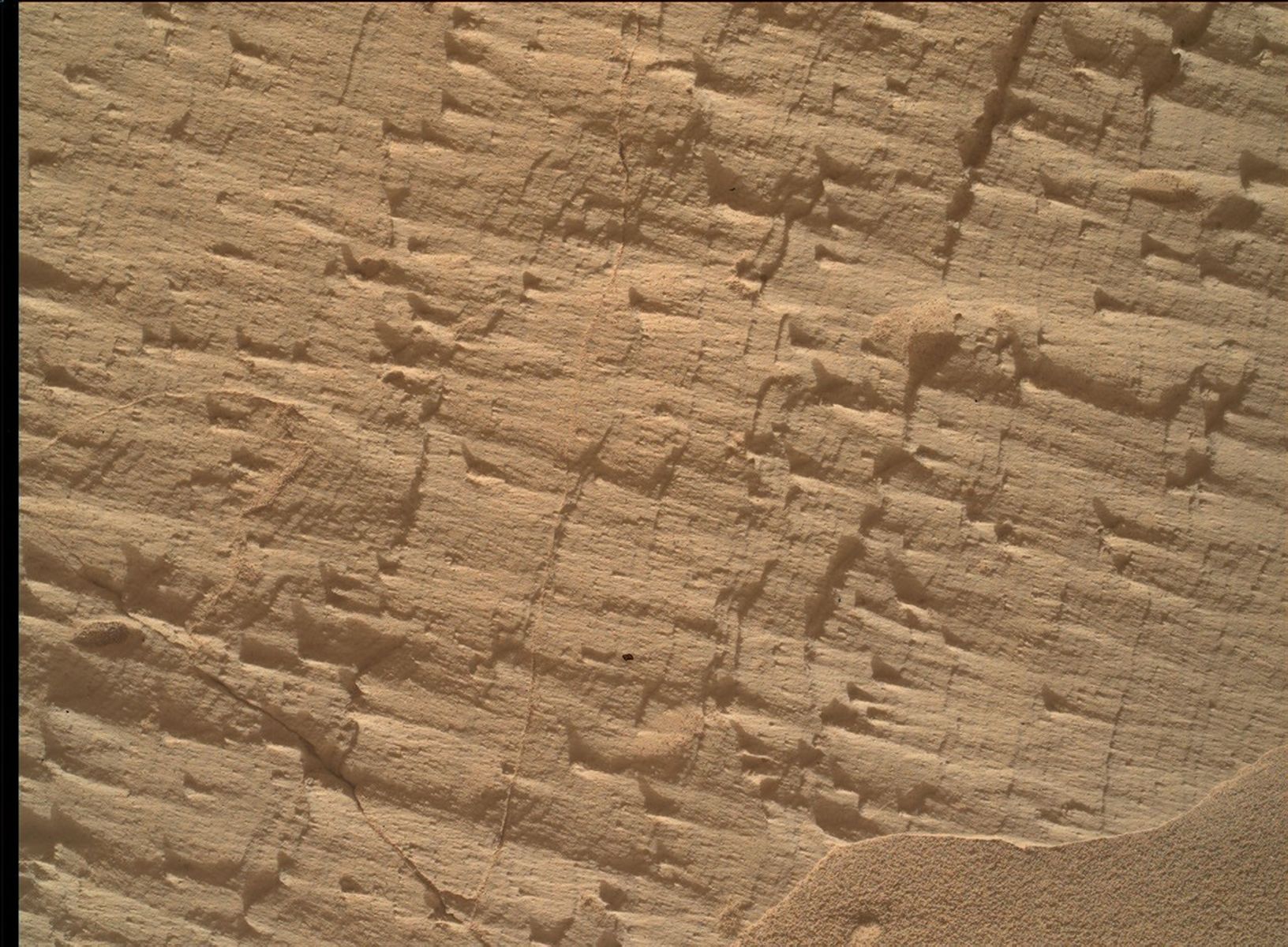
周一针对第 4982 至 4985 太阳日的规划始于 Curiosity 与侵蚀超表面接触点上方一个独特地质特征的面对面接触。正如您在上一篇博客中可能读到的那样,团队有幸在这个绝佳地点进行了两个规划周期的工作。MAHLI 利用这次机会重新获取了目标“Tres Morros”马赛克图像所需的选定影像。这将使科学团队能够详细且聚焦地观察该特征的底面。APXS 在使用 DRT 对基岩目标“El Motacusal”进行清理后对其进行了测量。APXS 还对“原样”基岩目标“Alto de Carmen”进行了第二次测量。这两个 APXS 目标均由 MAHLI 拍摄的高分辨率(high resolution)图像进行了记录。ChemCam 的活动包括对基岩目标“Lagunas Bravas”和“Parququcha”进行 LIBS 光谱学(spectroscopy)分析,以及对 Mishe Mokwa 进行 ChemCam 远程显微成像。我有幸参与了该计划的 Mastcam 上行链路轮班。Mastcam 拍摄了被称为“Los Toldos”的侵蚀脊的近场马赛克图像,以及侵蚀表面上方更远处被称为“Los Ladrillos”的基岩露头的马赛克图像。除了这些马赛克图像外,Mastcam 还提供了上一计划中对 Cordillera 进行 ChemCam 远程显微成像以及本计划中 ChemCam LIBS 活动的彩色记录。
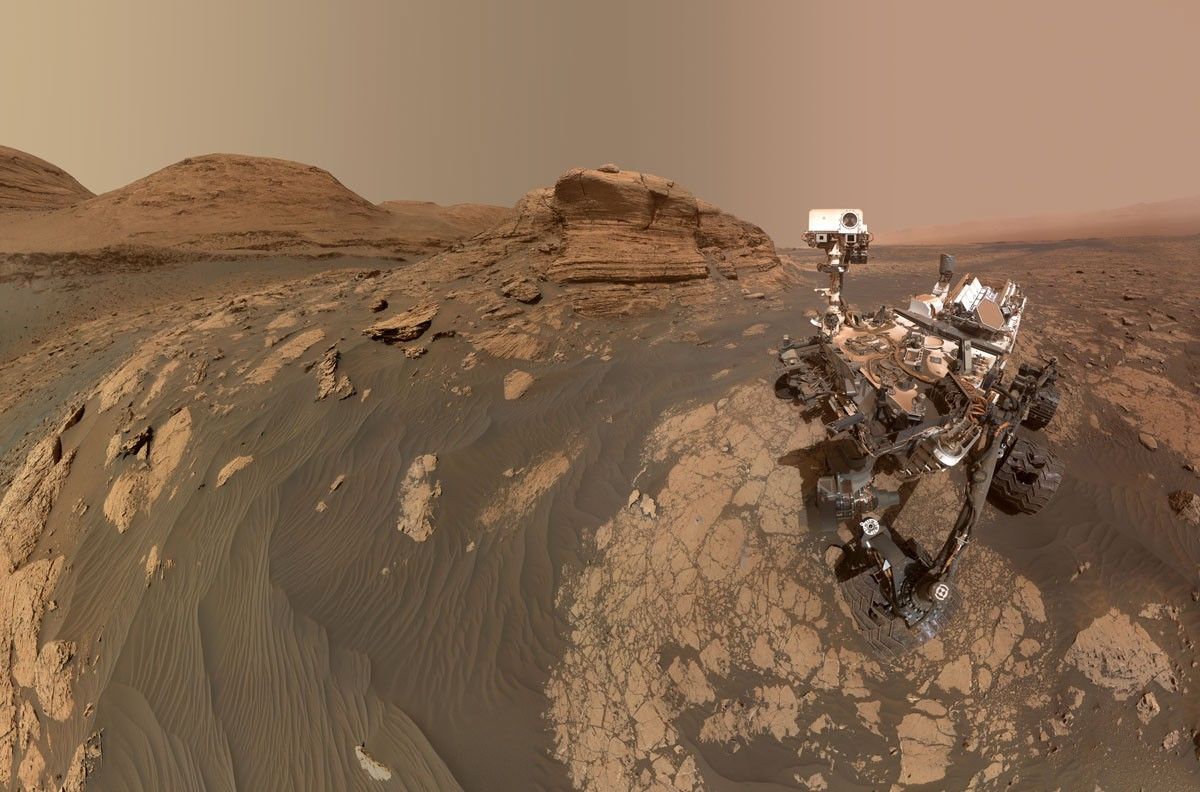
Monday’s plan for Sols 4982 to 4985 began with Curiosity standing face to face with a unique geologic feature just above the erosional supersurface contact. As you might have read in the previous blog, the team was fortunate enough to spend two planning cycles at this amazing location. MAHLI used this opportunity to reacquire selected images for the mosaic of target “Tres Morros.” This will allow the science team to have a detailed and focused view of the underside of this feature. APXS took measurements of the bedrock target “El Motacusal” after it had been brushed with the DRT. APXS took a second measurement on the “as is” bedrock target “Alto de Carmen.” Both of these APXS targets were documented with high-resolution images taken by MAHLI. ChemCam activities include LIBS spectroscopy on bedrock targets “Lagunas Bravas” and “Parququcha” and ChemCam Remote Micro-Imaging on Mishe Mokwa. I had the pleasure to be on the Mastcam uplink shift for this plan. Mastcam took a near-field mosaic of the erosional ridge, dubbed “Los Toldos,” as well as a mosaic on further away bedrock exposure above the erosional surface, named “Los Ladrillos.” In addition to these mosaics, Mastcam also provided color documentation of the previous plan’s ChemCam Remote Micro-Imaging on Cordillera and the ChemCam LIBS activities taken in this plan.
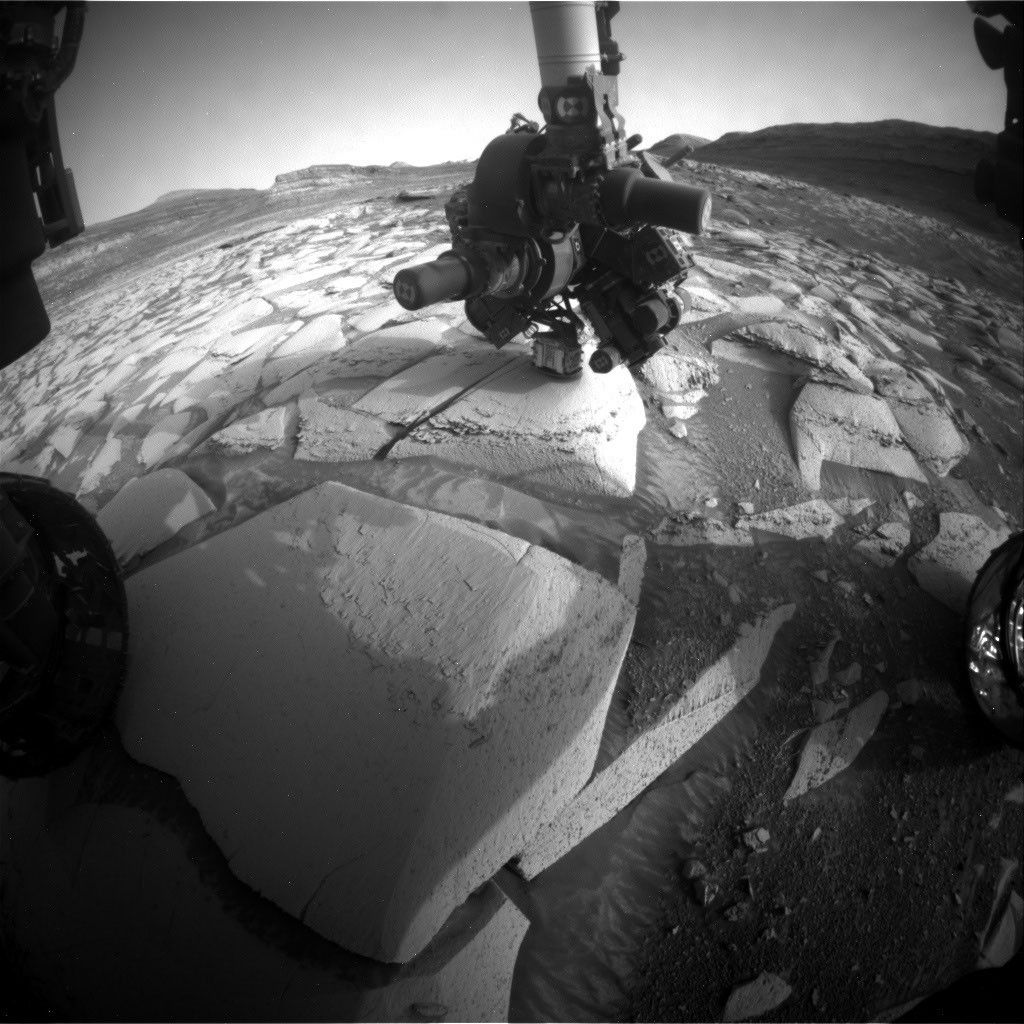
随后,Curiosity 行驶了 100 英尺(30 米),到达了我们周五针对第 4985 至 4987 太阳日规划的地点。尽管在这个新地点我们有充足且理想的平坦基岩,但我们无法将机械臂放置在安全位置以对基岩进行 DRT 操作。左前轮搁在一块小石头上,我们必须考虑到在移动机械臂时火星车可能从这块石头上滑落的风险。MAHLI 和 APXS 仍然能够安全地对两个基岩目标“Mamorecillo”和“Aguas Claras”进行接触科学探测。MAHLI 还进行了一项额外的内务活动,即对校准目标进行成像。ChemCam 计划使用其激光光谱仪收集该区域三个目标的地球化学数据,随后进行 Mastcam 记录。今天的 ChemCam LIBS 目标包括基岩“Yura Kasa”中一个深色调的抗侵蚀层。Mastcam 计划拍摄一系列马赛克图像,以继续对侵蚀接触点上方的地层进行成像。
Curiosity then drove 100 feet (30 meters) to take us to our location for Friday’s plan for Sols 4985 to 4987. Although we had plenty of flat and tasty bedrock in this new location, we could not place the robotic arm in a safe position to DRT the bedrock. The left-front wheel was perched on a small rock, and we had to account for a risk the rover could slip off this rock as we move the arm around. MAHLI and APXS were still able to safely perform contact science on two bedrock targets, “Mamorecillo” and “Aguas Claras.” MAHLI had an additional housekeeping activity to image the calibration target. ChemCam plans to use its laser spectrometer to gather geochemistry on three targets in this vicinity, followed by Mastcam documentation. Today’s ChemCam LIBS targets include a dark-toned resistant layer in the bedrock “Yura Kasa.” Mastcam is planning a series of mosaics to continue imaging the stratigraphy in the unit above the erosional contact.
今天的计划中包含了大量的环境监测活动,以监测尘暴。Mastcam 进行了多次尘埃成像观测,以测量大气的光深(optical depth),即“tau”值。较高的 tau 值与大气中增加的尘埃量相关。APXS 也参与了此次行动,计划进行一次夜间大气测量。Navcam 承担了监测尘暴的大部分繁重工作。这些活动包括多次大型尘卷风调查、天顶观测、坑内视线(line of sight)观测以及地平线上方云层影片拍摄。
Today’s plan was packed with environmental monitoring activities to monitor for dust storms. Mastcam took a flurry of dust-imaging observations to measure optical depth, or “tau,” of the atmosphere. A higher tau value is associated with an increased amount of dust in the atmosphere. APXS joined in on the action by planning an overnight atmospheric measurement. Navcam took on most of the heavy lifting to monitor for dust storms. These activities include multiple large dust-devil surveys, zenith observation, in-crater line-of-sight observations, and suprahorizon cloud movies.
Curiosity 随后将继续攀登夏普山;计划 150 英尺(47 米)的行驶距离将把火星车带到我们当前位置的西南方。我们将于周一返回,开始新的一周,继续在火星上进行接触科学、遥感(remote sensing)和行驶任务。
Curiosity will then continue to climb Mount Sharp; the planned drive distance of 150 feet (47 meters) will take the rover southwest of our current location. We will return Monday to start a new week full of contact science, remote sensing, and driving on Mars.
其他来源报道(1)
NASA 科学:Curiosity Blog, Sols 4982–4987: Back to Our Regularly Scheduled Programming来源与许可
原文来自公共领域来源;译文由机器生成,请以原文为准。 原始页面