查看原文全部插图(18 幅)



内容提要
美国国家航天局(NASA)的研究人员与摄影师在八月日全食期间,通过地面、空中及国际空间站(ISS)等多种视角对日冕及日食现象进行了观测。此次观测任务涵盖了从高分辨率成像到大气影响研究的广泛科学目标,旨在深入了解日食对地球环境的作用。
原文全文译文
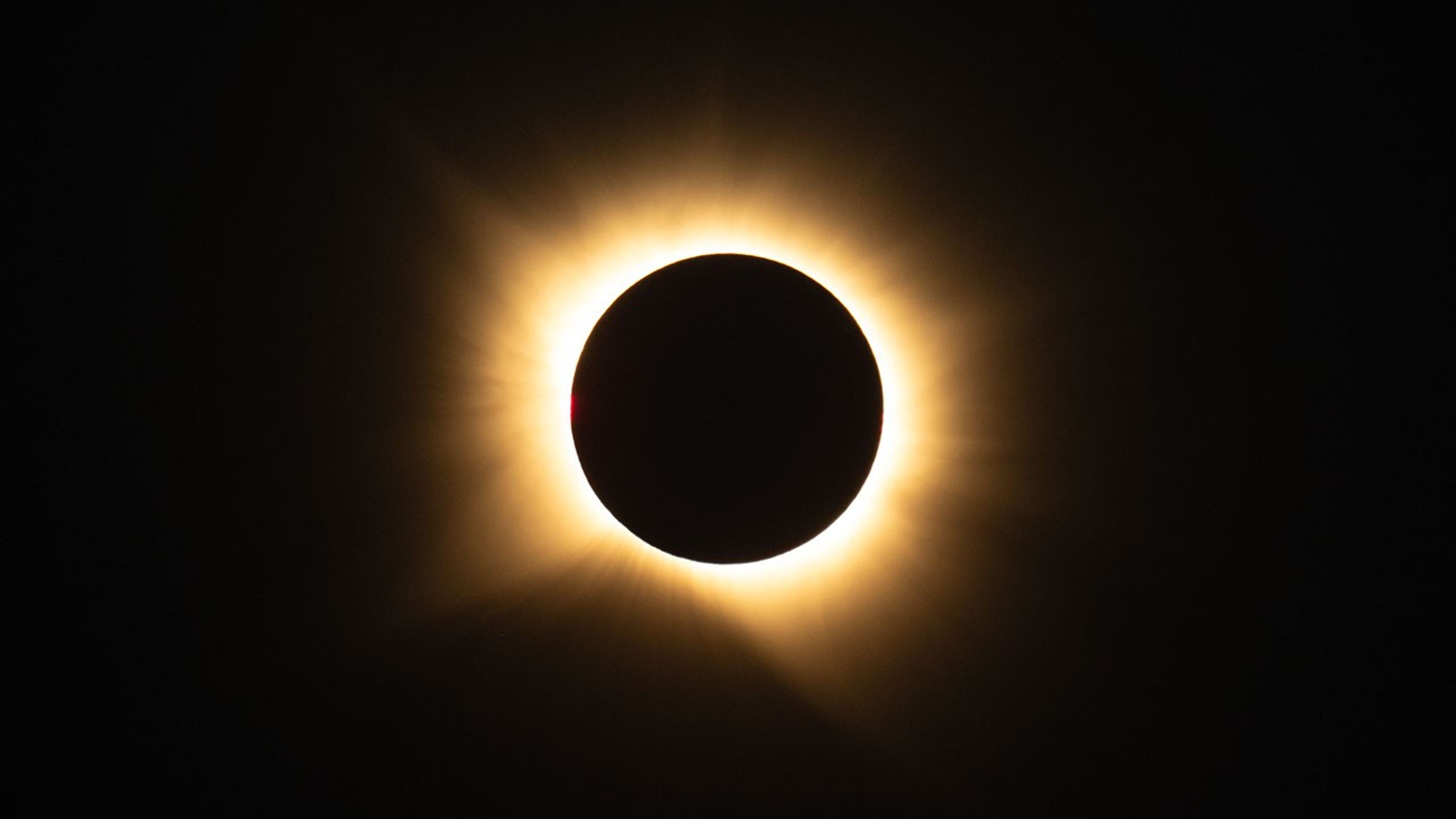
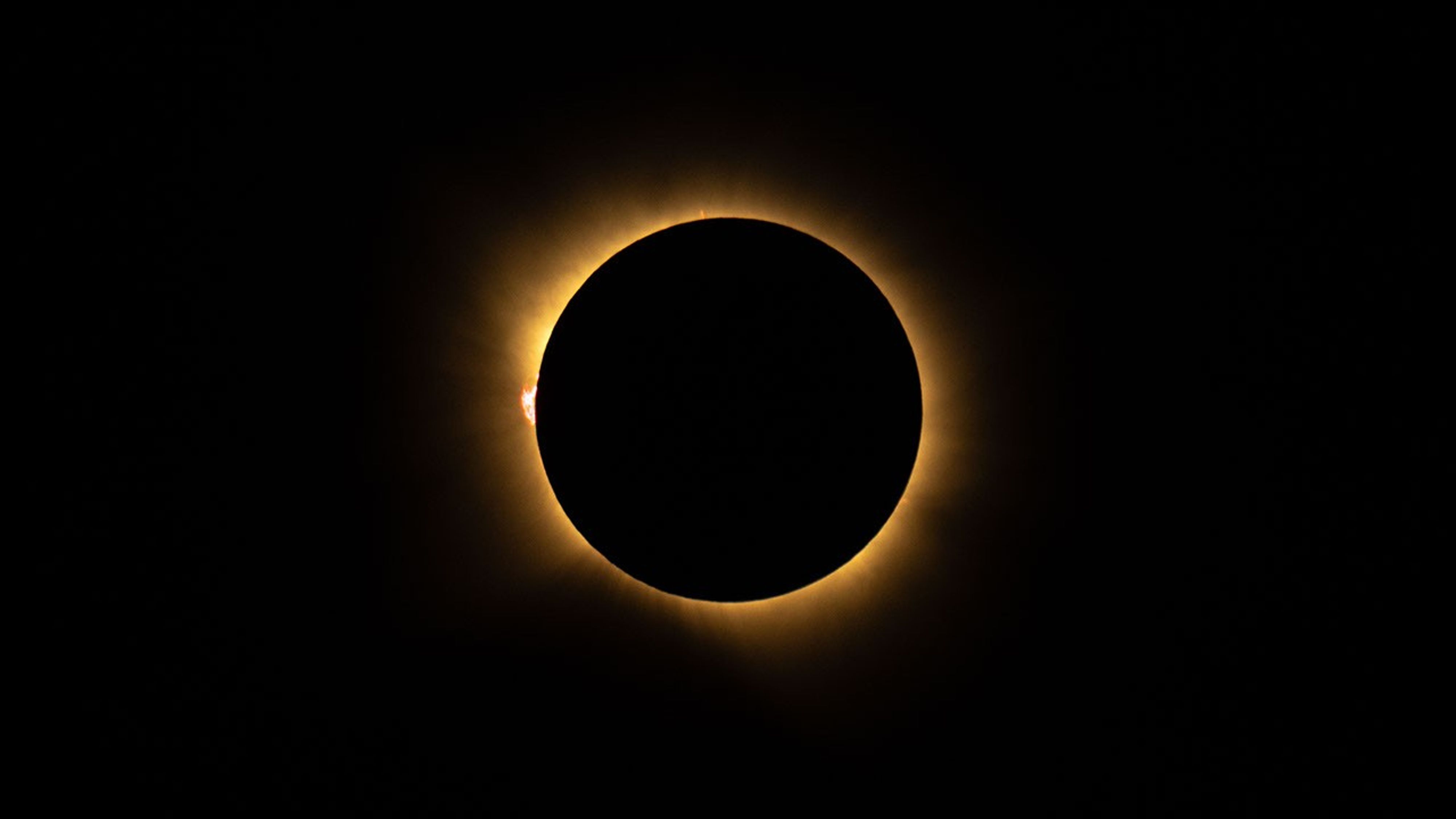
8月12日,一场日全食(total solar eclipse)使格陵兰岛、冰岛和西班牙上空陷入黑暗。当月球(Moon)遮住太阳时,处于全食带(path of totality)且有幸遇到晴朗天空的人们得以短暂地观测到太阳稀薄的外层大气(outer atmosphere)——日冕(corona)。NASA的研究人员和摄影师沿着食径(eclipse path)进行观测,旨在研究日冕、捕捉这一天文现象,并观察日食如何影响我们的行星(planet)。
On Aug. 12, a total solar eclipse darkened skies over Greenland, Iceland, and Spain. As the Moon covered the Sun, it briefly revealed the Sun’s wispy outer atmosphere — the corona — to those in the path of totality who were lucky enough to have clear skies. NASA researchers and photographers were along the eclipse path to study the corona, capture the phenomenon, and observe how the eclipse affected our planet.
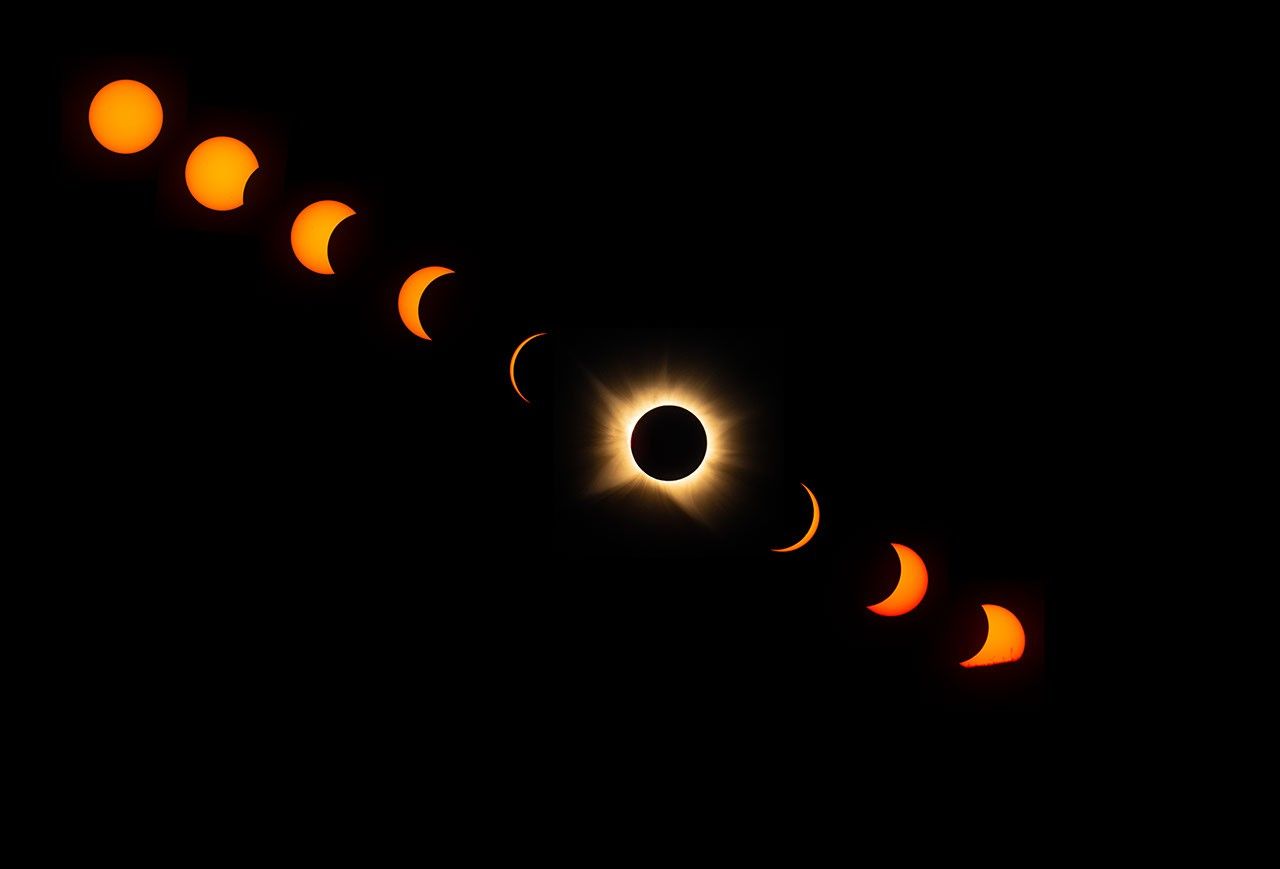
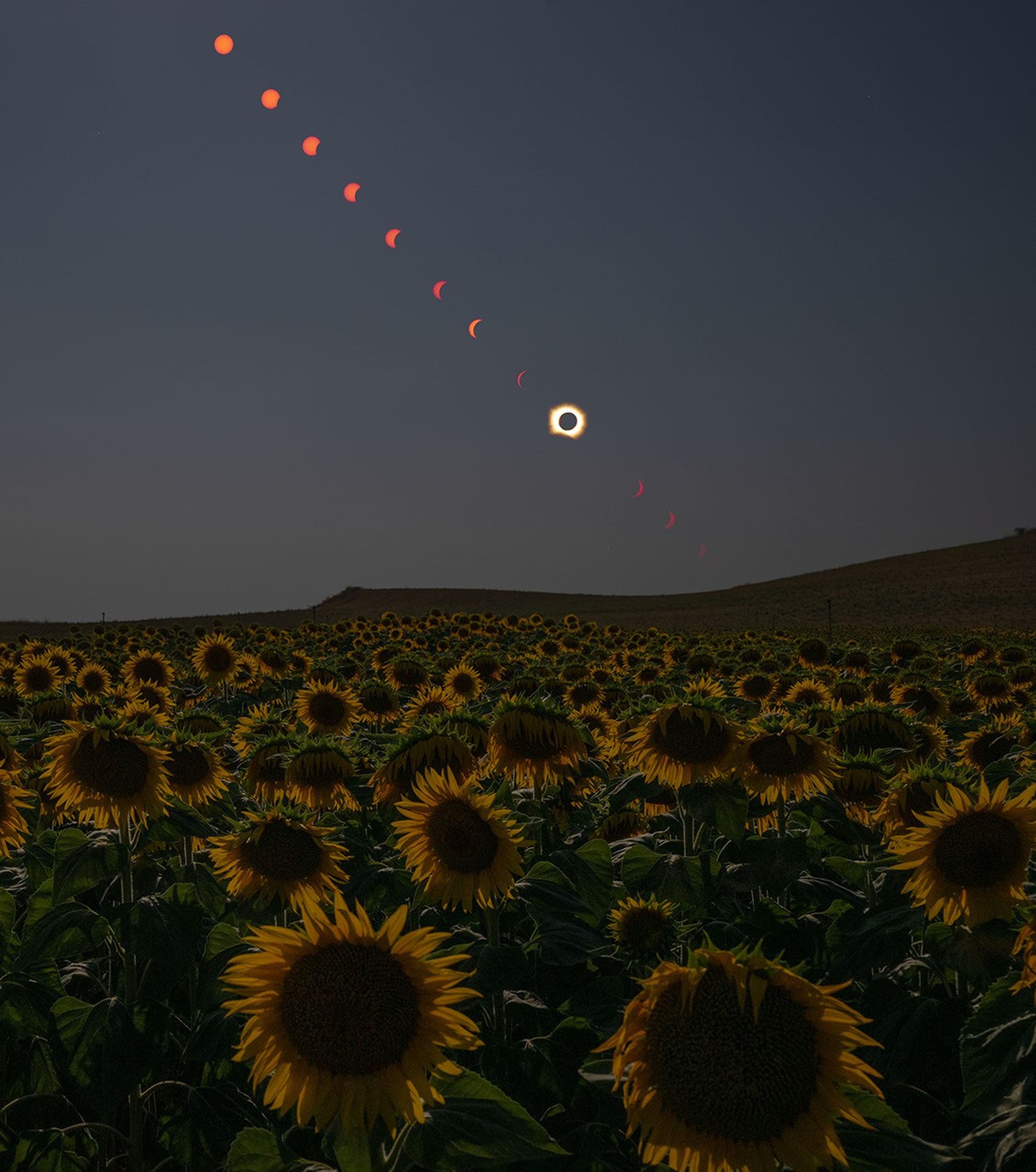
一位在西班牙的NASA摄影师捕捉到了日全食以及日食前后偏食(partial eclipse)阶段的景象,直至太阳落入地平线以下。
One NASA photographer in Spain captured the total solar eclipse as well as the partial phases before and after, until the Sun set below the horizon.
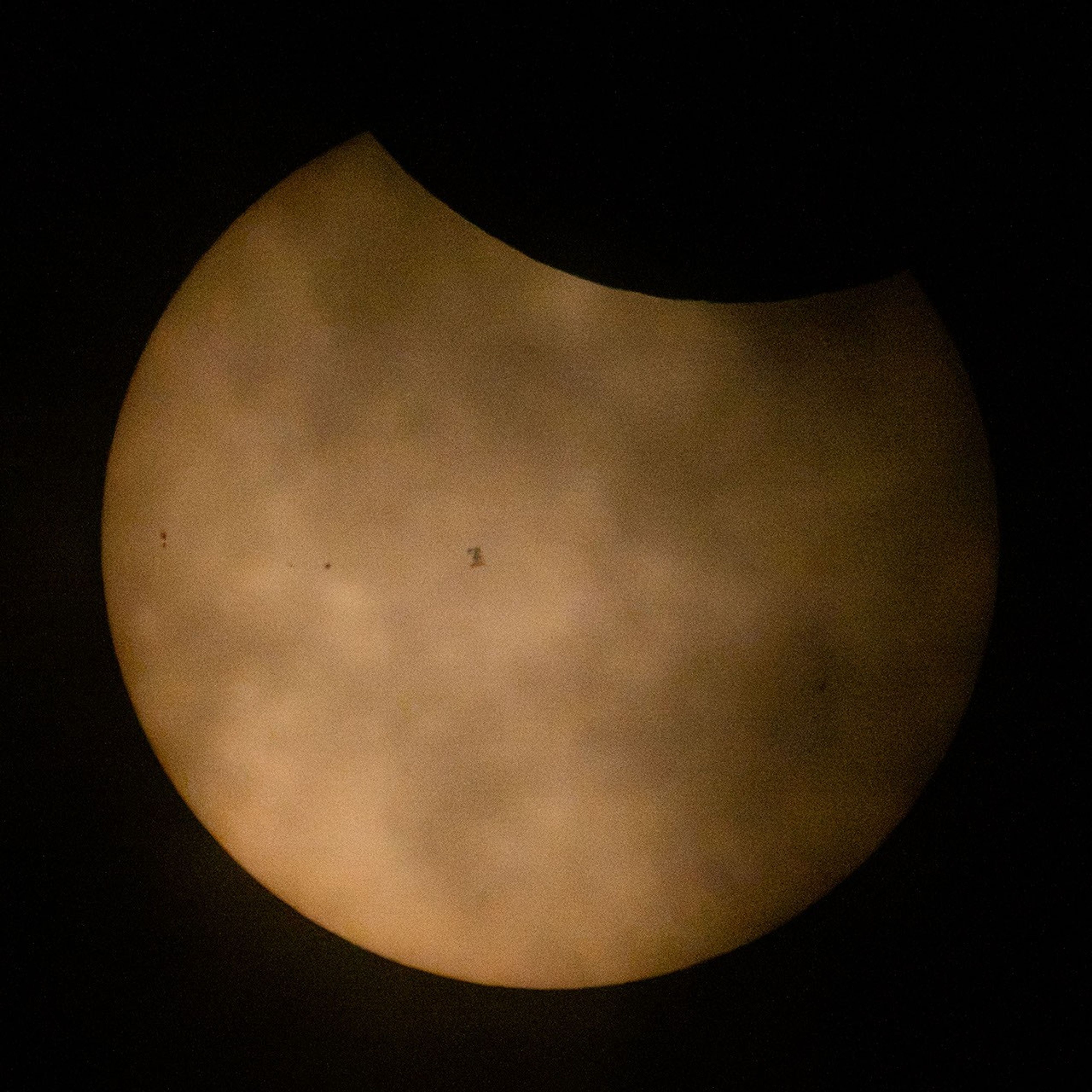
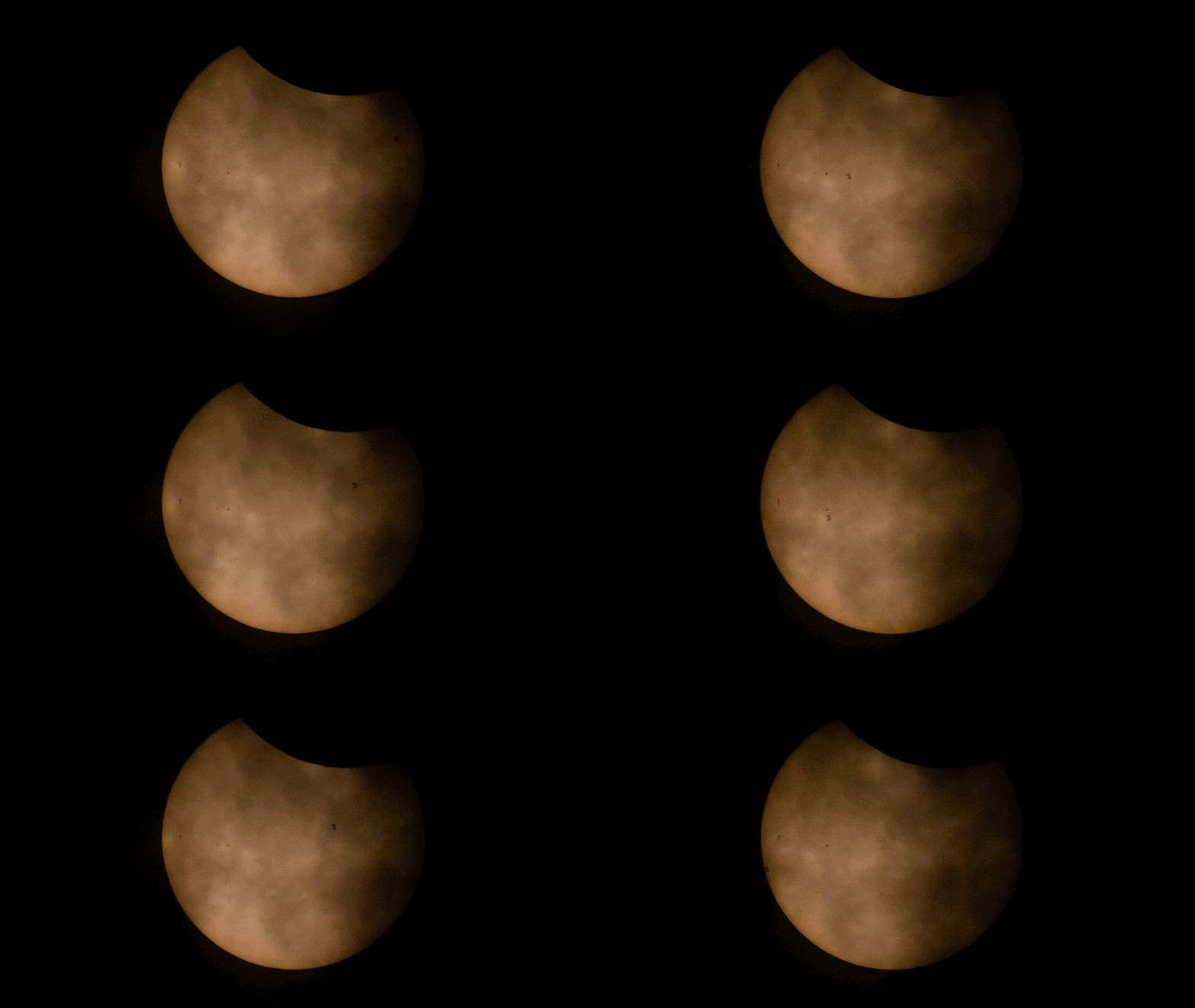
在缅因州北部,当地仅能观测到偏食,另一位NASA摄影师捕捉到了国际空间站(International Space Station)及其搭载的七名机组成员从偏食的太阳前方飞速掠过的画面。
In northern Maine, where only a partial eclipse was visible, another NASA photographer captured the International Space Station, with its crew of seven aboard, speeding past the partially eclipsed Sun.
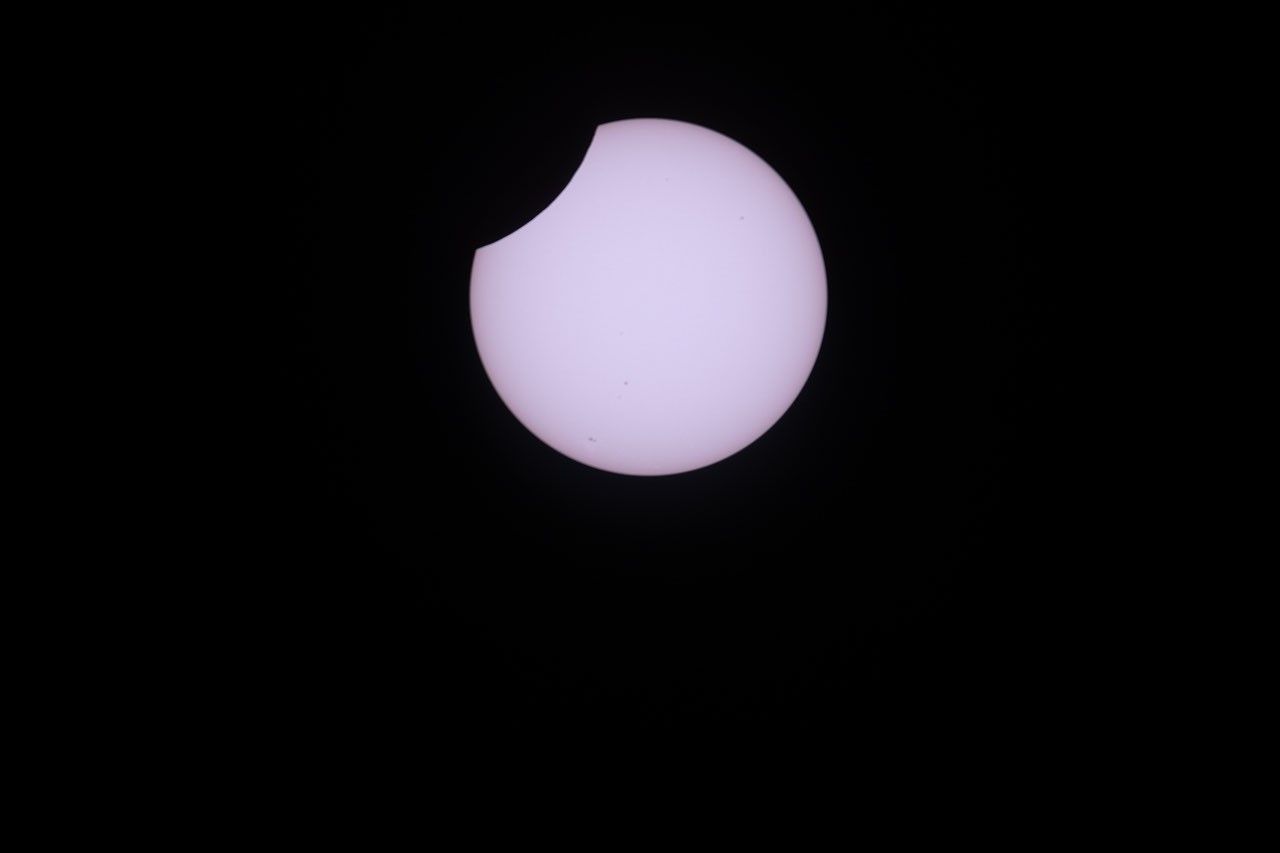
与此同时,在距离地面约250英里的高空,一名在国际空间站上的NASA宇航员也从他们的视角拍摄了几张偏食的照片。
Meanwhile, from about 250 miles above the ground, a NASA astronaut aboard the International Space Station snapped a few photos of the partial eclipse from their perspective as well.
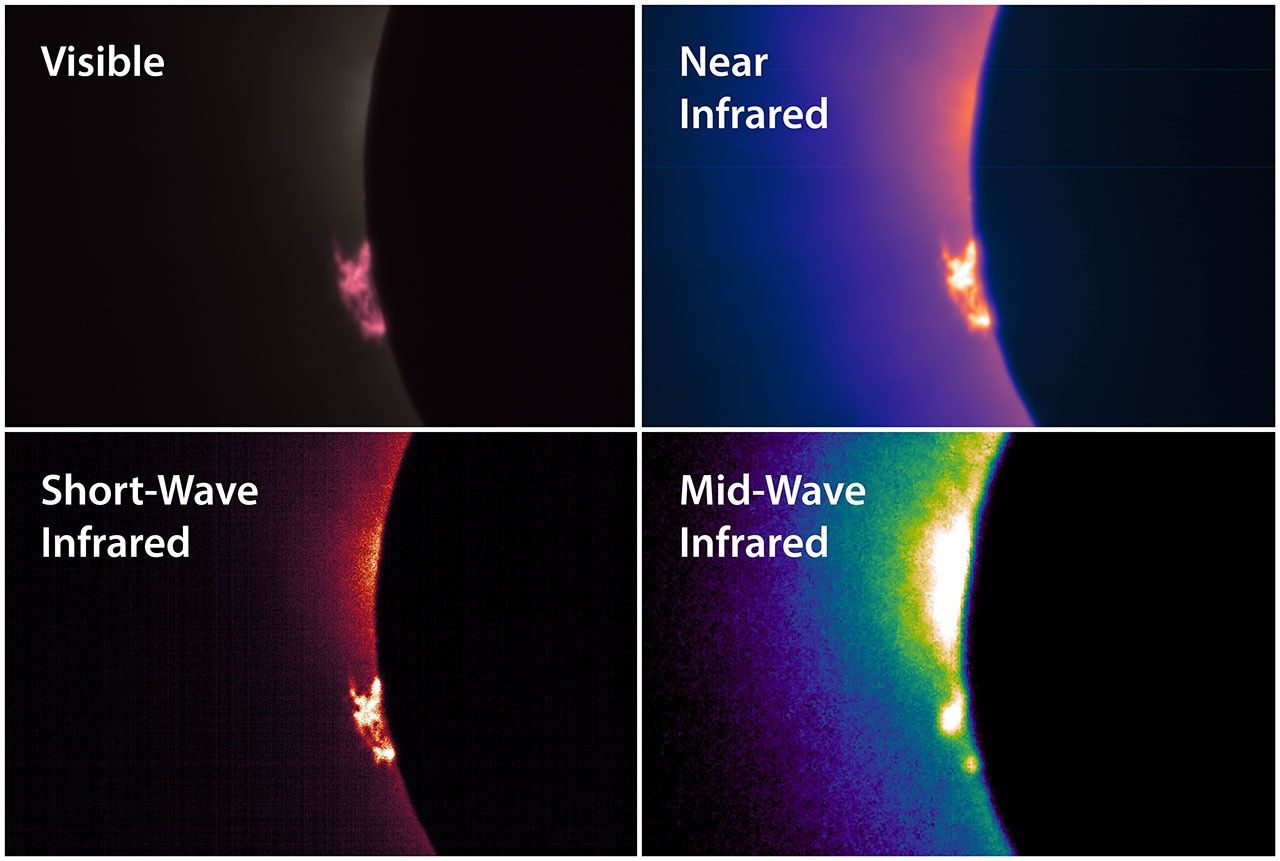
在地面与空间站之间,NASA飞行员驾驶NASA的WB-57F研究喷气机在50,000英尺的高度飞行,穿过日食的阴影以延长观测日食的时间。该喷气机搭载了一套摄像设备,在多种不同光波长下捕捉到了日冕和日珥(prominences)的高分辨率(high resolution)图像,日珥是从太阳表面升起的带电气体羽流。
Between the ground and the space station, NASA pilots flew NASA’s WB-57F research jet at an altitude of 50,000 feet, passing through the eclipse’s shadow to lengthen their time in the eclipse. The jet carried a suite of cameras that captured high-resolution images of the corona and prominences, plumes of electrically charged gas rising off the Sun, in several different wavelengths of light.
在冰岛和西班牙,参与NASA资助的“全国日食气球项目”(Nationwide Eclipse Ballooning Project)的学生团队发射了科学气球,携带球载仪器(balloon-borne instrument)捕捉日食阴影的图像,并研究日食对我们大气层的影响。尽管冰岛地面的云层遮挡了日食的视线,但天气并未干扰球载仪器收集关于短暂的光照和热量损失如何影响低层大气(lower atmosphere)的信息的能力。
In both Iceland and Spain, teams of students participating in the NASA-funded Nationwide Eclipse Ballooning Project launched scientific balloons that carried instruments to capture images of the eclipse’s shadow and study the eclipse’s effects on our atmosphere. Even though clouds obscured the view of the eclipse from the ground in Iceland, the weather did not interfere with the balloon-borne instruments’ ability to gather information about how the brief loss of light and heat affected the lower atmosphere.
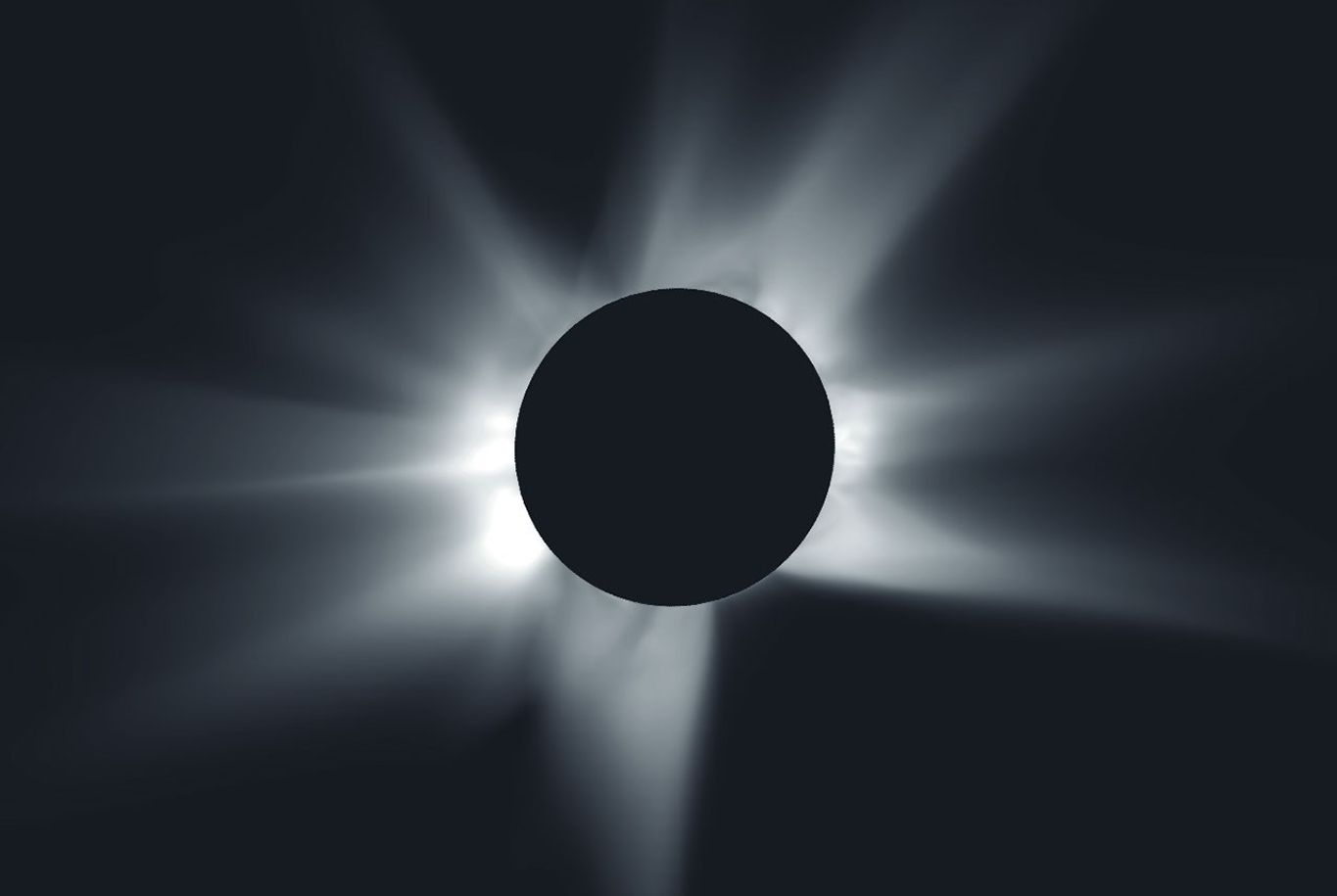
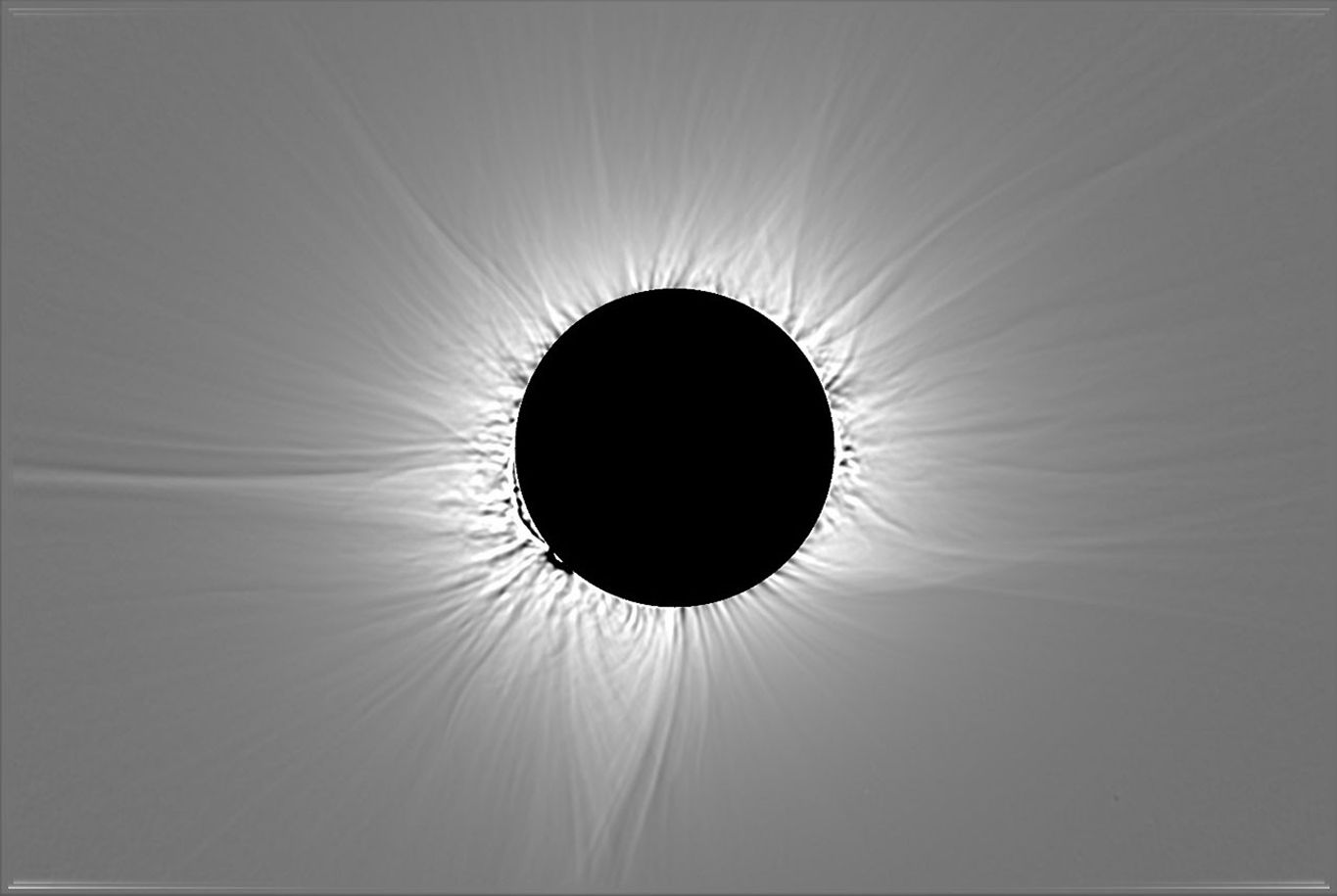
在日食发生前,Predictive Science Inc.的科学家在NASA拨款和超级计算机的支持下,利用NASA航天器和地基望远镜(ground-based telescope)对太阳的观测数据,预测了日食期间日冕的形态。下方展示了他们的日冕预测图与一张日冕合成图像的对比,该合成图像结合了NASA支持的DEB Initiative项目在西班牙莱昂附近进行全食(total eclipse)观测期间拍摄的多张图像。
Before the eclipse, scientists at Predictive Science Inc., with support from NASA grants and supercomputers, used observations of the Sun from NASA spacecraft and ground-based telescopes to predict what the corona would look like during the eclipse. Below, their corona prediction is compared to a composite image of the corona, which combines multiple images captured by the NASA-supported DEB Initiative project during the total eclipse near León, Spain.
其他来源报道(1)
NASA 科学:NASA Shares Views of August Solar Eclipse from Ground, Air, Space来源与许可
原文来自公共领域来源;译文由机器生成,请以原文为准。 原始页面