
查看原文全部插图(16 幅)





内容提要
2026 年 8 月 12 日,欧洲部分地区将迎来日全食,这为研究太阳日冕提供了难得的机会。欧洲空间局(ESA)通过 Proba-3 任务的人造日食技术以及 Solar Orbiter 的多视角观测,结合计算机模型,旨在深入理解太阳活动及其对空间天气的影响。
原文全文译文
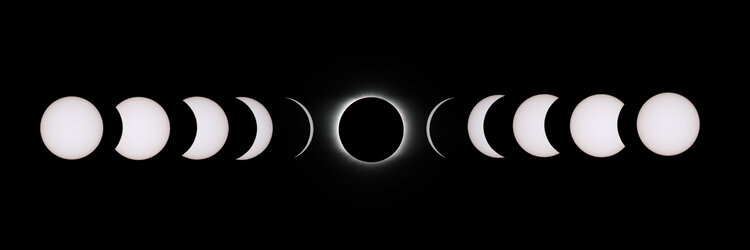
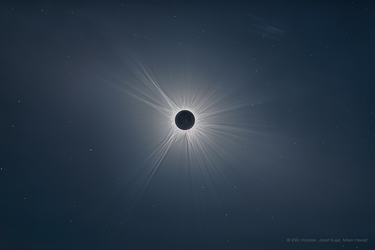
2026 年 8 月 12 日,欧洲部分地区将经历一次日全食(total solar eclipse)。随着太阳明亮的圆盘被遮挡,其周围的大气——日冕(corona)——将变得肉眼(naked eye)可见。遗憾的是,日全食非常罕见,且持续时间最多只有几分钟,这使得科学家几乎没有时间研究太阳神秘的光环。
On 12 August 2026, parts of Europe will experience a total solar eclipse. With the Sun's bright disc covered, its surrounding atmosphere – the solar corona – will become visible to the naked eye. Unfortunately, total solar eclipses are rare and last at most a few minutes, giving scientists little time to study the Sun’s enigmatic halo.
这就是为什么 ESA 开发了能够人工制造日食的任务,也是专家们使用计算机模型(computer model)进行数字模拟的原因。那么我们是如何做到的,为什么这很重要呢?
This is why ESA developed missions that create eclipses artificially, and why experts use computer models to create digital simulations. So how do we do it, and why is it important?
两天后,月球(Moon)将完全遮挡太阳,覆盖格陵兰岛、冰岛、西班牙和葡萄牙的部分地区,形成一次日全食。在短短两分多钟的时间里,白昼的亮度将转为黄昏,显露出平时因太阳强光而无法看见的日冕。
In two days, the Moon will completely shield the Sun for parts of Greenland, Iceland, Spain and Portugal, creating a total solar eclipse. For up to just over two minutes, the brightness of day will turn into twilight and reveal the solar corona, normally kept invisible by the Sun's glare.
日冕是空间天气(Space Weather)的起源地:太阳风(solar wind)在这里加速并向太阳系(solar system)流出,日冕物质抛射(coronal mass ejection)也在此产生。空间天气可能会干扰我们的卫星(satellite)网络、通信基础设施、电网以及现代社会所依赖的其他技术。
The corona is where space weather originates: where the solar wind gains speed before streaming out into the Solar System, and where coronal mass ejections arise. Space weather can disrupt our satellite networks, communication infrastructure, power grids and other technologies that modern society relies on.
直到最近,完整的日冕只能在日全食的短暂期间从地球(Earth)上观测到。这些现象在全球不同地点大约每年发生一次,极少数情况下两次,且持续时间最多只有几分钟。
Until recently, the full corona could only be observed from Earth during the short periods of total eclipses. These occur around once, very rarely twice a year, in different places across the globe, and last at most a few minutes.
日食是自然“日掩(solar occultation)”的一个例子——即从观测者的角度看,一个物体(在本例中为月球)遮挡了太阳圆盘。为了延长自然日食提供的短暂观测窗口,科学家们发明了人工制造掩食的方法,使用一种称为“日冕仪”的仪器:一种包含遮挡太阳圆盘的望远镜(telescope)。
A solar eclipse is an example of a natural 'solar occultation’ – when an object (in this case the Moon) blocks the Sun's disc from an observer's perspective. To stretch the short observation window that natural eclipses offer, scientists invented ways to create occultations artificially, using an instrument called a ‘coronagraph’: a telescope incorporating a disc to occult the Sun.
按需日全食
Total solar eclipse on demand
大多数日冕仪可以可靠地成像日冕的外部,但无法成像它与太阳表面之间的区域。为了填补这一观测空白,ESA 开发并发射了其人造日食制造者 Proba-3,该任务由一对相距 150 米飞行并自主作为单一航天器运行的卫星组成。
Most coronagraphs can reliably image the outer part of the corona, but not the region between it and the Sun's surface. To fill this observation gap, ESA developed and launched its artificial eclipse-maker Proba-3, a mission that consists of a pair of satellites flying 150 metres apart and autonomously operating as a single spacecraft.
掩星航天器(Occulter spacecraft)充当月球的角色,为日冕仪航天器(Coronagraph spacecraft)遮挡太阳,后者随后使用其科学仪器 ASPIICS,一次性捕捉数小时的日冕图像。
The Occulter spacecraft acts as the Moon and eclipses the Sun for the Coronagraph spacecraft, which then uses its scientific instrument, ASPIICS, to capture images of the solar corona for hours at a time.
比利时皇家天文台(Royal Observatory of Belgium)ASPIICS 仪器首席研究员 Andrei Zhukov 对该任务最近的一次人造日食评论道:“这是 Proba-3 常规运行中的第 62 次日食——这是我们获取日冕图像的任务阶段的一部分。”
Andrei Zhukov, principal investigator for the ASPIICS instrument at the Royal Observatory of Belgium, comments on one of the mission's most recent artificial eclipses: “This is the 62nd eclipse of Proba-3's nominal operations – a part of the mission during which we acquire coronal images.
“这次日食的独特之处在于,它是在 8 月 12 日即将到来的自然日食前约两周拍摄的。太阳绕其轴线旋转半周需要两周时间,因此如果我们水平镜像该图像,就能预测两天后从地球上看到的自然日食期间日冕的样子。在此期间,整体的大尺度日冕结构通常不会有太大变化。”
“What makes this one unique is that it was taken about two weeks before the upcoming natural eclipse on 12 August. It takes the Sun two weeks to rotate halfway around its axis, so if we mirror the image horizontally, we get a prediction of what the corona will look like during the natural eclipse seen from Earth two days from now. The overall large-scale coronal structure usually doesn't change much during that time.”
点击此处阅读更多关于 Proba-3 为 2026 年日全食所做工作的信息。
Click here to read more about what Proba-3 is doing for the 2026 total eclipse.
观察太阳的另一面
Seeing another side of the Sun
虽然 Proba-3 对日食的模拟是独一无二的,但其他太阳任务也同样重视这次日食。在 8 月 12 日之前的几天里,由 ESA 主导的环日轨道器(Solar Orbiter)任务正在利用其各种遥感(remote sensing)仪器开展一项特殊的观测活动。
While Proba-3's mimicry of solar eclipses is unique, other solar missions are taking this eclipse just as seriously. In the days leading up to 12 August, the ESA-led Solar Orbiter mission is running a special observation campaign with its various remote-sensing instruments.
全食揭示了日冕中由太阳磁场(magnetic field)塑造的结构。这意味着日食提供了一个难得的机会,来测试计算机模拟(computer simulation)是否准确捕捉到了太阳的磁环境。
Totality reveals structures in the corona that are shaped by the Sun's magnetic field. This means that eclipses provide a rare opportunity to test whether computer simulations accurately capture the Sun's magnetic environment.
“日全食让我们通过将预测与实际观测进行比较,来验证我们的模型是否正确,”ESA 空间天气建模协调员 Jorge Amaya 说。
“A total solar eclipse lets us verify that our models are correct by comparing forecasts with actual observations,” says Jorge Amaya, ESA Space Weather Modelling Coordinator.
大多数太阳观测都是在地球附近进行的,只能提供对广阔三维系统的有限视角。幸运的是,环日轨道器遵循着与其它太阳天文台(Observatory)不同的绕日轨道。今天,该航天器正面对着即将转入地球视野的太阳一侧,这让地面观测者有机会决定在日食期间重点关注哪些目标。
Most solar observations are made from near Earth, providing only a limited view of a vast three-dimensional system. Luckily, Solar Orbiter follows a different path around the Sun than other solar observatories. Today, the spacecraft is facing the side of the Sun that will soon roll into Earth's view, giving observers on the ground the opportunity to decide which targets to focus on during the eclipse.
特别有用的是环日轨道器的偏振与日震成像仪(PHI)记录的太阳可见表面磁图(磁图)。凭借该航天器独特的有利位置,这些数据为建模者提供了今天太阳磁场更完整的图像。
Particularly useful are the magnetic maps (magnetograms) of the Sun’s visible surface, recorded by Solar Orbiter’s Polarimetric and Helioseismic Imager (PHI). With the spacecraft’s unique vantage point, these data provide modellers with a much more complete picture of the Sun’s magnetic field today.
例如,PHI 正在观测太阳上一个新出现的活动区(active region),这很可能会影响 8 月 12 日日食期间日冕的样子。如果没有环日轨道器,发现这个活动区是不可能的。
For example, PHI is seeing a newly emerging active region on the Sun, which is likely to affect what the corona will look like during the 12 August eclipse. Spotting this active region would not have been possible without Solar Orbiter.
“我们在模拟中看到的磁场线就像绒球里的毛发,”Jorge 补充道。“从多个视角观测太阳使我们能够确定它们在三维空间中的方向。这是大幅改进太阳活动如何影响我们技术预测的关键。”
“The magnetic field lines that we see in simulations are like hairs in a fuzz ball,” adds Jorge. “Observing the Sun from multiple viewpoints allows us to determine their orientation in three dimensions. That is the key to dramatically improving forecasts of how solar activity will affect our technology.”
环日轨道器今天的位置让我们得以先睹为快 ESA 的空间天气预报任务 Vigil 将会看到什么。Vigil 计划于 2031 年发射,它将跟随地球,提供太阳侧面的连续、近实时观测(real-time observation)。
Solar Orbiter's location today gives us a sneak preview of what ESA’s space weather forecasting mission Vigil will see. Planned for launch in 2031, Vigil will tail Earth to provide continuous, near real-time observations of the Sun’s side.
“有了 Proba-3 和环日轨道器,我们对我们的恒星(star)有了前所未有的视角,”ESA 这两项任务的项目科学家 Miho Janvier 评论道。“两项任务都在为我们理解太阳做出贡献,从其表面到其厚大气(extended atmosphere)。即将到来的日全食提供了一个机会,来看看这些知识是如何结合在一起的,通过将观测与建模进行比较。”
“With Proba-3 and Solar Orbiter, we have an unprecedented view of our star,” comments Miho Janvier, ESA project scientist for the two missions. “Both missions are contributing to our understanding of the Sun, from its surface to its extended atmosphere. The upcoming total solar eclipse offers a chance to see how this knowledge comes together, comparing observations with modelling.”
虚拟全食
Virtual totality
ESA 的环日轨道器团队正在向 Predictive Science Inc. 提供其独特的数据,以准确预测即将到来的日全食期间太阳日冕的样子。您可以在 https://eclipse.predsci.com/#current-prediction 查看最新的预测。
ESA’s Solar Orbiter team is providing their unique data to Predictive Science Inc. to accurately predict what the Sun’s corona will look like during the upcoming total solar eclipse. You can see the latest predictions at https://eclipse.predsci.com/#current-prediction
与此同时,鲁汶大学(KU Leuven)正在协助 ESA 空间天气(Space Weather)办公室,对我们在 8 月 12 日日全食(total solar eclipse)期间将观测到的景象进行预测:https://sun.esa.int/eclipse/。阅读更多关于 KU Leuven 预测的内容。
In parallel, KU Leuven is supporting ESA’s Space Weather Office with predictions of what we’ll see during the 12 August eclipse: https://sun.esa.int/eclipse/. Read more about KU Leuven's predictions.
日食(solar eclipse)直播
Eclipse livestream
如果您无法亲临现场观看完整的日食,请收看 ESA 于 8 月 12 日 19:30–20:45 CEST 的现场直播。点击此处了解如何观看直播。
If you are unable to watch the full eclipse in person, tune in to ESA's live broadcast on 12 August at 19:30–20:45 CEST. Here's how to watch the broadcast.
重要提示:在没有适当保护的情况下直视太阳可能会导致严重的眼睛损伤。普通的太阳镜不足以安全地观测日食。为了安全地观看日食,请务必使用符合相应安全标准的认证日食眼镜,并在偏食阶段全程佩戴。只有在全食(totality)期间——即月球(Moon)完全遮住太阳时——才可以短暂地不佩戴防护设备进行观测。一旦太阳开始重新出现,必须立即重新戴上日食眼镜。阅读更多关于如何安全观测日食的信息。
Important: Looking directly at the Sun without proper protection can cause serious eye damage. Regular sunglasses are not safe for observing a solar eclipse. To watch the eclipse safely, always use certified eclipse glasses that meet the appropriate safety standards and wear them at all times during the partial phases. Only during totality – when the Moon completely covers the Sun – is it safe to briefly look without protection. As soon as the Sun begins to reappear, eclipse glasses must be worn again. Read more about how to observe a solar eclipse safely.
来源与许可
本站仅展示标题与摘要,正文版权归原作者及原发布机构所有。 原始页面