
查看原文全部插图(36 幅)





内容提要
2026年8月12日,欧洲迎来了二十多年来的首次日全食。此次日全食在格陵兰岛、冰岛、西班牙和葡萄牙等地可见,欧洲大部分地区则观测到了偏食。
原文全文译文
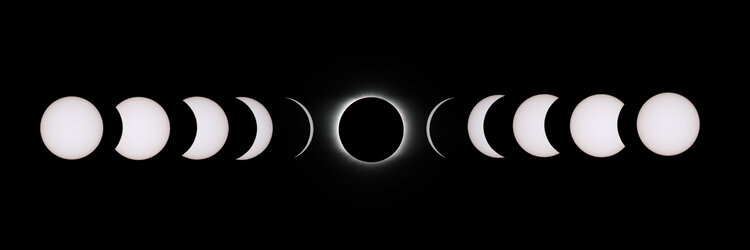
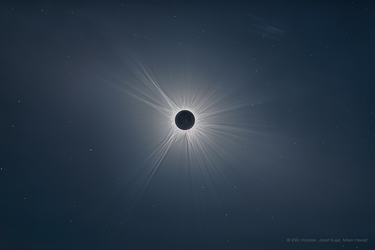
2026年8月12日,欧洲见证了二十多年来的首次日全食(total solar eclipse)。数以百万计的人们被月球(Moon)完全遮住太阳明亮圆盘的景象所震撼,白昼瞬间变为黑夜,并显现出太阳的外层大气(outer atmosphere)。全食带(path of totality)覆盖了格陵兰岛、冰岛、西班牙和葡萄牙,而欧洲其余大部分地区则观测到了偏食(partial eclipse)。
On 12 August 2026, Europe witnessed the first total solar eclipse in over two decades. Millions of people were awed by the Moon completely covering the Sun's bright disc, briefly turning day into night and revealing the Sun's outer atmosphere. Totality could be seen from Greenland, Iceland, Spain and Portugal, while most of the rest of Europe saw a partial eclipse.
随着月球遮挡的太阳部分增多,光线减弱,气温下降。阴影变得更加锐利,树叶间的缝隙(或举向光线的漏勺)在地面上投射出新月形的影像。
As the Moon eclipsed more of the Sun, the light faded and temperature dropped. Shadows sharpened, and shuffling leaves on trees (or colanders held up to the light) projected crescents on the ground.
就在太阳圆盘即将被完全遮挡前,月球边缘可见一串小光珠,这是阳光穿过月球山谷形成的。随着最后一道明亮闪光的出现,即所谓的金刚石环效应(diamond-ring effect),全食开始了。
Right before the Sun's disc was entirely blocked, small beads of light could be seen on the Moon’s edge, where sunlight passed through lunar valleys. With a final bright flash of light, known as the diamond ring effect, totality began.
转瞬间,黑暗降临,太阳的外层大气展现出其全部光辉。白色的光束向四面八方延伸,明亮且炽热的红色日冕(corona)物质喷发物紧贴着太阳表面。
In a moment, darkness set in and the Sun’s outer atmosphere was revealed in all its glory. White streaks of light extended outwards in all directions, and bright red, glowing prominences clung close to the Sun’s surface.
“我认为‘令人难以置信’足以概括这一切,”欧洲空间局(European Space Agency, ESA)科学主任Carole Mundell教授在ESA从西班牙哈瓦兰布天体物理天文台(Observatorio Astrofísico de Javalambre)进行的直播中说道。“细节令人难以置信。这种诡异的夜间光感非常真实,但现在并非夜晚。这真的非常、非常特别。”
“I think ‘boggles the mind’ sums it up,” says the European Space Agency's Director of Science Professor Carole Mundell, during ESA's live broadcast from the Observatorio Astrofísico de Javalambre, Spain. “The detail was incredible. This eerie, nighttime light is what it feels like, but it's not nighttime. Really very, very special.”
以下是日食期间拍摄的一系列图像。点击左右箭头可在图像间切换,点击图像本身可获取更多信息。ESA安排了来自西班牙莱昂、帕伦西亚和哈瓦兰布站点的望远镜(telescope)实时画面,欧洲各地的摄影师也与我们分享了他们的照片。地球(Earth)观测卫星(satellite)MTG-I1捕捉到了月球阴影在地球表面移动的过程,ESA的人造日食制造者Proba-3在地球轨道(earth orbit)上捕捉到了双重日食,而ESA的Proba-2则多次穿过了月球的阴影。
Below is a collection of images taking during the eclipse. Click the left and right arrows to move between them, and click on the images themselves for more information. ESA arranged for live telescope feeds from the Spanish sites of León, Palencia and Javalambre, and photographers across Europe shared their photos with us. Earth observation satellite MTG-I1 captured the Moon’s shadow moving across Earth, ESA's artificial eclipse-maker Proba-3 captured a double eclipse from Earth orbit, and ESA's Proba-2 passed through the Moon's shadow multiple times.
正文在图片后继续。
Text continues after the images.
来自全食带的实时广播
A live broadcast from the path of totality
对于那些无法前往全食可见地区的人们,ESA的实时广播让他们能够与ESA的科学家及天文台人员共同体验这次日食。点击此处查看照片。
For those unable to travel to regions from where totality was visible, ESA's live broadcast allowed them to experience the eclipse together with scientists from ESA and the observatory. Click here for photos.
该节目由Dame Dr Maggie Aderin主持,探讨了从太阳及其日冕的奥秘,到一次著名的日食如何改变了我们对引力的理解,以及ESA目前如何在太空中制造人造日食等话题。
Hosted by Dame Dr Maggie Aderin, the programme explored topics ranging from the mysteries of the Sun and its corona, to how one famous eclipse changed our understanding of gravity, and how ESA is now creating artificial solar eclipses in space.
亮点是时长1分21秒的全食报道,当时月球使哈瓦兰布陷入了完全的黑暗。除了望远镜图像和全食的无人机镜头外,我们还捕捉到了Maggie和科学主任Carole在目睹这一非凡现象时的惊叹反应。
The highlight was the coverage of 1 minute and 21 seconds of totality, as the Moon plunged Javalambre into complete darkness. As well as telescope images and drone shots of totality, we captured Maggie and Director of Science Carole's astonished responses to witnessing this extraordinary phenomenon.
您可以在下方重温广播。
You can rewatch the broadcast below.
成千上万的人聚集在莱昂
Thousands of people gathered in León
ESA与莱昂市及莱昂大学合作,在日食当天于莱昂会展中心(Palacio de Exposiciones y Congresos de León,西班牙)组织了一场免费的公共活动。
ESA, together with the City of León and the University of León, organised a free public event at the Palacio de Exposiciones y Congresos de León (Spain) on the day of the eclipse.
据估计,有一万至一万两千人参加了日食前的日间活动,包括为各年龄段设计的实践研讨会、实验和互动活动。点击此处查看照片。
An estimated ten to twelve thousand people came for the pre-eclipse daytime programme, consisting of hands-on workshops, experiments and interactive activities designed for all ages. Click here for photos.
其中的亮点是“包容性日食”研讨会,ESA的CESAR科学教育团队成员展示了无需视觉即可体验日食的工具。从3D打印的太阳、月球和地球触觉模型,到使用Micro:bit和LightSound传感器将日食期间的光线变化转化为声音变化的演示。点击此处聆听更具艺术感的日食声化效果。
A highlight was the ‘an inclusive eclipse’ workshop, where members of ESA’s CESAR science education team demonstrated tools to experience an eclipse without using your eyes. From 3D printed tactile models of the Sun, Moon and Earth, to demonstrations using Micro:bit and LightSound sensors to turn changes in light experienced during an eclipse into changes in sound. Click here to listen to a more artistic sonification of the solar eclipse.
另一项受欢迎的实践活动是制作自己的针孔照相机。这是一种通过在盒子内投射太阳形状来安全观测(偏食)的方法。
Another popular hands-on activity involved making your own pinhole camera. This is a method for safely viewing a (partial) eclipse by projecting the shape of the Sun inside a box.
另有14500人参加了晚间节目,该节目涵盖了日食本身。节目包括科学讲座和专家评论,引导参观者了解日食的每个阶段,解释天空中正在发生的事情,以及为什么这次特殊的日食如此引人注目。点击此处查看照片。
A further 14 500 people attended the evening programme, which covered the eclipse itself. The programme included science talks and expert commentary to guide visitors through every stage of the eclipse, explaining what was happening in the sky and why this particular eclipse was so remarkable. Click here for photos.
日食开始时,每个人都聚集在观测区。人们使用日食眼镜或针孔照相机等间接方法安全地观测太阳。许多天文爱好者(amateur astronomer)和天文摄影师在现场架设了自己的设备。大屏幕播放了ESA在莱昂现场记录的实时望远镜画面。在莱昂的全食结束后,参观者观看了从ESA位于特鲁埃尔附近的广播点拍摄的全食望远镜画面。
When the eclipse began, everyone gathered in the viewing area. People used eclipse glasses or indirect methods such as a pinhole camera to safely observe the Sun. Many amateur astronomers and astrophotographers set up their own equipment at the site. A large screen showed ESA’s live telescope feed recorded at the site in León. Right after totality in León ended, visitors were shown the telescope feed of totality as seen from the ESA broadcast location near Teruel.
日食三重奏
Trio of eclipses
幸运的是,还有两次日食即将光临欧洲。2027年8月2日,西班牙南部、北非和中东地区将见证“世纪日食”期间超长的全食。而2028年1月26日,葡萄牙和西班牙将迎来“火环”日环食(annular solar eclipse)。
Luckily, two more solar eclipses are heading to Europe. On 2 August 2027, the southern tip of Spain, North Africa and the Middle East will witness a super long totality during ‘the eclipse of the century’. And on 26 January 2028, Portugal and Spain will be treated to a ‘ring of fire’ annular solar eclipse.
访问 www.esa.int/solareclipse 获取所有与这一独特日食三重奏相关的ESA活动和资源。
Visit www.esa.int/solareclipse for all of ESA’s activities and resources related to this unique trio of eclipses.
来源与许可
本站仅展示标题与摘要,正文版权归原作者及原发布机构所有。 原始页面