
查看原文全部插图(12 幅)



内容提要
2026年8月12日,西班牙北部地区观测到了日全食,月球运行至太阳与地球之间,使全食带内的观测者得以一睹太阳外层大气的风采。本文介绍了此次日食的观测情况,以及美国国家航天局(NASA)利用高空喷气机和科学气球进行的观测研究。
原文全文译文
2026年8月12日,当月球(Moon)直接运行至太阳与地球(Earth)之间时,西班牙北部广大地区的观星者见证了一场日全食(total solar eclipse)。在全食带(path of totality)内的观测者有难得的机会,在月球遮挡太阳的短暂时间内,一睹太阳活跃的外层大气(outer atmosphere),即日冕(corona)。
Skywatchers across a swath of northern Spain witnessed a total solar eclipse when the Moon lined up directly between the Sun and Earth on August 12, 2026. Those within the path of totality had the rare chance to glimpse the Sun’s active outer atmosphere, or corona, during the short time the Moon blocked the Sun.
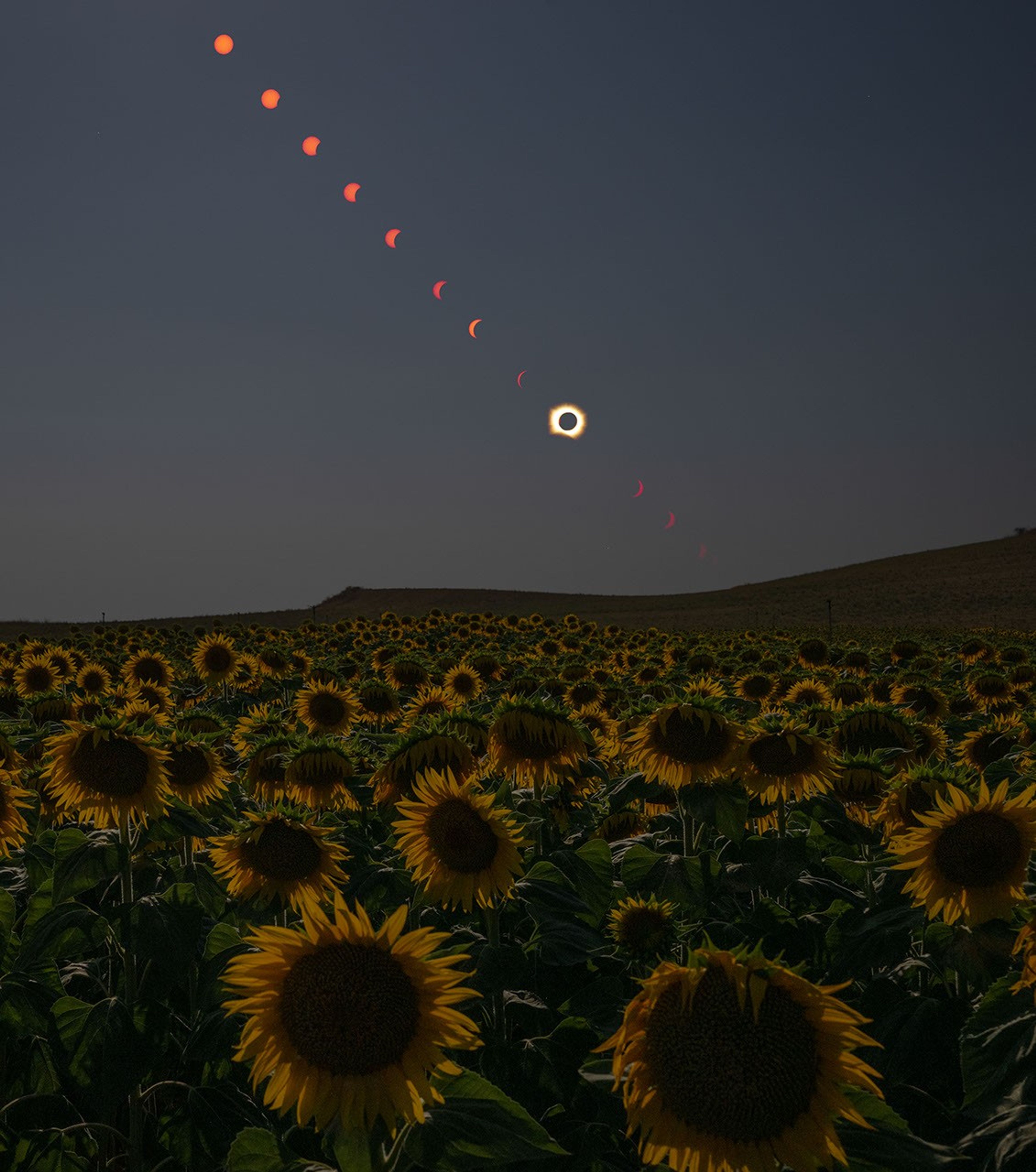
这张合成照片是在西班牙西北部莱昂以南约40公里的圣米兰-德洛斯卡瓦列罗斯(San Millán de los Caballeros)的一片主题花田中,于全食(total eclipse)发生前、发生时及发生后拍摄的。除了格陵兰岛和冰岛的部分地区外,西班牙北部是陆地上少数处于此次日食全食带内的地点之一。
This composite photo was taken before, during, and after the total eclipse from a field of appropriately themed flowers in San Millán de los Caballeros, a town about 40 kilometers (25 miles) south of León in northwestern Spain. Along with parts of Greenland and Iceland, Northern Spain was one of the few places on land that fell within this eclipse’s path of totality.
当月球的阴影,即本影(umbra),扫过西班牙时,日落即将来临。在莱昂,偏食(partial eclipse)于地方时(local time)晚上7:32开始,于晚上9:22结束,此时距离太阳落入地平线仅剩几分钟。全食持续了约两分钟,始于晚上8:28。在西班牙更东部的地区,太阳在食终(eclipse end)之前就已经落山了。
Sunset was approaching when the Moon’s shadow, or umbra, swept across Spain. In León, the partial eclipse began at 7:32 p.m. and ended at 9:22 p.m. local time, just minutes before the Sun dipped below the horizon. Totality lasted about two minutes, starting at 8:28 p.m. Farther east in Spain, the Sun set before the eclipse ended.
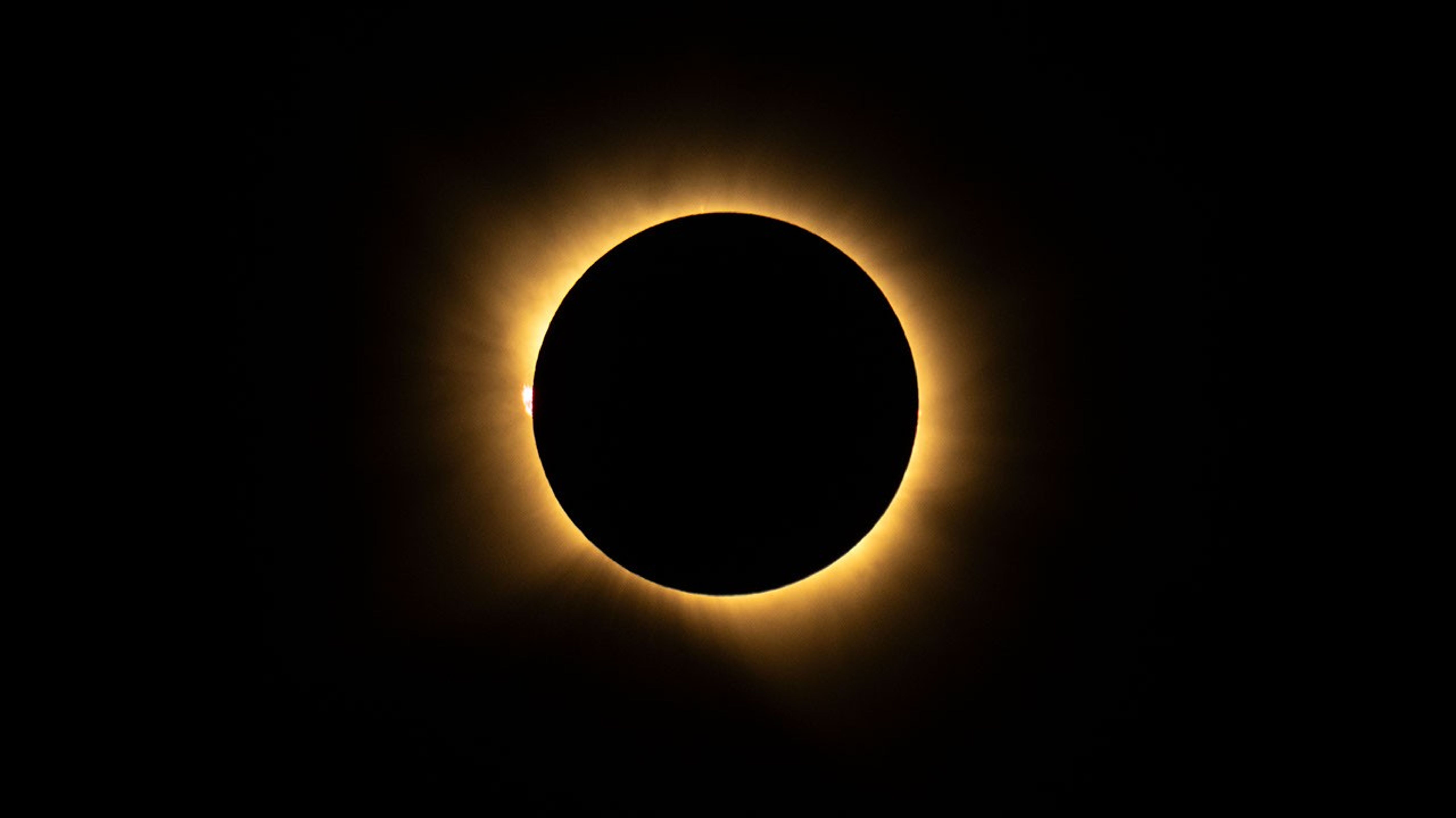
在上面这张全食期间拍摄的照片中,左侧可以看到一个被称为日珥(solar prominence)的发光等离子体环延伸至日冕中。等离子体是一种主要由电离氢和氦组成的超高温气体,沿着太阳磁场(magnetic field)错综复杂的结构流动。日珥的高度有时可达地球直径的数倍,在日食期间有时可以用肉眼(naked eye)观测到。
In the photo above, taken during totality, a glowing loop of plasma called a solar prominence is visible extending into the corona on the left. Plasma, a super-hot gas composed mostly of ionized hydrogen and helium, flows along the tangled and twisted structure of the Sun’s magnetic fields. Solar prominences, which can measure many times higher than Earth is wide, are sometimes visible to the naked eye during eclipses.
日食(solar eclipse)为美国国家航天局(NASA)提供了从不同角度观测太阳和地球大气的机会。8月12日,科学团队驻扎在冰岛,利用NASA的WB-57高空喷气机追逐月球阴影,并以可见光和红外光对日冕进行成像。此外,由NASA支持的全国日食气球项目(Nationwide Eclipse Ballooning Project)在日食发生前、发生时及发生后发射了科学气球,以测量太阳被暂时遮挡时地球大气的变化。
Solar eclipses offer NASA the opportunity to get a different look at the Sun and our own atmosphere. On August 12, science teams staged in Iceland to chase the Moon’s shadow in one of NASA’s WB-57 high-altitude jets and image the corona in visible and infrared light. And the NASA-supported Nationwide Eclipse Ballooning Project launched scientific balloons before, during, and after the eclipse to measure how Earth’s atmosphere changed when the Sun was temporarily blocked.
虽然全食带内的观测机会有限,但欧洲其他地区以及非洲、加拿大和美国的部分地区经历了偏食。有关此次全食和偏食的照片与视频可在NASA的图像库中获取。下一次日全食将于2027年8月2日发生,全食带将横跨西班牙南部、北非、沙特阿拉伯(Arabia)和也门。
While viewing opportunities in the path of totality were limited, the rest of Europe and parts of Africa, Canada, and the U.S. experienced a partial eclipse. Photos and video from the total and partial eclipse are available in NASA’s image library. The next total solar eclipse will occur on August 2, 2027, with the path of totality crossing southern Spain, North Africa, Saudi Arabia, and Yemen.
图注:NASA照片由Bill Ingalls拍摄。故事由Lindsey Doermann撰写。
NASA photos by Bill Ingalls. Story by Lindsey Doermann.
References & Resources
- NASA (2026) August 12, 2026, Total Solar Eclipse. Accessed August 13, 2026.
- NASA (2026, August 13) Eclipses. Accessed August 13, 2026.
- NASA (2026, July 27) NASA Science Soars During August Total Solar Eclipse. Accessed August 13, 2026.
- NASA Earth Observatory (2026, August 12) Stops Along the Path of Totality. Accessed August 13, 2026.
- NASA Scientific Visualization Studio (2025, July 13) Animations of the August 12, 2026, Total Solar Eclipse. Accessed August 13, 2026.
来源与许可
原文来自公共领域来源;译文由机器生成,请以原文为准。 原始页面