查看原文全部插图(8 幅)

内容提要
美国国家航天局(NASA)的研究团队开发了一种新型机器学习模型,能够在太阳活动区显现前 12 小时对其进行预测。该模型通过分析太阳内部声波的微小波动,为提升空间天气预报能力提供了新途径。
原文全文译文
随着人类将目光投向月球(Moon)和恒星(star)以进行未来的探索,预测空间天气(Space Weather)——即主要由太阳驱动的空间环境状况——变得比以往任何时候都更加重要。
As humanity looks to the Moon and stars for future exploration, predicting space weather — conditions in space primarily driven by the Sun — is more important than ever.
现在,美国国家航天局(NASA)COFFIES(太阳内部和外部场与流的后果)项目的一支由天体物理学家(astrophysicist)和数据科学家组成的团队,开发出一种新型机器学习模型,能够在太阳活动区(active region)出现前 12 小时对其进行预测。
Now, a team of astrophysicists and data scientists with NASA’s COFFIES (Consequence Of Fields and Flows in the Interior and Exterior of the Sun) has developed a novel machine-learning model capable of predicting the emergence of active regions on the Sun up to 12 hours before they appear.
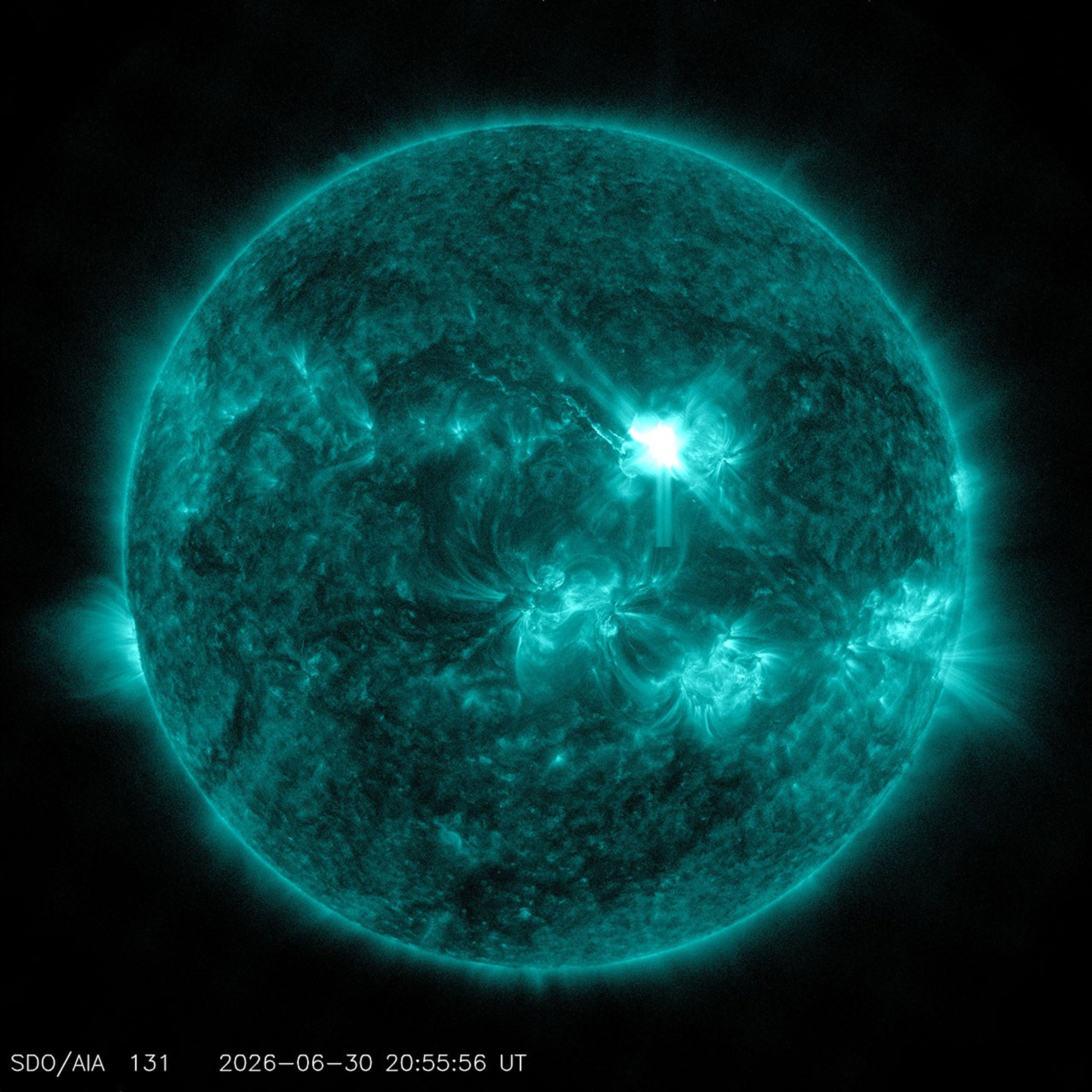
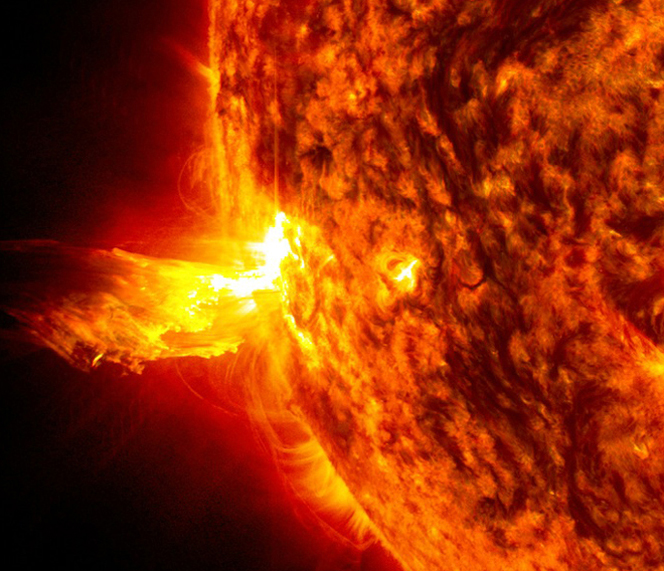
太阳时刻处于剧烈活动中。局部磁场(magnetic field)的强烈聚集会突然突破太阳表面,形成太阳黑子。空间天气预报员会对太阳黑子进行编号和追踪,因为它们是活动区的可见表现,而活动区正是太阳耀斑(solar flare)和日冕物质抛射(coronal mass ejection)等严重空间天气事件背后的主要引擎。这些爆发会向太空发送高能辐射(high-energy radiation)和荷电粒子(charged particle)波,引发的风暴可能威胁宇航员安全、导致卫星(satellite)失效,并干扰地球(Earth)上的无线电通信。
The Sun is constantly churning. Intense concentrations of localized magnetic fields can suddenly break through the solar surface, forming sunspots. Space weather forecasters then collectively number and track sunspots since they are visible manifestations of active regions, which serve as the main engines behind severe space weather events such as solar flares and coronal mass ejections. These eruptions send waves of high-energy radiation and charged particles across space, creating storms that can threaten astronauts, disable satellites, and disrupt radio communications on Earth.
通过整合不同科研机构的专业知识,作为美国国家航天局(NASA)DRIVE(多样化、实现、整合、冒险、教育)科学中心之一的 COFFIES,汇集了来自新泽西理工学院(NJIT)、普林斯顿大学以及位于加州硅谷的美国国家航天局(NASA)艾姆斯研究中心(Ames Research Center)的研究人员。该团队转向先进的人工智能架构——即决定数据如何被处理并用于产生可靠预测或行动的机制——以捕捉活动区形成前太阳表面细微的、基于时基(time-base)的模式变化。通过分析美国国家航天局(NASA)太阳动力学观测台(Solar Dynamics Observatory)捕获的数据,并利用艾姆斯研究中心(Ames Research Center)的超级计算资源,这种发表在《地球物理学研究杂志》(Journal of Geophysical Research):机器学习与计算上的新方法,着眼于太阳黑子区域在太阳内部(solar interior)形成并开始向表面移动的过程中所引起的声波(acoustic wave)波动。
By bridging expertise across different scientific institutions, COFFIES, a NASA DRIVE (Diversify, Realize, Integrate, Venture, Educate) Science Center, brought together a team of researchers from New Jersey Institute of Technology (NJIT), Princeton University, and NASA’s Ames Research Center in California’s Silicon Valley. The team turned to advanced artificial intelligence architectures — which dictate how data is processed and used to produce reliable predictions or actions — to capture subtle, time-based pattern changes on the solar surface before an active region took shape. By analyzing data captured by the agency's Solar Dynamics Observatory and using NASA Ames' supercomputing resources, this new approach, published in the Journal of Geophysical Research: Machine Learning and Computation, looks at fluctuations in acoustic waves caused by sunspot regions when the regions form beneath the solar surface and begin the journey upward to emerge on the surface.
“当磁结构还在穿过太阳内部上升时,我们无法直接看到它。相反,我们必须寻找间接影响——即磁场和持续穿过太阳的声波模式中非常微小的变化,”COFFIES 项目在新泽西理工学院(NJIT)的共同研究员亚历山大·科索维切夫(Alexander Kosovichev)表示。“这项开发出的技术通过太阳声功率的细微变化,识别出与新兴活动区相关的先兆——这更像是在一个非常嘈杂的管弦乐队中节奏的轻微改变。”
“We cannot directly see the magnetic structure while it is still rising through the solar interior. Instead, we must look for indirect effects — very small changes in the magnetic field and in the pattern of acoustic waves continually traveling through the Sun,” said Alexander Kosovichev, a COFFIES co-investigator at NJIT. “The developed technique identifies precursors associated with an emerging active region in slight changes of the Sun’s acoustic power — more like a slight change in rhythm within a very noisy orchestra.”
为了制定当前的业务预报,美国国家海洋和大气管理局(National Oceanic and Atmospheric Administration,NOAA)的空间天气预报中心(Space Weather Prediction Center)和美国空军会对太阳上已经可见的活动区进行监测,以分析这些区域的特征并评估太阳耀斑发生的概率。
To develop current operational forecasts, the National Oceanic and Atmospheric Administration’s Space Weather Prediction Center and the United States Air Force monitor active regions that are already visible on the Sun to analyze the regions’ characteristics and estimate the probability of solar flares.
COFFIES 团队旨在彻底改变这一过程。该团队开发的人工智能模型采用了一种专门的早期检测系统来处理极长的数据序列——称为滑动窗口转换器架构——利用观测结果发现太阳声学活动和磁场的微小减弱,这些信号是科学家此前难以捕捉到的。这些减弱形成了特定的模式,人工智能模型利用这些模式在活动区于太阳表面可见前数小时进行预测。与早期深度学习方法一次性观察太阳表面所有活动不同,这种新模型在太阳活动的长跨度时间线上移动一个固定大小的“观察窗口”,在关注近期数据的同时记忆整体模式。这种方法使预报员能够预测新兴太阳黑子的大致位置,而无需依赖对已可见太阳黑子的计数。
The COFFIES team aims to revolutionize this process. The AI model the team developed a specialized early detection system to handle very long sequences of data — called sliding-window transformer architecture — to use observations to find tiny reductions in the Sun’s acoustic activity and magnetic field, signals that scientists struggled to capture until now. These reductions form patterns that the AI model uses to predict active regions several hours before they become visible on the solar surface. Instead of looking at all activity on the solar surface at once, like earlier deep learning approaches have done, this new model moves a fixed-size "viewing window" across a long timeline of the Sun’s activity to focus on recent data while remembering overall patterns. This method allows forecasters the ability to predict approximate locations of emerging sunspots, rather than relying on counting already visible sunspots.
这种极具前景的人工智能架构展示了深度机器学习如何为太阳物理学——即研究太阳本质及其如何影响空间和行星(planet)本质的学科——做出贡献。虽然该模型尚未准备好用于实时的业务预报,但团队计划在更多已知的太阳事件中验证该方法,以对模型进行微调。
This promising AI architecture shows how deep machine learning can contribute to heliophysics — the field studying the nature of the Sun and how it influences the very nature of space and the planets that exist there. While the model is not ready for operational real-time forecasting, the team plans to validate the approach across many more known solar events to fine-tune the model.
图注:美国国家航天局(NASA)的实时(real time)空间天气监测
NASA’s real-time space weather monitoring
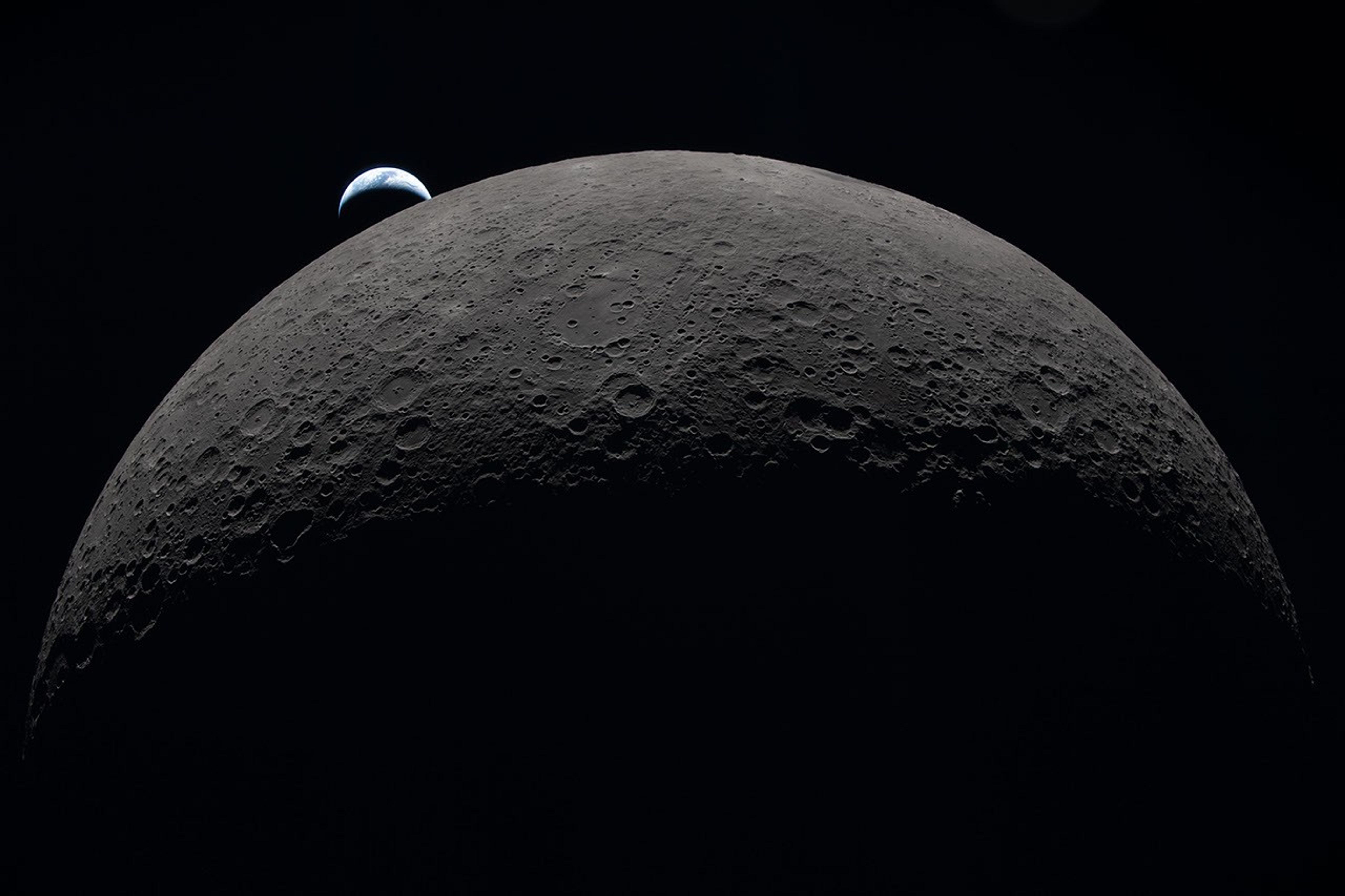
随着美国国家航天局(NASA)专注于通过阿尔忒弥斯任务将人类送往月球(Moon)探索,并派遣首次载人任务前往火星(Mars),监测和预报空间天气对于确保宇航员及其所依赖设备的安全至关重要。COFFIES 团队的这一预测性飞跃,对于保护技术装备和深空(deep space)探索者免受太阳系(solar system)多变环境的影响可能至关重要。
As NASA focuses on sending humans to explore the Moon with the Artemis missions and sending the first crewed missions to Mars, monitoring and forecasting space weather is important for ensuring the safety of our astronauts and the equipment they rely on. This predictive leap from the COFFIES team could prove vital for safeguarding technology and deep-space explorers from the volatile environment of our solar system.
美国国家航天局(NASA)和美国国家海洋和大气管理局(NOAA)的各个团队正在合作,将研究能力转化为实际的 360 度空间天气监测业务工具——包括美国国家航天局(NASA)的空间辐射分析小组、月球至火星空间天气分析办公室(M2M SWAO)和社区协调建模中心,以及美国国家海洋和大气管理局(NOAA)的空间天气预报中心。太阳黑子区域的出现预测能力,特别是针对太阳背面(far side)的预测,可以提供补充这些团队当前所用模型的新信息。
Teams across NASA and NOAA collaborate to transition research capabilities into actual 360-degree space weather monitoring operational tools — including NASA’s Space Radiation Analysis Group, Moon to Mars Space Weather Analysis Office (M2M SWAO), and Community Coordinated Modeling Center as well as NOAA’s Space Weather Prediction Center. Sunspot region emergence prediction capabilities, especially of the Sun’s far side, could provide new information that supplements current models used by these teams.
“COFFIES 的人工智能模型让我们团队感到兴奋,因为它能为我们提供提前预测潜在耀斑位置的新能力,”M2M SWAO 副主任米开朗基罗·罗马诺(Michelangelo Romano)说。“有了这个预警,我们可以为美国国家航天局(NASA)的任务提供额外支持。”
“The COFFIES AI model is exciting to our team because it could provide us with new capabilities towards predicting potential flaring locations ahead of time,” said Michelangelo Romano, M2M SWAO deputy director. “With this heads up, we can provide additional support to NASA missions."
美国国家航天局(NASA)的 COFFIES 是三个 DRIVE 科学中心之一,旨在通过建立由美国多个机构的多学科团队组成的中心来鼓励协作科学。这些开创性的设施聘请了建模师、理论家、计算机科学家和观测者,共同研究我们恒星(star)的重要奥秘及其影响,这一科学分支被称为太阳物理学。
NASA’s COFFIES is one of three DRIVE Science Centers created to encourage collaborative science by establishing centers that are made of multidisciplinary teams from several institutions across the U.S. These pioneering facilities employ modelers, theoreticians, computer scientists, and observers to study important mysteries of our star and its influence, a branch of science known as heliophysics.
COFFIES 团队专注于太阳活动背后的相互关联过程。了解太阳内部和磁场变化是推进我们对太阳 11 年活动周期认识并微调空间天气预报工具的关键。
The COFFIES team focuses on the interconnected processes behind the Sun’s activity. Understanding the Sun’s interior and magnetic variability is key to advancing our understanding of the Sun’s 11-year activity cycle and fine-tuning space weather forecasting tools.
来源与许可
原文来自公共领域来源;译文由机器生成,请以原文为准。 原始页面