查看原文全部插图(4 幅)


内容提要
美国国家航天局(NASA)的研究表明,随人类探索者进入太空的地球微生物可能在月球南极的阴影区域存活。这一发现强调了在人类建立长期月球基地前,需深入了解微生物在极端环境下的持久性,以避免其干扰对月球及火星的科学探测。
原文全文译文
请在此处阅读本文的西班牙语版本。
Lee esta historia en español aquí.
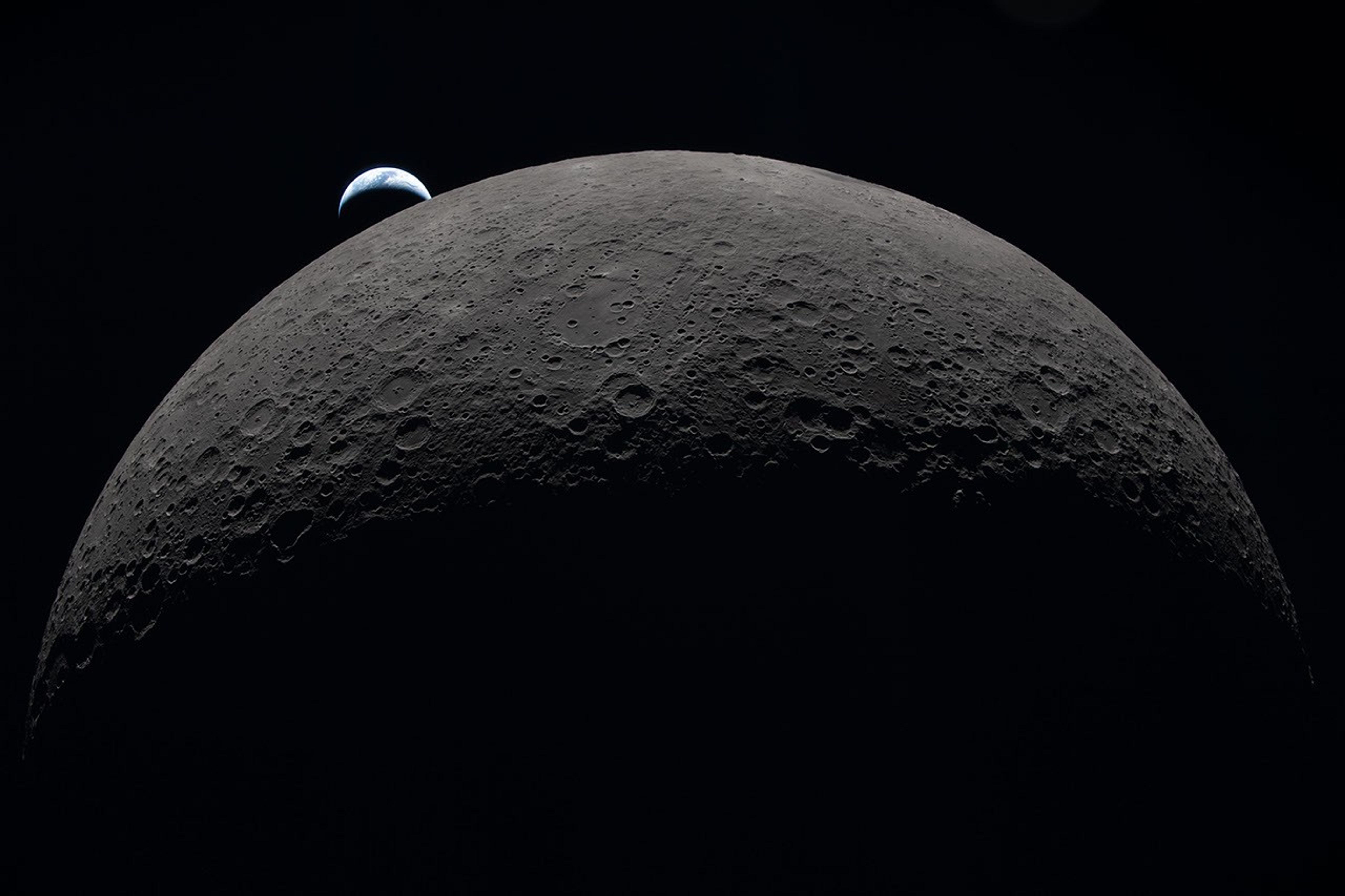
美国国家航天局(NASA)的科学家表示,一些可能随人类探索者搭便车进入太空的地球(Earth)微生物,或许能在月球(Moon)南极(south pole)区域阴影笼罩的角落和缝隙中存活。
Some of Earth’s microbes likely to hitch a ride to space with human explorers could survive in the shaded nooks and crannies of the Moon’s South Pole region, NASA scientists say.
这项研究于2026年8月19日发表在《科学进展》(Science Advances)杂志上,研究结果强调了深入了解微生物在极端月球环境下持久性的必要性。随着人类在月球上建立永久存在,区分古老的月球化学成分与到访宇航员带来的污染可能会变得困难。科学家们表示,这种担忧不仅限于月球,还延伸到了火星(Mars)。
Published on Aug. 19, 2026, in Science Advances, these findings highlight a need to better understand microbial persistence in extreme lunar environments. As humans build a permanent presence on the Moon, it may become difficult to distinguish ancient lunar chemistry from contamination delivered by visiting astronauts. The concern extends beyond the Moon and on to Mars, scientists say.
“人类是天生的探索者,随之而来的是他们的声音、记忆……以及他们的微生物,”戈达德航天中心(Goddard Space Flight Center)的行星(planet)科学家、该研究负责人Prabal Saxena说道。“对于包括我在内的一些科学家来说,这种现实可能令人不安。但它也创造了一个机会,将一种不完美的局面转化为有用的实验。”
“Humans are natural explorers, and with them come their voices, their memories … and their microbes,” said Prabal Saxena, a planetary scientist who led the study from NASA’s Goddard Space Flight Center in Greenbelt, Maryland. “For some scientists, myself included, that reality can be unsettling. But it also creates an opportunity to turn an imperfect situation into a useful experiment.”
携带微生物是不可避免的:例如,人类每块铅笔橡皮大小的皮肤上平均生活着100万个细菌。这些细菌会从航天服和栖息地中散发出来。尽管该论文的作者担心污染会干扰对古代地质或生物学化学线索的搜寻,但他们也主张应将月球用作天然实验室。在南极周围的阴影区域,科学家可以仔细测试微生物在地球上难以复制的环境中生存的真实极限。
Bringing microbes along is unavoidable: Humans have, on average, 1 million bacteria living on each patch of skin the size of a pencil eraser, for example. These bacteria vent from spacesuits and habitats. Though the paper’s authors worry about contamination interfering with the search for chemical clues to ancient geology or biology, they also argue that the Moon should be used as a natural lab. In shaded areas around the South Pole, scientists could carefully test the real-life limits of microbial survival in an environment that can’t easily be reproduced on Earth.
作者指出,在进行任何表面科学研究之前,科学家需要对人类带来的污染物进行基线测量。
Before any surface science can happen, scientists need a baseline measurement of what contaminants humans bring, the authors say.
“我们需要了解在我们到达之前那里有什么,因为当我们前往火星寻找地球以外的生命迹象时,我们要确保那不是我们带去的物质,”NASA戈达德航天中心的论文合著者、负责月球样本污染控制的科学家Andrew Needham说道。
“We need to understand what was there before us, because when we go to Mars to search for signs of life beyond our planet, we will want to make sure it’s not stuff we brought,” said Andrew Needham, a NASA Goddard-based paper co-author who is an Artemis contamination‑control scientist for lunar samples.
即使有严格的灭菌程序,一些生物体依然顽强地存活下来。一个很好的例子是黑曲霉(Aspergillus niger),这是一种在家庭浴室以及供暖、通风和空调(air conditioning)系统中等温暖潮湿的地方茁壮成长的真菌。宇航员已经在国际空间站(International Space Station)内对其进行了采样,实验证明该真菌也能在空间站外存活。黑曲霉是本研究选定的五种微生物(包括细菌和真菌)之一,因为它在航天环境中具有已知的韧性。
Even with strict sterilization procedures, some organisms are stubbornly resilient. A good example is Aspergillus niger, which is a fungus that thrives in warm, damp places like household bathrooms and heating, ventilation, and air conditioning systems. Astronauts have sampled it inside the International Space Station, and experiments demonstrate that the fungus can survive outside the station as well. Aspergillus niger was one of five microbes, including bacteria and fungi, selected for this study because of its known toughness in spaceflight environments.
微生物在空间站外部存活令科学家感到惊讶。据约翰逊空间中心(Johnson Space Center)的地球微生物学家Aaron Regberg称,这些物种通常不被认为是能承受真空等恶劣条件的“极端微生物”。
That microbes survived on the space station’s exterior surprised scientists. These species are typically not considered “extremophiles” that can withstand harsh conditions, such as the vacuum of space, according to Aaron Regberg, a geomicrobiologist at NASA’s Johnson Space Center in Houston.
“我本以为这些微生物会干枯死亡,”研究空间站细菌并担任该论文合著者的Regberg说。
“I would have expected these microbes to have dried out,” said Regberg, who studies space station bacteria and was a co-author on the paper.
他指出,NASA经常在华氏400度以上的高温下烘烤机器人航天器,以减少其上的活生物体数量。但这在宇航员身上是无法实现的,因此在载人探索月球南极环境时,污染问题具有了新的意义。
He pointed out that NASA often bakes robotic spacecraft at temperatures above 400 degrees Fahrenheit to reduce the number of living organisms on them. But that’s not possible with astronauts, so contamination concerns take on new meaning in crewed exploration of the Moon’s south polar environment.
通过了解阳光在两极的行为,可以更清晰地了解微生物可能在哪里存活。本研究中的“存活”是指微生物至少能存活一个地球日(earth day),这并不意味着它能够生长和繁殖。
A clearer picture of where microbes might survive comes from understanding how sunlight behaves at the poles. Survival in this study means the microbe can stay alive for at least one Earth day, which does not mean that it can grow and reproduce.
由于月球的轴倾角非常小,从其两极看去,太阳似乎悬浮在地平线之上,像放在桌子上的手电筒一样掠过表面。因此,地表的高处,包括环形山(crater)脊、山脉甚至小凸起,都会阻挡光线到达低洼地形。这产生了阴影区域,可以保持低温并保存水分,同时保护脆弱的分子和可能的微生物免受致命辐射。
Because the Moon has a very small tilt on its axis, the view from its poles is of a Sun that appears to hover just above the horizon, skimming the surface like a flashlight laying on a table. As a result, elevated parts of the surface, including crater ridges, mountains, and even small bumps, block light from reaching low-lying terrain. This produces pockets of shadowed areas that can remain cold and preserve water, as well as shield fragile molecules and possible microorganisms from lethal radiation.
考虑到这一科学背景,研究团队着手测试哪些地球微生物可以在极端极地条件下存活。他们重点研究了航天环境中常见的生物以及人类皮肤上常见的生物。除了黑曲霉,这些生物还包括枯草芽孢杆菌(Bacillus subtilis)、金黄色葡萄球菌(Staphylococcus aureus)、耐辐射异常球菌(Deinococcus radiodurans)以及几种镰刀菌(Fusarium)。基于对以往研究的分析,科学家们记录了每种生物体所能承受的最大热量和紫外辐射(UV radiation)。
With that scientific context in mind, the team set out to test which Earth microbes could survive extreme polar conditions. They focused on organisms commonly found in spaceflight environments and those common on human skin. Besides Aspergillus niger, these included Bacillus subtilis, Staphylococcus aureus, Deinococcus radiodurans, and several species of Fusarium. Based on an analysis of previous studies, the scientists noted the maximum amount of heat and ultraviolet (UV) radiation each organism can withstand.
随后,这些生物体在模拟月球南极附近的三个区域——Nobile Rim、Connecting Ridge和De Gerlache Rim——进行了测试。这些模拟使用了由NASA月球勘测轨道飞行器(Lunar Reconnaissance Orbiter)上的仪器收集的高程和温度数据构建的详细环境地图,并结合了辐射如何撞击表面的模型。
Then, the organisms were tested in simulations of three regions near the lunar South Pole — Nobile Rim, Connecting Ridge, and De Gerlache Rim. Those simulations used detailed environmental maps built from elevation and temperature data collected by instruments aboard NASA’s Lunar Reconnaissance Orbiter, combined with models of how radiation strikes the surface.
模型显示了“可存活生态位”的地图,其大小从数英里宽的环形山底(crater floor)到宇航员的靴印不等。对紫外辐射抵抗力最强的黑曲霉,甚至能够在有一定阳光照射的区域存活。紫外辐射对大多数微生物来说是致命的,因此它在医院中被用于灭菌。
The models showed maps of “survivable niches” that range in size from a miles-wide crater floor to an astronaut's boot print. Aspergillus niger, which was most resistant to UV radiation, was able to survive even in areas with some sunlight exposure. UV radiation is so deadly to most microbes that it’s used for sterilization in hospitals.
“当我们想到月球时,通常不会想到生物学,”NASA戈达德航天中心的论文合著者Heather Graham说,她致力于开发检测可能与地球生物完全不同的生物的工具和技术。“但月球是一个细胞可以存活的地方,所以我们对这些地点的首次探索应该格外关注我们的微生物搭便车者,并努力在我们的访问改变我们将要发现的东西之前,对月球化学进行表征。”
“When we think of the Moon, we don’t typically think of biology,” said Heather Graham, a paper co-author at NASA Goddard who helps develop tools and techniques for detecting biology that may look nothing like Earth’s. “But the Moon is a place where a cell can survive, so our first exploration of these sites should pay extra attention to our microbial hitchhikers and work hard to characterize lunar chemistry before our visits change what we will find.”
研究作者指出,尽管一些微生物能够在南极(south pole)周边的区域以休眠状态存活,并由此对未来的某些科学调查造成困扰,但目前并无证据表明月球(Moon)具备维持其生长和复制的关键要素。这些要素包括液态水,而液态水的存在通常需要大气层和适宜的温度。
The authors note that while some microbes can survive in a dormant state in regions around the South Pole, and thereby confuse some future scientific investigations, there is no evidence the Moon has key ingredients to sustain growth and replication. Such ingredients include liquid water, which typically requires an atmosphere and moderate temperatures.
欲了解更多信息,请访问:
For more information, visit:
来源与许可
原文来自公共领域来源;译文由机器生成,请以原文为准。 原始页面