查看原文全部插图(10 幅)



内容提要
美国国家航天局的月球勘测轨道飞行器拍摄了一系列月面新巨爵座的图像,该巨爵座由SpaceX猎鹰9号火箭末级撞击形成。通过调整视角和精确的拍摄时机,科学家得以分析该巨爵座的物理特征及其周围的物质分布。
原文全文译文
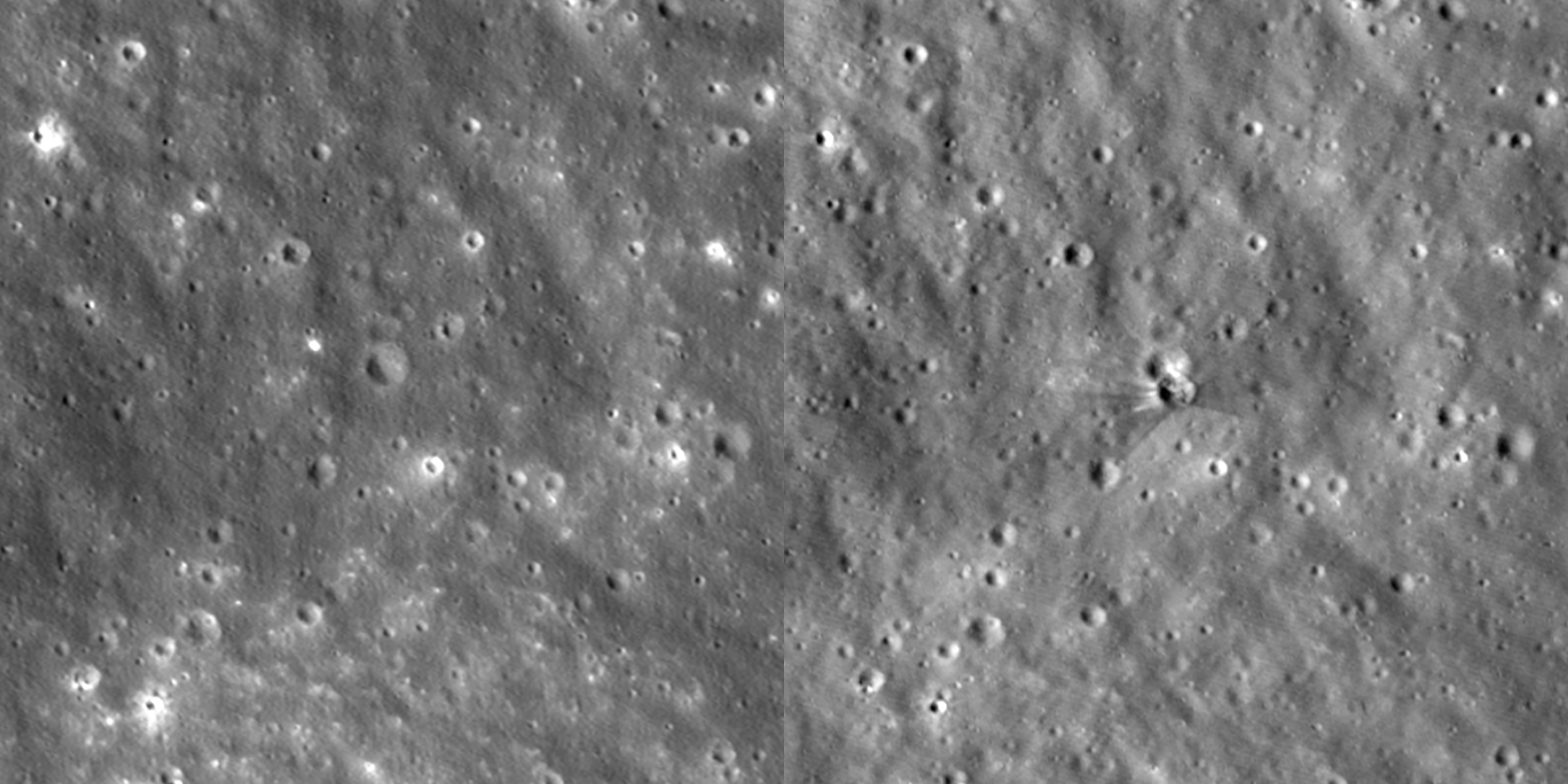
在8月11日至12日期间,美国国家航天局(NASA)的月球勘测轨道飞行器(LRO)拍摄了一系列月球上新巨爵座(Crater)的图像。该巨爵座形成于8月5日,当时SpaceX猎鹰9号火箭末级在执行2025年1月发射的Firefly Blue Ghost 1任务后撞击了月面(lunar surface)。
Between Aug. 11 and 12, NASA’s Lunar Reconnaissance Orbiter (LRO) captured a series of images of a new crater on the Moon. The crater formed on Aug. 5, when a SpaceX Falcon 9 upper stage impacted the surface following its January 2025 launch of the Firefly Blue Ghost 1 mission.
为了捕捉撞击影像,工程师们倾斜了航天器,使其相机在LRO每次以每秒1英里的速度从月球上方约60英里处经过时,都能对准该巨爵座。该轨道飞行器每两小时绕月球两极飞行一圈,而月球在其下方缓慢旋转。为了拍摄特定地点,航天器必须等待该位置转入视角(viewing angle),在此次任务中耗时六天。
To capture imagery of the impact, engineers tilted the spacecraft so its cameras would point toward the crater each time LRO passed about 60 miles above the Moon, traveling 1 mile per second. The orbiter circles the Moon from pole to pole every two hours, while the Moon slowly rotates underneath it. To photograph a specific spot, the spacecraft must wait until that location turns into view, which took six days in this case.
调整指向只是挑战的一半,时机也必须准确。如果相机拍摄时间提前或滞后哪怕10秒,目标就会偏离中心10英里。
Getting the pointing right was only half the challenge; timing had to be accurate as well. If the camera snapped even 10 seconds too early or too late, the target would drift off-center by 10 miles.
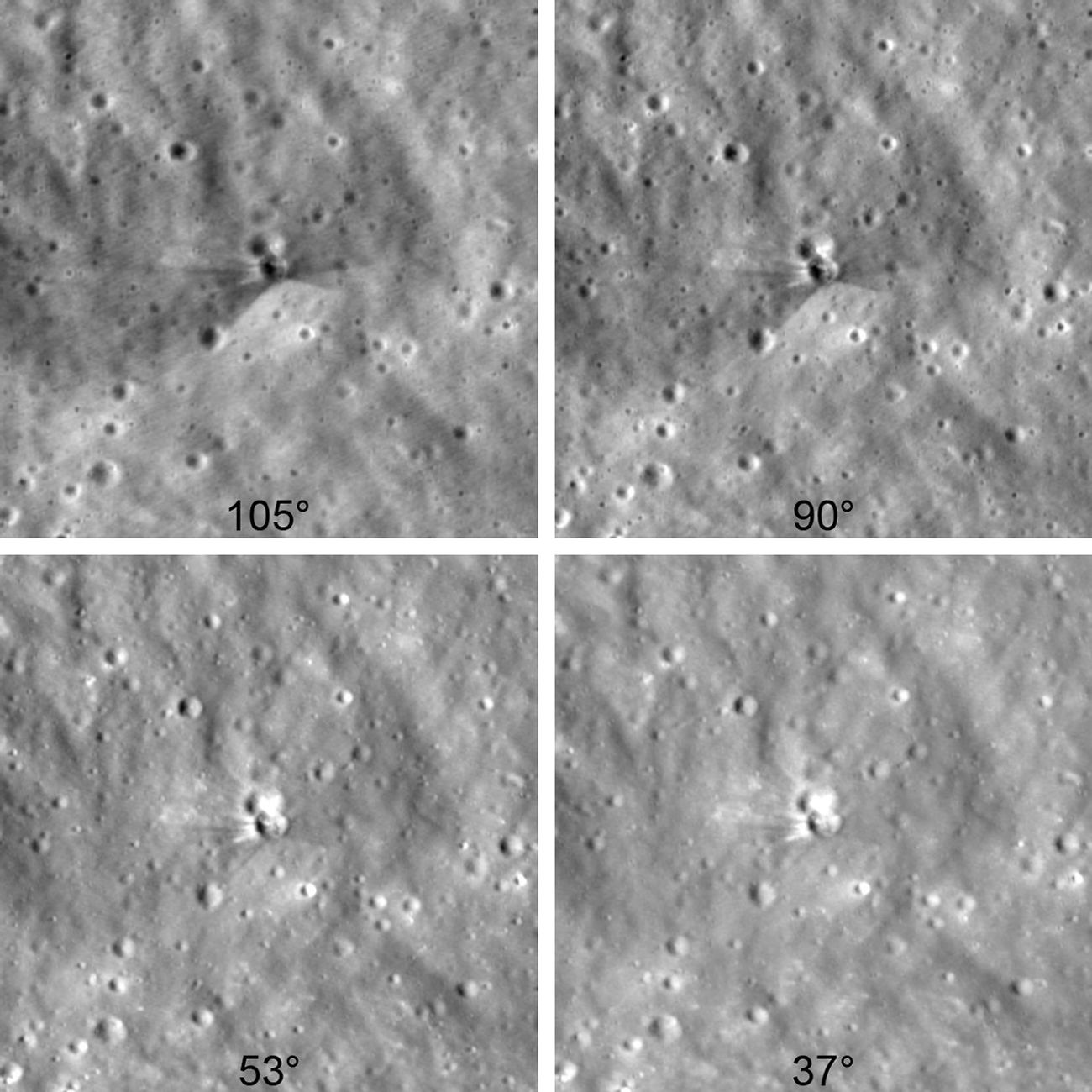
由于视角的多样性,科学家们可以在多种光照条件下观察该巨爵座,从而揭示其独特特征。在巨爵座边缘突出的图像中,科学家测量出其宽度为60英尺。科学家还根据其阴影长度确定该巨爵座深度不足10英尺。
Because of the variety of viewing angles, scientists could see the crater under multiple lighting conditions that revealed unique features. In images where the crater rim stood out, scientists measured its 60‑foot width. Scientists also determined the crater is less than 10 feet deep based on the length of its shadow.
为了捕捉这些细节,LRO使用了其窄角相机,该相机可以识别小至3英尺宽的特征。
To capture these details, LRO used its Narrow-Angle Camera, which can spot features as small as 3 feet wide.
上图显示了从巨爵座向外延伸的明暗射线。较暗的条纹由长期受太阳风(solar wind)、银河宇宙线(cosmic ray)和微陨石撞击影响而改变的表面尘埃和岩石组成。这些风化物质是被撞击从月面下1.5英尺处挖掘出来的。巨爵座边缘附近的较亮条纹则是由从更深地下挖掘出的新鲜物质组成。
The images above show bright and dark rays stretching out from the crater. The darker streaks are made of surface dust and rocks altered over a long time by solar wind, galactic cosmic rays, and micrometeorite impacts. This weathered material was excavated by the collision from 1.5 feet into the lunar surface. The brighter streaks near the crater rim are made of fresh material excavated from deeper underground.
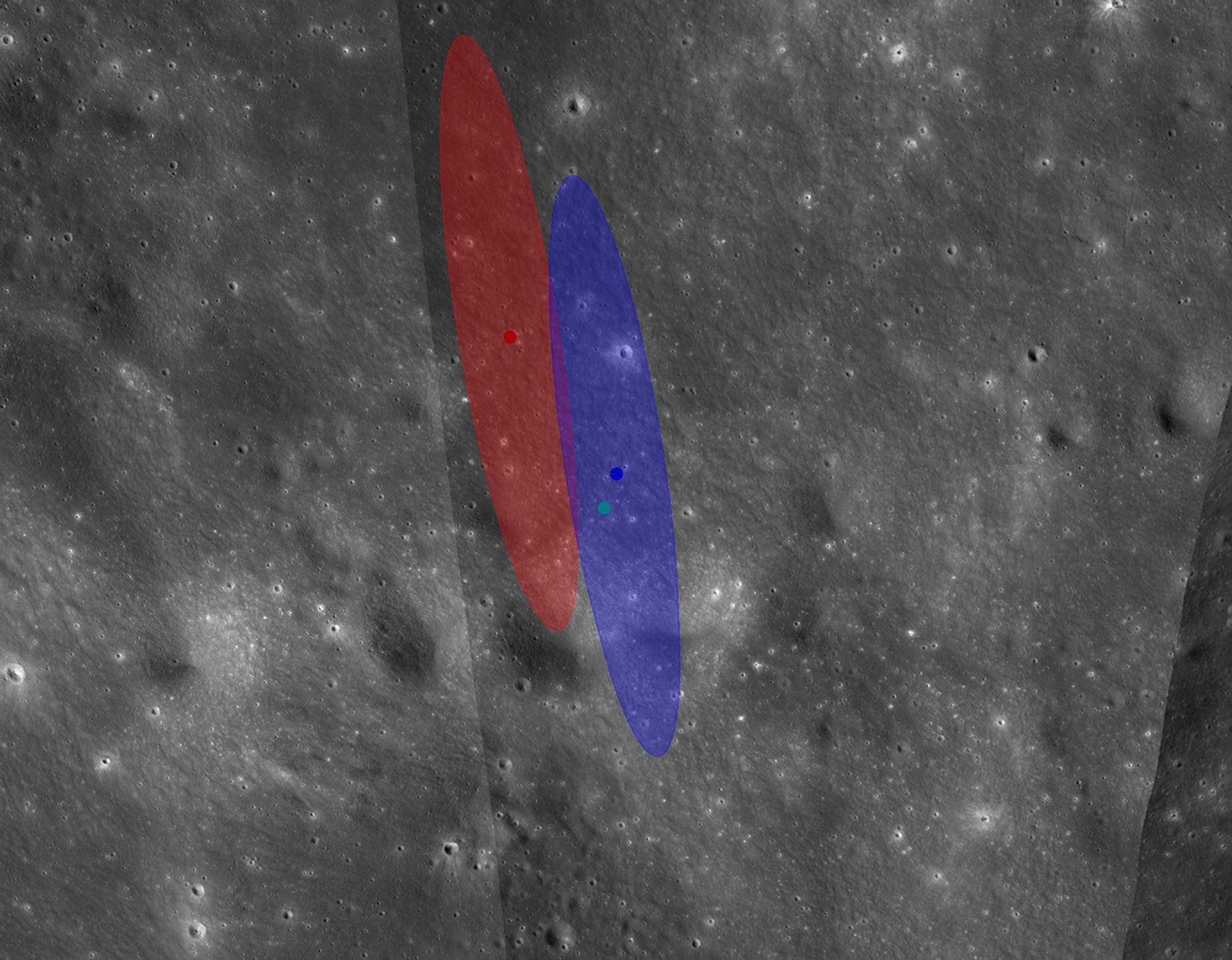
寻找撞击点需要专家和业余爱好者之间的全球协调。独立天文学家(astronomer)首先利用公开数据确定了火箭的轨迹。NASA的近地天体(near-earth object)研究中心负责追踪可能对地球(Earth)构成威胁的自然天体,该中心利用此次机会测试并验证了预测撞击的工具和技术。
Finding the impact site took global coordination among experts and hobbyists. Independent astronomers first identified the rocket’s trajectory using publicly available data. NASA’s Center for Near Earth Object Studies, which tracks natural objects that could pose hazards to Earth for the agency’s Planetary Defense program, used this opportunity to test and validate tools and techniques for predicting impacts.
该中心位于南加州的喷气推进实验室(Jet Propulsion Laboratory),通过逐步细化轨迹确定了撞击位置,并将该信息提供给了韩国的韩国探路者月球轨道飞行器(Danuri)团队。该团队在几小时后使用Danuri上的高分辨率(high resolution)LUTI相机对该巨爵座进行了成像,发现预测精度约为0.6英里。
Based at NASA’s Jet Propulsion Laboratory in Southern California, the center incrementally refined the trajectory until identifying the location of impact, which it provided to the Republic of Korea for their Korea Pathfinder Lunar Orbiter (Danuri) team. The team used the high-resolution LUTI camera on Danuri a few hours later to image the crater, finding the prediction was accurate to about 0.6 miles.
在拍摄了该巨爵座的图像后,Danuri任务组将坐标发送给NASA的LRO团队,以帮助优化其随动(follow-up)成像序列。通过将新的巨爵座图像与撞击前的图像进行对比,LRO团队更新了巨爵座中心坐标:19.4759°N, 266.7138°E,海拔511米。
After capturing images of the crater, the Danuri mission sent coordinates to NASA’s LRO team to help refine their follow-up imaging sequence. Comparing their new crater images with the pre-impact images, the LRO team updated the crater center coordinates: 19.4759°N, 266.7138°E, 511 meters elevation.
来源与许可
原文来自公共领域来源;译文由机器生成,请以原文为准。 原始页面