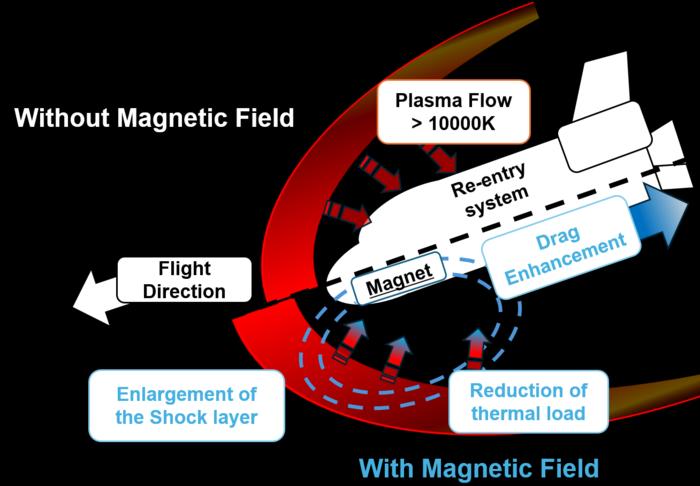
航天器再入大气层时通常会损耗部分结构以吸收能量,但这限制了有效载荷并增加了维护成本。东京都立大学的研究人员开发了一种新的测试装置,旨在帮助设计人员评估磁流体动力学(MHD)制动系统在再入过程中的实际表现。
Spacecraft famously have small bits of them disintegrate on reentry. That’s by design, as it is one of the easiest solutions to absorbing the incredible amounts of energy they experience. However, it also results in long turn around times while these heat shields are repaired, and the shields themselves act as “dead weight” limiting payload capacity. With the increased focus on reusable rockets, and the emphasis on payload capacity, engineers have been looking for alternative solutions to the reentry problem - and the one of the most promising is known as magnetohydrodynamic (MHD) braking. A new paper from researchers at the Tokyo Metropolitan University describes a new test setup that should help designers of these advanced braking systems truly capture what their system is doing upon reentry.
来源与许可
本站仅展示标题与摘要,正文版权归原作者及原发布机构所有。 原作者:Andy Tomaswick (https://www.universetoday.com/authors/andy-tomaswick)。 原始页面