查看原文全部插图(2 幅)
内容提要
本集探讨了美国国家航天局(NASA)如何通过工程师的职业流动与经验积累,实现跨项目间的知识传承。嘉宾Heather Koehler分享了如何将航天飞机等项目的技术经验与软技能应用于Artemis计划等新任务中。
原文全文译文
[轻柔的开场音乐]
[Soft intro music]
Heather Koehler:当我意识到不必事事精通,可以大胆提问、寻求理解并接受指导时,机会便随之而来,我也因此获得了最宝贵的经验。
Heather Koehler: When I learned that it was okay to not know everything, that it’s okay to ask questions and ask for understanding, allow myself to be mentored, that’s when opportunities presented themselves, and that’s when I gained the best experiences.
主持人Andres Almeida:欢迎收听《小步快跑,巨大飞跃》(Small Steps, Giant Leaps),这是来自美国国家航天局(NASA)项目/工程领导力学院(APPEL)的播客。我是主持人Andres Almeida。
Host Andres Almeida: Welcome to Small Steps, Giant Leaps, the podcast from NASA’s Academy of Program/Project & Engineering Leadership, or APPEL. I’m your host Andres Almeida.
NASA的知识在人与人、项目与项目之间传递。NASA飞行力学技术研究员Heather Koehler曾参与多个项目,包括航天飞机(space shuttle)和Artemis计划的太空发射系统(Space Launch System)火箭。
Knowledge at NASA is passed from person to person, program to program. Heather Koehler, NASA Technical Fellow for Flight Mechanics, has worked on many programs, including the space shuttle and the Space Launch System rocket for Artemis.
她还制定了一项NASA技术标准,这是一套记录在案的规则和规范,规定了系统应如何设计和运行,以保护航天器免受微陨星体(micrometeoroid)的伤害。该标准沿用至今。
She also developed a NASA Technical Standard, a documented set of rules and specifications that says how systems should be designed and operated, on protecting spacecraft from micrometeoroids. It’s still in use today.
主持人:你好,Heather,欢迎来到本期播客。
Host: Hi, Heather, welcome to the podcast.
Heather Koehler:谢谢你,Andres,很高兴能来到这里。
Heather Koehler: Thank you, Andres, for having me. I’m excited to be here.
主持人:你参与过多个项目。你编写过航天飞机飞行软件,也领导过太空发射系统的技术团队。一个项目的知识是如何延续到另一个项目中的?
Host: You’ve worked on several programs. You’ve written space shuttle flight software. You’ve led technical teams on the Space Launch System. How has knowledge from one program carried over to another?
Koehler:在NASA,工程师在职业生涯中支持多个项目是很常见的。
Koehler: At NASA, it’s common for engineers to support multiple programs over their career.
正如你所提到的,我最初从事航天飞机的工作,但我的职业生涯也涵盖了其他载人任务、科学任务和行星任务。
As you mentioned, I started working on the space shuttle, but my career has spanned other manned missions, science, and planetary missions as well.
如果你从事的是飞行力学这样的工程学科,你会提供任务设计,开发模拟和模型,并为项目生命周期的所有不同阶段执行分析。
If you’re in an engineering discipline like flight mechanics, for example, you provide the mission designs, you develop simulations and models, you perform analysis for all the different phases of a program’s life cycle.
在你的职业生涯中,你会为所有不同的项目和计划反复这样做。你支持的每一个项目,都能让你深入了解构成该飞行系统的所有系统和组件。
And you do that repeatedly for all the different programs and projects over your career. Every program you support, you gain understanding of all the systems and the components that make up that flight system.
你学会了如何使用专门的工具和方法来解决问题,这些工具和方法是为解决该项目独特的挑战而量身定制的。因此,投入时间和精力解决这些复杂项目的问题,往往会转化为另一个项目的解决方案或近似方案。
You learn how to solve problems with specialized tools and methods tailored to solve that program’s unique challenges. So, spending time and energy in solving these complex programs, for one, often will translate into solutions or close approximations for another program.
知识通过工程师在转向不同项目时的经验,从一个项目转移到另一个项目。
Knowledge gets transferred from one program to another through the experiences of the engineers as they transition to different programs.
例如,我们为太阳帆CubeSat任务开发的制导、导航和控制算法,这些算法包括了姿态控制推进器、导航传感器或恒星(star)追踪器的模型。
So, for example, the guidance, navigation, and control algorithms we developed for a solar sail CubeSat mission, those algorithms include models for reaction control thrusters or navigation sensors or star trackers.
工程师也非常擅长在其他任务的飞行力学模拟中回收和重用这些模型。他们可能会使用相同的导航传感器或尺寸相似的推进器。
Engineers are also really good at recycling and reusing those models in other flight mechanics simulations for a different mission. And they might use the same navigation sensors or similarly sized thrusters.
因此,你在集成、操作和表征一个系统性能方面所获得的知识,往往是开启下一个项目的良好起点。
So, the knowledge that you’ve gained in integrating and operating, characterizing the performance of one system is often a really good starting place for how you start the next program.
主持人:是的。
Host: Yeah.
Koehler:你通常会根据新的约束条件或略有不同的环境来调整你的工具集和模型,但你在之前的工作中完善的方法论往往是下一个项目最好的起点。
Koehler: You often will adapt your tool sets and models to new constraints or slightly different environments, but the methodology you refined on that previous effort is often the very best starting point for the next one.
另一个例子是,我之前在航天飞机项目上的工作,那是一项非常复杂的工程。它涉及了每一个主要工程学科的集成,包括推进、航空电子设备、结构、通信——仅举几例。
Another example, you know, my previous work on the space shuttle program, that was just a really complex effort. It involved the integration of every major engineering discipline, propulsion, avionics, structures, communications – just to name a few.
因此,航天飞机系统中的一些主要组件被回收并升级到了我们今天在Artemis计划中看到的样子:RS-25发动机、固体火箭助推器和芯级储罐,甚至包括一些软件流程,如发射日目标设定。航天飞机软件架构的这些方面被回收并重用于太空发射系统的软件中。
So, some of those major components in the space shuttle system, they were recycled and upgraded to what we see today in the Artemis Program: the RS-25 engines, the solid rocket boosters, and the core stage tank, even some of the software processes like launch day targeting. Those aspects of the space shuttle software architecture were recycled and reused for the Space Launch System software.
那些设计、开发和操作航天飞机的工程师,嗯,他们中的一些人今天仍然在这里,他们现在支持太空发射系统和猎户座(Orion)(Artemis计划)。所以,他们将航天飞机的知识带入了新的架构中。
The engineers that designed and developed and operated the space shuttle, well, some of them are still here today and they support SLS and Orion (Artemis Program) today. So, they brought that shuttle knowledge with them into the new architecture.
因此,在设计会议和审查委员会中,拥有这些过去项目的经验非常有帮助,即使是在处理相同或类似的硬件,但应用在略有不同的环境中时,也能帮助你解决新问题。
So, having that experience on those past programs is just really helpful in your design meetings and your review boards when you’re trying to solve new problems, even if it’s with the same hardware or similar hardware, but it’s being used in a slightly different environment.
主持人:那么你多年来培养的价值观和软技能呢?它们能很好地迁移吗?
Host: And what about those values and soft skills that you’ve developed over the years? Do they transfer over pretty well?
Koehler:哦,当然。你知道,那些软技能,即向他人展示解决问题的技术方案,你是在反复成长和发展这些技能,对吧?你需要将这些方案呈现在总工程师和工作组面前。
Koehler: Oh, oh, yes. You know, those soft skills, presenting the really technical solutions to a problem, you grow and develop those skills repeatedly, right? You’re bringing those in front of your chief engineers, in front of working groups.
在试图沟通风险所在、理解上的差距,并确保你能向合适的受众传达问题的解决方案时,你确实经历了一番磨练。
You really go through the ringer in trying to communicate where the risks are, where the gaps in your understanding are, and just trying to make sure that you can communicate whatever the solution is to that problem to the right audience.
所以,你在这些项目上经历整个生命周期,确实磨练了你的技能。
So, you really refine your skills over the years on these programs going through the entire life cycle.
主持人:现在我们知道并非所有知识都会被记录下来,那么你如何确保它不会丢失?
Host: Now, we know not all knowledge gets written down, so how do you ensure it doesn’t get lost?
Koehler:这是一个非常好的观点。我认为人类通过观察他人、亲身实践并反复操作来学习效果最好。
Koehler: That’s a really great point. I think humans learn best from observing others and doing something firsthand and doing it repeatedly.
因此,我有幸在整个职业生涯中拥有伟大的导师。他们让我练习,有时会失败,有时会再次失败,但他们一直让我执行这些任务并获得经验,始终在他们的指导下进行。
So, I was very blessed to have had great mentors throughout my career. They let me practice and sometimes fail and sometimes fail again, but they kept letting me perform those tasks and gaining that experience, but always under their guidance.
我最好的导师非常有耐心。他们解释他们正在做什么,如何使用软件工具,如何设计某些东西以避免故障。这些人坐在技术会议上陪着我。他们在我的耳边低语。他们在走廊里与我进行侧面交谈。
My best mentors were very patient. They explained what they were working on, how to use the software tool, how to design something to avoid a failure. These people sat with me in technical meetings. They whispered in my ear. They had side conversations with me in the hallway.
从系统的技术层面到对组织文化和人际关系的理解,这些经历确实帮助我学会了如何成为一名更好的技术领导者,以及如何在没有行政职权的情况下激励他人并影响决策。这种强有力的指导确实能够塑造职业生涯,就像它塑造了我的职业生涯一样。
Everything from the technical aspects of a system to just the understanding the organizational cultures, the personalities of the people in the room – that really helped me understand how to be a better technical leader and how to maybe motivate and influence decisions even when you’re not in a position of authority. That strong mentoring really can shape a career as it did mine.
美国国家航天局(NASA)的许多部门都在尝试将资深工程师与职业生涯早期的工程师进行配对,以确保知识不会流失。
Many organizations around NASA, they try to pair senior engineers with early career engineers to make sure knowledge isn’t lost.
这在航天发射系统(Space Launch System)中是一种非常普遍的做法,这也是我曾经参与的项目之一。他们会将处于职业生涯中期的工程师与特定学科或领导岗位的资深工程师配对,从而为后者承担下一阶段的工作做好准备。
This is really a common practice on the Space Launch System, one of the programs that I worked on, where they would pair mid-career engineers with senior engineers in a very specific discipline or a leadership role, and then that prepared that person to do the next level of that job.
因此,在新项目中让不同经验的人员进行配对,为那些职业生涯早期的员工提供了机会。他们可以作为设计师、开发人员、测试人员或负责人获得实践经验。
So, pairing different experienced people on new programs exposes those early career employees with opportunities. They get hands-on experience as the designer, as the developer, as the tester or the lead.
他们能从资深人士那里获得直接指导,而且由于有资深专家在身边协助,他们不必对产品承担全部责任。
They get direct mentoring from a senior person, and they’re not really completely responsible for the product because you’re working with that senior expert right by your side.
在我的部门,即NASA工程与安全中心(NESC),我们经常邀请职业生涯早期的员工加入技术评估团队。同样,他们能够接触到复杂问题的解决过程,与团队共同工作,并向经验更丰富的工程师学习。
In my organization, the NESC (NASA Engineering and Safety Center) we will often invite early career employees to serve on technical assessment teams. Again, they get exposure to solving complex problems, they’re working with the team, they’re learning alongside more experienced engineers.
获取和保存知识与经验的另一种方式是进行独立分析或测试。NASA正在对商业航天合作伙伴关系进行大量投资。
And another way that knowledge and experience is gained and preserved is from doing independent analyses or tests. NASA’s investing a lot in commercial space partnerships.
这意味着有时我们并不负责设计系统,而是购买服务。因此,通过对商业供应商的系统进行独立分析或模拟,你可以获得实践经验。你可以在不同的运行约束条件下对特定的硬件进行建模,同时也能深入了解该系统。
And that sometimes means we aren’t responsible for designing the system, but we’re buying a service instead. So, performing independent analysis or simulation of that commercial provider system, you get hands-on experience. You’re modeling specific hardware under different operational constraints, but you’re also gaining insight into that different system.
执行这些独立洞察任务的工程师仍然可以从中学到宝贵的经验,了解特定设计的局限性,理解需求如何被不同地解读,并看到技术的创新应用。
And the engineers that perform those independent insight tasks can still learn valuable lessons on where the limitations of a certain design are, how requirements can be interpreted differently, and they see creative new applications of technology.
这些经验会伴随工程师,并有助于充实他们的整体经验库,从而应用到下一次任务中。
And then those lessons stay with the engineer and they contribute to their overall experience base and can be applied to the next mission.
主持人:你们传递这些经验的一些正式方式是什么?
Host: What are some of the formal ways you pass on these lessons?
Koehler:我们分享经验、保存和转移知识的一些正式方式包括举办网络研讨会和工程材料的技术演示。内容可能是基础知识,也可能是前沿技术,或者是从过去的项目、之前的飞行异常或故障中吸取的教训。
Koehler: Some of the formal ways that we share lessons, preserve and transfer knowledge is by presenting webinars, technical presentations of engineering material. It might be fundamentals or it could be cutting edge technology or the lessons learned from a past program or a previous flight anomaly or failure.
在我的部门,即NASA工程与安全中心(NESC),我们保存了一个由NASA专家录制的网络研讨会库,涵盖了所有这些类型的工程学科以及飞行和测试项目。
In my organization, the NESC, NASA Engineering and Safety Center, we keep a library of recorded webinars from NASA experts covering all of those types of engineering disciplines and flight and test programs.
我们定期提供关于新软件工具或工程流程的培训,包括系统工程中的领导力,以及运行和管理技术或飞行项目所需的所有方面。
We provide training regularly on new software tools or engineering processes, including leadership in systems engineering, all the aspects that you might need to run and manage a technology or flight project.
我们邀请退休的NASA工程师回来教授专题或历史经验,并录制专家访谈,以记录一路走来吸取的教训。因此,在整个NASA,你可以通过最佳实践手册、技术公告、技术报告或指南以及研讨会的形式找到知识捕获的成果。
We bring back retired NASA engineers to teach special topics or historical lessons, and we record interviews with experts to capture lessons learned along the way. So, across NASA, you can find knowledge capture in the form of best practices handbooks, technical bulletins, technical reports or guidelines, and workshops.
我们大多数时候会将这些课程向公众开放,但它们肯定可以在我们的NASA网站上获取,以确保这些信息不会在下一代中流失。
And we make these courses available most of the time to the public, but it’s definitely available on our NASA websites to ensure that this information is not lost for the next generation.
主持人:我们能谈谈你过去的工作吗?你开发了一个模型,它成为了NASA的技术标准。它至今仍在使用,最初是为了保护航天器免受微陨星体(meteoroid)的撞击。这个标准的开发背后经历了什么?
Host: Can we talk a little bit about what you’ve worked on in the past? You developed a model that is a NASA technical standard. It’s still in use today and it was written to protect spacecraft from micrometeoroids. What went behind the development of this standard?
Koehler:是的,我认为在开发标准时,你必须牢记该标准适用于谁。你必须了解你的受众以及他们将如何使用它。
Koehler: Yeah, I think when developing a standard, you have to keep in mind who the standard is going to apply to. You have to know your audience and how they’re going to use it.
在这个特定案例中,NASA的航天器设计师和操作员一直依赖一个非常简单的模型,实际上是一个数学表达式,它描述了航天器在太空中运行所处的自然环境之一。
In this particular case, spacecraft designers and operators for NASA had been reliant on a very simple model, a mathematical expression really, and it characterized one of the natural environments for spacecraft operating in space.
它有助于描述航天器因暴露在这种环境中而面临的风险。然而,该模型基于非常有限的观测数据(observational data),并且几十年来没有根据任何新的输入进行更新。
It helped describe the risk to the spacecraft from exposure to this environment. The model, though, was based on a very limited set of observational data and had not been updated in decades from any new inputs.
但该模型使用和理解起来非常简单,因此工程师和航天器操作员很容易采用和实施。因此,在采用或开发新标准时需要考虑的一个重要教训是——以这个描述风险的新环境模型为例——你的模型或标准必须以数据为基础。
But the model was very simple to use and understand and therefore easy for engineers and spacecraft operators to adopt and implement. So, an important lesson to consider for adopting or developing a new standard, in this case, this new environment model that describes risk, is your model or your standard must be anchored in data.
它需要在你所处的飞行领域具有相关性,并且你需要了解该模型或其底层数据的局限性。
It needs to be relevant in the regime you’re flying, and you need to understand the limitations of that model or the underlying data that went into it.
回想一下你之前关于传承知识和经验的问题,在开发标准时,记录所有不确定性、假设以及模型适用范围的限制是至关重要的。
Thinking back to some of your earlier questions about carrying knowledge and experience forward, it’s really crucial when developing a standard to document all of those uncertainties and assumptions and limits to when and how the model can be used.
许多专家为开发这一环境标准做出了贡献。他们拥有在不同研究项目和飞行项目中工作了几十年的经验,这些项目收集并解读了相关数据,所有这些都融入了这个标准的模型中。
Many experts contributed to developing this environment standard. They had decades of experience working different research programs and flight programs that collected and interpreted that data, and all of that went into this model for this standard.
他们集体的知识和吸取的教训,以及在尝试应用之前那个标准时所看到的种种差距——他们将这些理解和知识带到了新的、改进的风险表征方式中。这塑造了这一新标准的开发过程。
Their collective knowledge and lessons learned, trying to apply that previous standard, just seeing all the gaps – they brought that understanding and that knowledge with them as a new and improved way of representing the risk from this environment. And that shaped how this new standard really was developed.
我们倾听了航天器设计师和操作人员的意见。我们理解了他们需要处理的重要参数。我们确保在发布新标准时,其中包含了这些信息,并且格式易于使用。
We listened to the spacecraft designers and operators. We understood what were the important parameters that they needed to work with. And we made sure that when we put out that new standard, it had that information in them in there and that it was an easy-to-use format.
主持人:哇。当你开始负责领导团队时,你对知识共享的看法是否有所改变?
Host: Wow. Did your perspective in knowledge sharing change at all when you became responsible for leading teams?
Koehler:哦,当然。是的。我一直都在想如何效仿那些领导者,学习他们所具备的积极品质和特征。
Koehler: Oh, absolutely. Yes. It’s always been on my mind to emulate those leaders, the positive qualities and characteristics that they had.
你知道什么时候才算是一位好领导:当他们提供或设定了总体愿景和目标,但随后又给予你自主权和独立性,让你能以创造性的方式去执行团队的任何任务或目标。我想成为那样的领导者。
You know when you have a good leader: when they provide or set the overall vision and goals, but then they give you the autonomy and independence to find creative ways to execute whatever mission or goal is for the team. I want to be that kind of leader.
我想为他人成为那样的领导者,对吧?因为我有幸在生活中遇到过这样的人,并从中获得了经验。
I want to be that kind of leader for others, right? Because I’ve had the good fortune and experience of having those in my life.
回想我的第一个团队,我的第一位团队负责人和导师,他们通过分享所知且毫无保留地帮助了我最多。
So, reflecting back on my first team, my first team lead and mentors, they helped me the most by sharing what they knew and not holding it back.
他们自由地分享了他们能获取的数据,以及他们开发的方法。他们将职业生涯中积累的所有那些小窍门和技巧都分享给我,使我成为了一名更好的工程师。反过来,这也使我成为了一名更好的领导者。
They freely shared the data they had access to, the methods that they developed. All those little tips and tricks that they learned throughout their career, they shared that with me to make me a better engineer. And then in turn, that made me a better leader.
因此,在今天的领导岗位上,我真的努力去培养和鼓励同样的知识共享,因为我看到了当我们从各自为政、保护数据转变为更加开放并自由分享时,组织所获得的益处。
So, in my leadership roles today, I really try to foster and encourage that same knowledge sharing because I’ve seen the benefits to organizations when we shift from being stovepiped and protective of data to when we’re more open and share it freely.
你知道,当每个人都能获取信息时,我们都会成功,特别是在技术组织中,如果你真的试图在多重星系(multiple system)或多个组织之间进行复杂的集成时。
You know, we’re all successful when everyone has access to information, especially in a technical organization if you’re really trying to do complex integration across multiple systems or multiple organizations.
我努力消除障碍并使他人能够成功,这包括为他们提供特殊的飞行力学工具、技术培训,或分享资深专家的信息,让他们能够帮助改进设计。
I try to remove barriers and enable others to be successful, and that’s providing them access to special flight mechanics tools or technical training or sharing information from senior experts, making them available to help improve designs.
此外,还要非常有意识地组建老虎队(tiger teams)或评估团队,汇集各种不同的视角和多元化的技能组合,从而为我们的客户提供最好的产品和解决方案。
And then, also being really intentional about building tiger teams or assessment teams that have all the different perspectives and diverse skill sets all to get the best product, best solution for our customers.
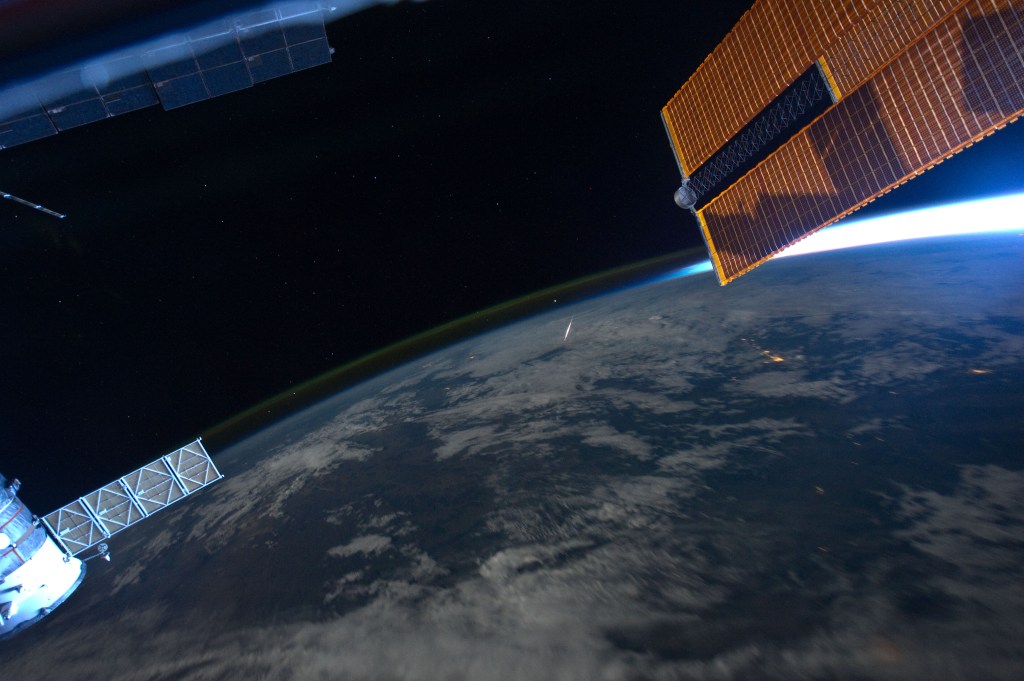
主持人:我对你身后墙上的那张照片很好奇。那是国际空间站(ISS)飞越地球(Earth),可以看到地球的边缘,后面还有一个太阳能电池阵列。这张照片对你有什么意义吗?
Host: I’m curious about the image I’m seeing on the wall behind you. It’s the ISS flying over Earth, the limb of the Earth, and there’s a solar array behind it. Does the image mean something to you?
Koehler:是的,这张我一直放在办公室里并时常反思的照片,我认为它对于今天的谈话非常贴切,对吧?
Koehler: Yeah, so this image that I actually keep in my office and I reflect on it, I think it’s really appropriate, right, for the conversation today.
这是一张地球边缘的照片,可以看到流星体(meteoroid)进入大气层并燃烧殆尽。
This is a picture of the Earth limb with meteoroids entering, kind of burning up in the atmosphere.
主持人:真好。
Host: Lovely.
Koehler:这张照片是在空间站(space station)上拍摄的。所以,当我离开那个组织时,我的团队成员都在这张非常精美的照片上签了名,它代表了我工作多年的环境。所以,它对我来说非常有意义。我喜欢把它放在我身边。
Koehler: And the image was taken from Space Station. So, my team, when I left that organization, they all signed this really nice picture that represents the environment that I worked on for years. And so, it’s really meaningful for me. And I like having it right by me.
主持人:我们会在播客网站 nasa.gov/podcasts 上分享这张照片。
Host: We’ll share the image on the podcast website at nasa.gov/podcasts.
你对未来的工程师有什么建议?
What advice do you have for upcoming engineers?
Koehler:我们谈了很多关于知识共享的话题,以及经验和教训如何在项目之间进行转移。所以,我给新工程师的建议是:保持好奇心。多问问题。
Koehler: We talked a lot about knowledge sharing, how experience and lessons can be transferred between programs. So, my advice would for new engineers would be: Be curious. Ask a lot of questions.
这会鼓励指导,而这种指导会建立关系。在你的职业生涯中,你将需要依赖这些关系。
That encourages mentoring, and that mentoring builds relationships. And you’re going to need to rely on those relationships over your career.
它们将在你整个职业生涯中为你提供支持。愿意寻求帮助或指导。乐于从事各种不同的任务。从经验中总能学到东西。
They’re going to support you throughout the entire length of your career. Be willing to ask for help or guidance. Be open to working on a lot of different tasks. There is always something to be learned from an experience.
你甚至可能学到什么不该做,或者什么行不通。但所有这些积极或消极的经验都是宝贵的教训。你接触的工作种类越多,你对这个组织就越有价值。
You might even learn what not to do or what’s not going to work. But all of those experiences, positive and negative, are valuable lessons. And the more exposure you have to a variety of work, the more useful you are to this organization.
主持人:我喜欢这个观点,而且这似乎也适用于日常生活,即工程之外的生活。
Host: I love that, and that seems to apply even to daily life, life outside of engineering.
Koehler:[笑] 我希望如此。这也是我试图教给我孩子们的道理。
Koehler: [Laughter] I hope so. It’s what I try to teach my kids.
主持人:Heather,你的“巨大飞跃”是什么?
Host: Heather, what was your giant leap?
Koehler:我的巨大飞跃。最近我在职业生涯中经常思考这个问题。我的巨大飞跃是意识到,你与人建立的关系对你的成功贡献最大,可能比任何技术成就都重要。
Koehler: My giant leap. I’ve been thinking about this a lot in my career lately. My giant leap has been realizing that it’s the relationships you develop with people that contribute the most to your success, probably more so than any technical achievement.
当我明白不知道一切也没关系,问问题和寻求理解也没关系,允许自己接受指导也没关系时,机会就出现了,我也获得了最好的经验。你知道,我继承了所有那些抽出时间给我的资深工程师的知识。
When I learned that it was okay to not know everything, that it’s okay to ask questions and ask for understanding, allow myself to be mentored, that’s when opportunities presented themselves, and that’s when I gained the best experiences. You know, I inherited the knowledge of all those senior engineers that gave me some of their time.
所以,我能回馈给他们的最好的礼物就是传承我所学到的东西。我真的觉得我的遗产,以及所有那些非常有才华的领导者、工程师、主管、团队负责人、项目经理的遗产——这些遗产并不是你个人的技术成就。而是你所投入的生命,以及我们花在培养他人身上的时间。是被指导和被教导之人的成长。
So, the best gift that I can give back to them is to pass on what I’ve learned. And I really feel that my legacy and the legacy of all those other incredibly talented, you know, leaders, engineers, supervisors, team leads, project managers – the legacies aren’t your individual technical achievements. It’s the lives you invest in and the time we give to developing others. It’s the growth of the people that were mentored and taught.
主持人:很好的建议。那么,谢谢你,Heather。感谢你今天加入我们并分享你所有的知识和见解。
Host: Great advice. Well, thank you, Heather. Thanks for joining us today and sharing all your knowledge and insights.
Koehler:嗯,谢谢你们邀请我。这真的很有趣。
Koehler: Well, thank you for having me. This is really fun.
主持人:以上就是本期《小步,巨大飞跃》(Small Steps, Giant Leaps)的全部内容。如需文字记录和收听所有其他剧集,请访问 nasa.gov/podcasts。在那里,也请查看我们的其他播客,如《休斯顿,我们有播客》(Houston, We Have a Podcast)、《好奇宇宙》(Curious Universe)和《NASA好奇宇宙》(Universo curioso de la NASA)。一如既往,感谢收听。
Host: That’s it for this episode of Small Steps, Giant Leaps. For a transcript and for all other episodes, visit nasa.gov/podcasts. And while you’re there, check out our other podcasts like Houston, We Have a Podcast, Curious Universe, and Universo curioso de la NASA. As always, thanks for listening.
结尾:三。二。一。这是美国[国家]航天局(NASA)的官方播客。
Outro: Three. Two. One. This is an official NASA podcast.
来源与许可
原文来自公共领域来源;译文由机器生成,请以原文为准。 原始页面