查看原文全部插图(3 幅)
内容提要
NASA的“蜻蜓号”旋翼机已完成关键的电气线束安装,为其在土卫六(Titan)的探测任务奠定基础。同时,国际天文学联合会(IAU)正式将该探测器在土卫六的着陆区命名为Ahmakiq Undae。该任务旨在探索土卫六的有机沙丘及陨击坑(impact crater)区域,以研究生命起源相关的化学环境。
原文全文译文
美国国家航天局(NASA)的“蜻蜓号”完成布线,土卫六(Titan)着陆区命名
NASA’s Dragonfly Gets Wired Up While Titan Landing Area Is Named
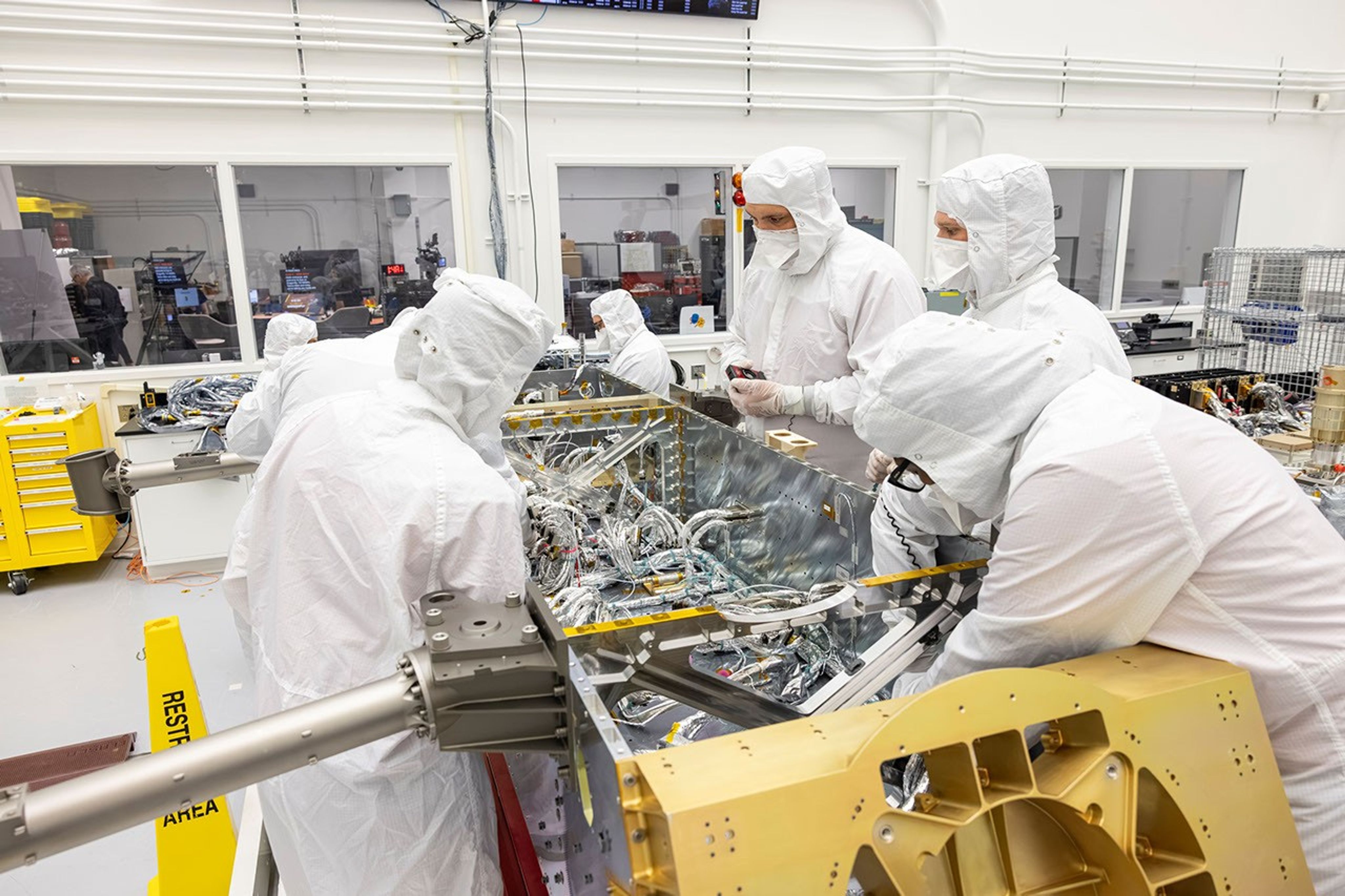
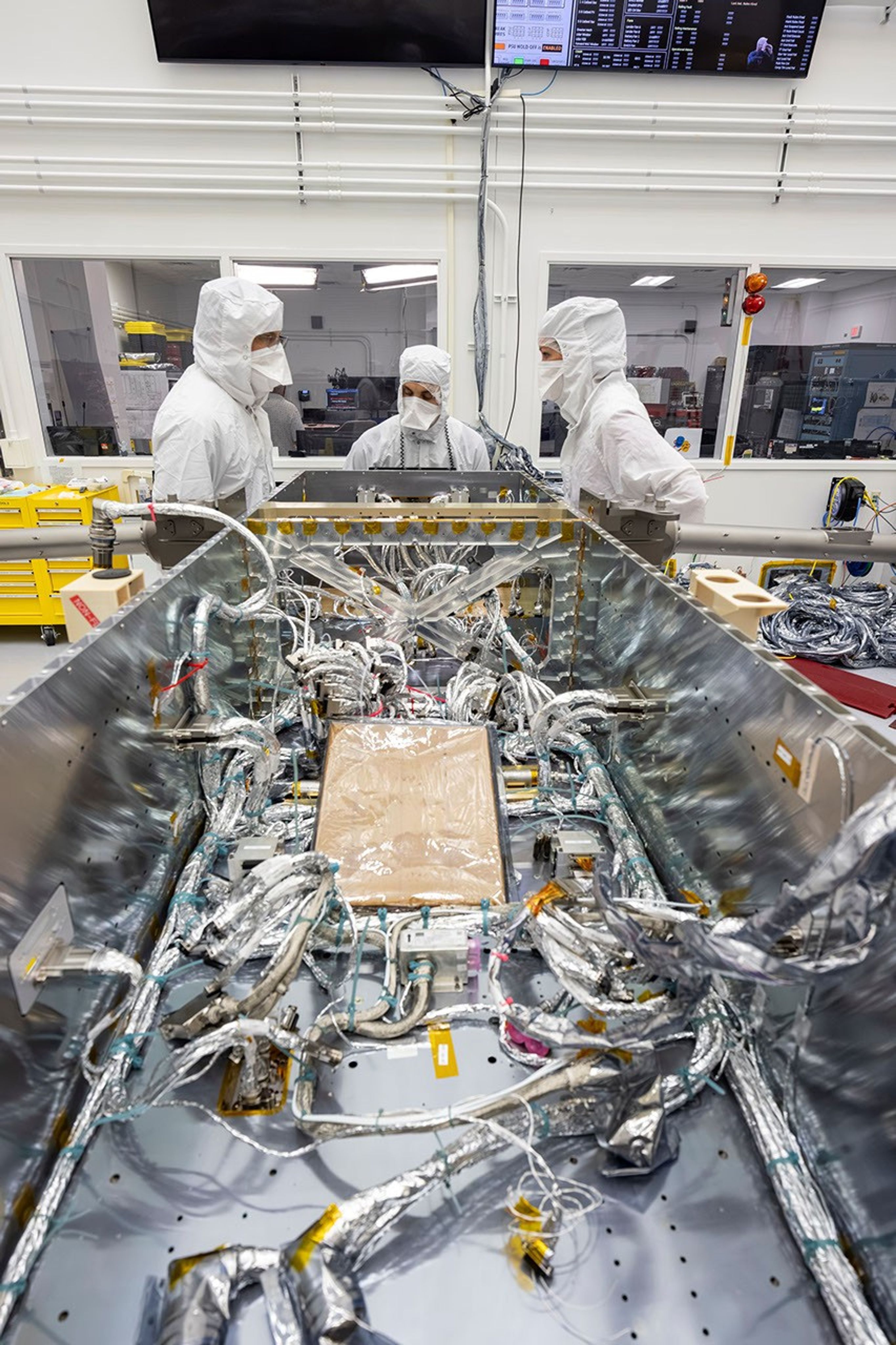
透过马里兰州劳雷尔市约翰·霍普金斯应用物理实验室(APL)洁净室的窗户向内看,你可能会首先注意到NASA“蜻蜓号”(Dragonfly)的一个特征:数十根银色电缆在正在建造的、即将前往土卫六的旋翼机结构中蜿蜒穿梭。
Peeking into the clean room at the Johns Hopkins Applied Physics Laboratory (APL) in Laurel, Maryland, it might be one of the first things you notice about NASA’s Dragonfly: the dozens of silver cables snaking around and through the structure of the in-progress, Titan-bound rotorcraft.
这些线束、电缆和连接器共同构成了航天器的电气线束。这是“蜻蜓号”的神经系统,旨在确保着陆器的计算机、执行器、传感器、科学仪器和电池之间能够安全地传输电力与数据。
Collectively, these bundles of wires, cables, and connectors make up the spacecraft’s electrical harness. It’s Dragonfly’s nervous system, fitted to securely transmit power and data between the lander’s computers, actuators, sensors, scientific instruments, and battery.
“线束本身并不执行任何功能,但它是其他所有部件正常运作的必要条件,”APL的“蜻蜓号”着陆器线束负责人Jackie Perry说道。APL负责为NASA设计、建造并运行该旋翼机。“它是关键的硬件,存在的唯一目的就是服务于着陆器的其他部分。没有它,我们什么也做不了。”
“The harness doesn’t do anything by itself, but it is necessary for everything else to function,” said Jackie Perry, Dragonfly lander harness lead at APL, which is responsible for designing, building, and operating the rotorcraft for NASA. “It’s critical hardware that exists only to serve the rest of the lander. We can’t do anything without it.”
Perry带领的小型工程师和技术人员团队在7月达成了一个重要里程碑,他们将线束安装到了飞行机身上。“一旦飞行结构交付,且远程接口单元和温度传感器安装完毕,我们就能开始铺设线束了,”Perry说。
Perry’s small team of engineers and technicians reached a major milestone in July when it installed the harness on the flight fuselage. “Once the flight structure was delivered and the remote interface units and temperature sensors were installed, we were able to start laying the harness,” Perry said.
线束通常是首批交付给航天器的组件之一。“蜻蜓号”在2022年通过了关键设计评审;制造工作于2024年末开始,并于约一年后完成。电线采用镀银铜线,包裹在耐热、耐用的聚合物涂层中,并缠绕铝箔,随后连接到塑料和金属连接器上。“蜻蜓号”计划于2028年夏季发射,并于2034年末抵达土星(Saturn)的卫星土卫六。
The wiring harness is typically one of the first components delivered to a spacecraft. Dragonfly passed its critical design review in 2022; fabrication began in late 2024 and finished about a year later. The wire is silver-coated copper, insulated in a heat-resistant, durable polymer coating and wrapped with aluminum, which is then attached to plastic and metal connectors. Dragonfly is scheduled to launch in summer 2028 and reach Saturn’s moon Titan in late 2034
“蜻蜓号”在土卫六上的运行环境带来了一些独特的挑战。由于该旋翼机采用了保温瓶式设计——通过隔热层保留核动力源产生的热量,以在土卫六极寒条件下保持温暖——线束的设计必须能够穿过着陆器外部厚厚的泡沫隔热层,并适应内部暖空气的循环。Perry表示,旋翼机的高功率需求需要使用4号和8号规格的电线,同时线束必须具备足够的柔韧性,以便穿过包含飞行系统、仪器箱以及重达近300磅电池的紧凑内部空间。
Dragonfly’s operating environment on Titan poses some unique challenges. Because of the rotorcraft’s thermos bottle design – insulated to retain heat from its nuclear power source and stay warm in Titan’s extremely cold conditions – the harness had to be designed to route under a layer of thick foam insulation on the outside of the lander and accommodate the circulation of that warm air through the inside. The rotorcraft’s high power demands require both 4- and 8-gauge wire, Perry said, yet the harness has to be flexible enough to weave through a packed interior that includes the flight system and instrument boxes, as well as a nearly 300-pound battery.
随着科学仪器和其他飞行组件陆续交付至APL进行集成和额外测试,团队将继续把线束连接到这些设备上。
The team will continue connecting the harness to science instruments and other flight components as they’re delivered to APL for integration and additional testing.
土卫六目标区域获得命名
Titan target area lands name
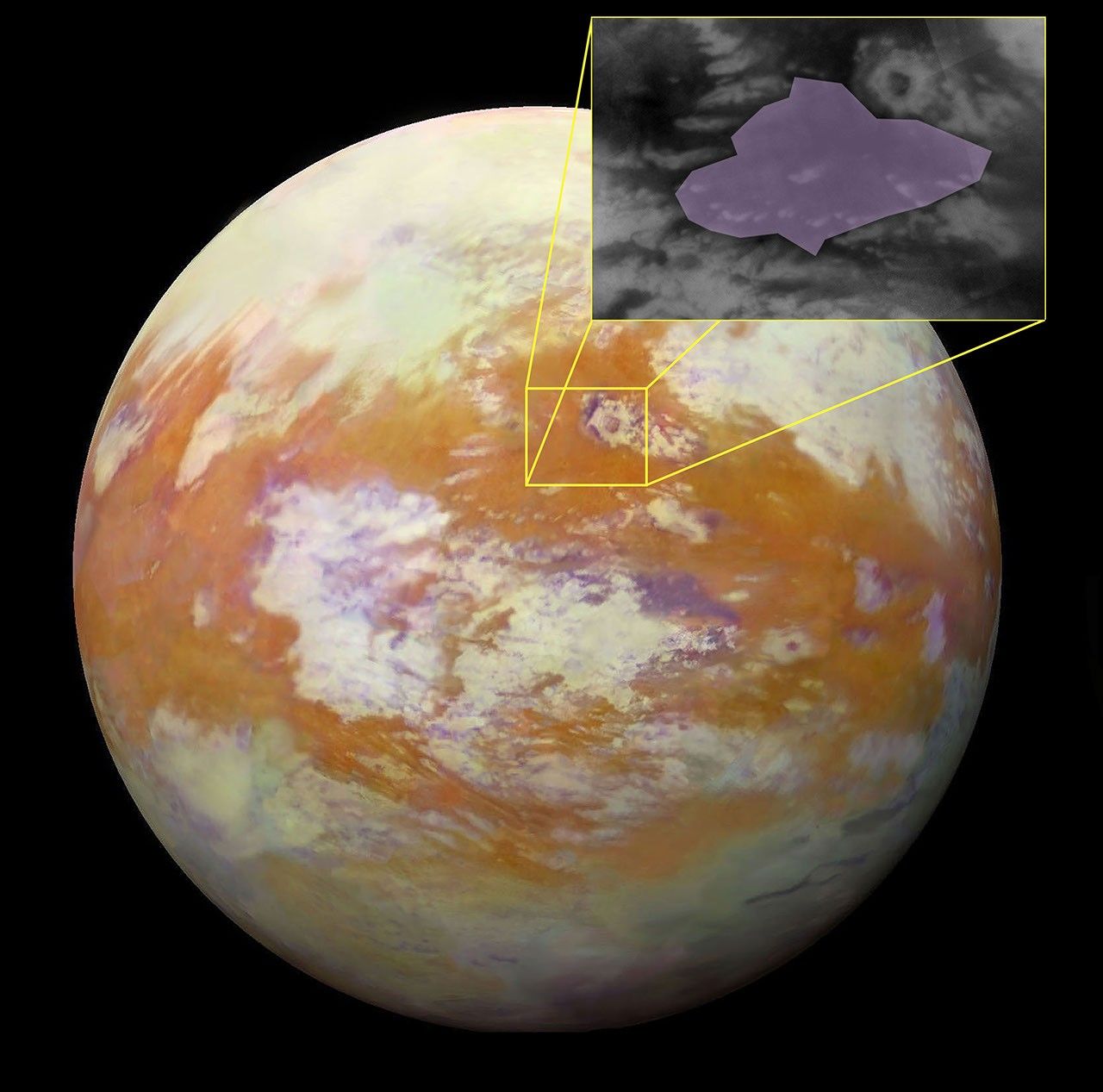
负责正式命名太空天体的全球机构国际天文学联合会(International Astronomical Union,IAU)已经批准了“蜻蜓号”在土卫六着陆的大型沙丘区的名称:Ahmakiq Undae。该区域由Selk Crater(巨爵座)南部的沙丘和沙丘间区域组成,延伸至一系列丘陵或山脉的边缘。
The International Astronomical Union (IAU), the global body responsible for officially designating objects in space, has approved a name for the large dune field where Dragonfly will land on Titan: Ahmakiq Undae. The region consists of dunes and interdune areas to the south of Selk Crater, extending to the edge of a range of hills or mountains.
在玛雅传统中,人们会祈求Ahmakiq(发音为“ah-mahk-eek”)神灵阻止强风破坏农作物。该名称字面意思是“锁住风的人”,符合IAU以风神命名沙丘区(拉丁语为undae)的惯例。“蜻蜓号”团队从IAU建议的名单中选择了Ahmakiq。
In the Mayan tradition, people appealed to the spirit Ahmakiq (pronounced “ah-mahk-eek”) to stop strong winds from damaging their crops. The name literally translates to the “one who locks up the wind,” and aligns with the IAU convention of naming dune fields – or undae, in Latin after gods and goddesses of wind. The Dragonfly team chose Ahmakiq from a list of IAU suggestions.
一旦“蜻蜓号”抵达土卫六,该旋翼机将执行为期3.3年的主要任务,探索从有机沙丘到与陨击坑(impact crater)——Selk Crater——相关的沉积物等多种环境,这些地方曾同时存在液态水和生命所需的复杂有机物质。科学分析表明,形成Selk的撞击融化了冰质基岩,可能形成了一个巨大的临时水池,在隔热冰层的覆盖下,它可能像地球(Earth)上的冬季池塘一样保持液态长达数百年至数千年。
Once Dragonfly reaches Titan, the rotorcraft will conduct a 3.3 year primary mission, exploring diverse environments from organic dunes to deposits associated with an impact crater – Selk Crater – where liquid water and complex organic materials key to life once existed together. Scientific analysis indicates that the impact that formed Selk melted the icy bedrock, potentially creating a large temporary pool that could have remained liquid for hundreds to thousands of years under an insulating ice layer, like winter ponds on Earth.
来源与许可
原文来自公共领域来源;译文由机器生成,请以原文为准。 原作者:Erin Morton。 原始页面