查看原文全部插图(10 幅)


内容提要
NASA的探空火箭(sounding rocket)通过部署多个探测器,首次实现了对高层大气中干扰射频的“偶发E层”的多点同步观测。研究发现这些云层并非平坦的结构,而是受到大气湍流影响,呈现出复杂的波图案。
原文全文译文
在地球(Earth)高空,一层薄薄的金属雾霭在太空边缘漂移。这些被称为偶发E层(sporadic E layers)的高空“云层”由流星(meteor)燃烧后的汽化尘埃形成,因其出现和消散的不可预测性而得名。现在,一枚美国国家航天局(NASA)探空火箭(sounding rocket)——一种亚轨道研究火箭——在穿过其中一层时同时释放了五个探测器,首次揭示了该层意想不到的复杂性。
High above Earth, thin veils of metallic haze drift through the edge of space. Known as sporadic E layers, these high-altitude “clouds” form from the vaporized dust of burnt-up meteors, earning their name from the unpredictable way they emerge and then dissipate. Now, new results from a NASA sounding rocket — a suborbital research rocket — that flew five detectors through one of these layers simultaneously reveal unexpected complexity in the layer for the first time.
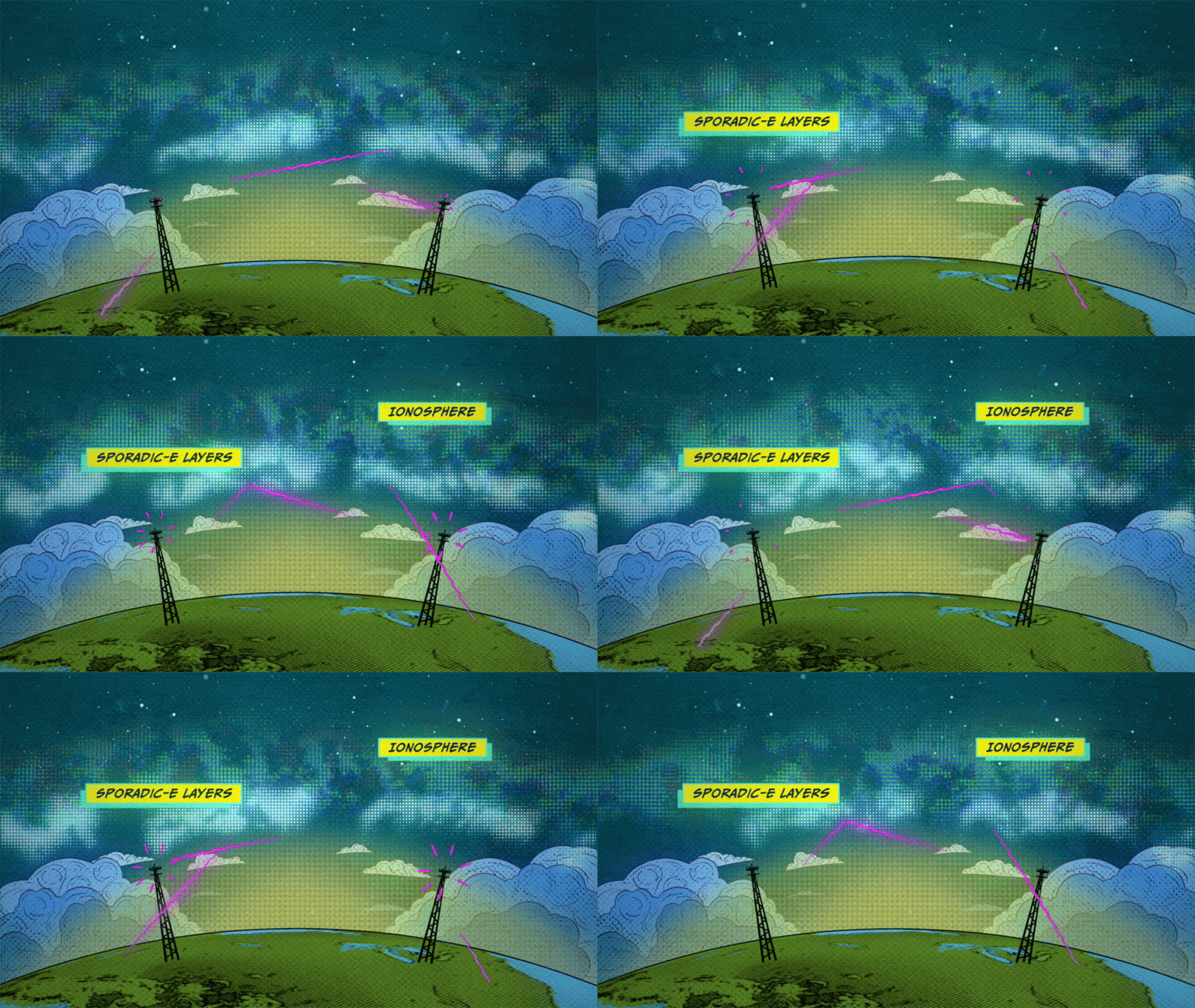
尽管肉眼不可见,但偶发E层会干扰我们依赖的长距离通信射频(radio frequency)。当偶发E层存在时,它会将这些射频信号向意想不到的方向反射,导致相关技术暂时失效。
Though invisible to the eye, sporadic E layers make their presence known to the radio signals we rely on for long-distance communication. When present, sporadic E can send those signals ping-ponging off in unexpected directions, rendering the technology temporarily unreliable.
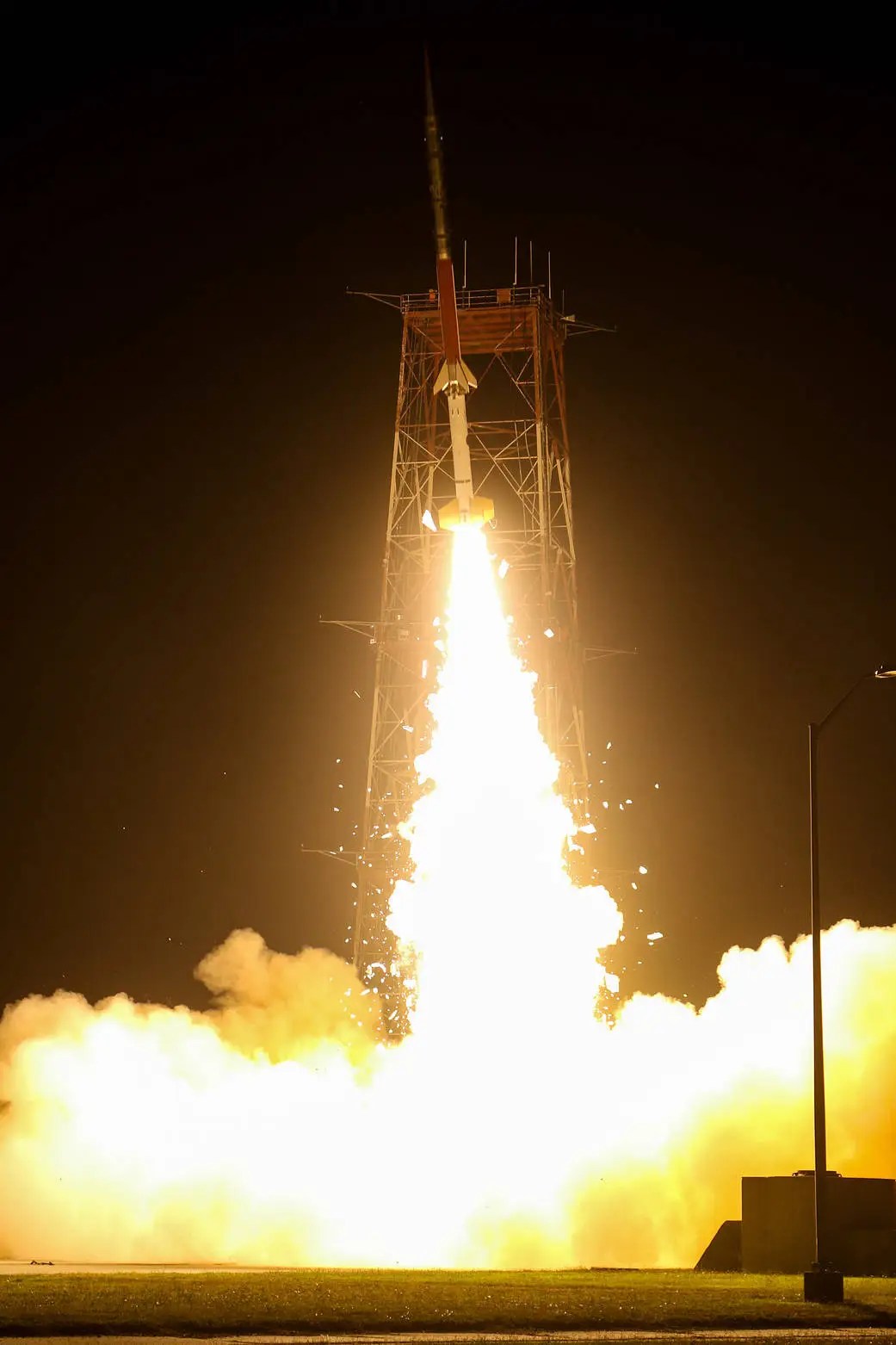
科学家们长期以来一直寻求对这些干扰射频的云层有更全面的了解,但直到最近,他们每次只能对其进行单一狭窄切片的采样。这枚名为“偶发E电动力学演示”(Sporadic E Electrodynamics Demonstration,简称 SpEED Demon)的火箭于2022年8月24日从位于贞女星(Virginia)的NASA瓦勒普斯飞行设施发射,并展示了对偶发E层内部首次同步的多点观测。由安柏瑞德航空航天大学领导的团队在《地球物理学研究杂志》(Journal of Geophysical Research: Space Physics)上发表的一项新研究中描述了其结果。
Scientists have long sought a fuller understanding of these radio-disrupting clouds, but until recently, they had only sampled them one narrow slice at a time. The rocket, called the sporadic E Electrodynamics Demonstration, or SpEED Demon for short, launched from NASA’s Wallops Flight Facility in Virginia on Aug. 24, 2022, and demonstrated the first concurrent, multi-point view inside sporadic E. Its results, from a team led by Embry-Riddle Aeronautical University, are described in a new study in the Journal of Geophysical Research: Space Physics.
偶发E层形成于电离层,这是高层大气(upper atmosphere)中约40英里(60公里)以上的一个区域,中性气体(neutral gas)开始转化为等离子体或电离气体。那里的一些粒子来自流星,流星燃烧后留下了铁、镁和其他金属的痕迹。这些金属偶尔会聚集成致密的云状薄片——即偶发E层——并反射射电波(radio wave)。
Sporadic E layers form in the ionosphere, a region of the upper atmosphere beginning around 40 miles (60 kilometers) up where the neutral gases begin to transform into plasma, or ionized gas. Some of the particles there come from meteors, which burn up and leave behind traces of iron, magnesium, and other metals. These metals occasionally clump into dense, cloud-like sheets — the sporadic E layers — that reflect radio waves.
“从某种意义上说,偶发E层是天空中巨大的射频波镜子,”该任务首席研究员、佛罗里达州代托纳比奇安柏瑞德航空航天大学工程物理学教授 Aroh Barjatya 说。
“Sporadic E layers are, in one sense, giant mirrors of radio frequency waves in the sky,” said Aroh Barjatya, the mission’s principal investigator and a professor of engineering physics at Embry-Riddle in Daytona Beach, Florida.
当偶发E层形成时,本应射向太空的信号可能会反弹回地面。空中交通管制员和海上无线电用户可能会接收到远处的传输,就好像它们在附近一样,而扫描地平线以外的雷达可能会记录到所谓的“鬼影”或虚假目标。这些影响也波及到日常技术。
When a sporadic E layer forms, signals meant to travel out to space can ricochet back toward the ground. Air traffic controllers and marine radio users may pick up distant transmissions as though they were nearby, and radars scanning beyond the horizon can register so-called “ghosts,” or false targets. The effects reach everyday technology, too.
“例如,手机GPS中最大的误差来源是电离层中的等离子体,而偶发E层会加剧这种不确定性,”该研究的主要作者 Henry Valentine 说,他在安柏瑞德航空航天大学完成了这项工作,现在是美国海军科研实验室(Naval Research Laboratory)的研究员。
“The biggest source of error in the GPS in your phone, for example, is from the plasma in the ionosphere, and sporadic E layers can contribute to this uncertainty,” said Henry Valentine, the study’s lead author, who conducted the work at Embry-Riddle and is now a researcher at the U.S. Naval Research Laboratory.
由于偶发E层悬浮在约60英里(100公里)的高空——对于气象气球来说太高,对于卫星(satellite)来说太低——且形成和消散具有不可预测性,它们长期以来一直是探空火箭的研究领域,因为探空火箭可以在短时间内发射以捕捉其活动。但单枚火箭只能沿单条路径飞行,仅能沿一条线进行测量。Barjatya 将这种情况比作通过墙上的裂缝观察场景。人们只能观察到那条狭窄缝隙中发生的事情,而错过了视野左侧或右侧正在发生的关键背景。
Because sporadic E layers hover around 60 miles (100 kilometers) up—too high for weather balloons, too low for satellites — and form and dissipate unpredictably, they have long been the province of sounding rockets, which can be launched on short notice to catch one in the act. But a single rocket flies a single path, taking measurements only along a line. Barjatya likens the situation to viewing a scene through a crack in a wall. One can only observe what is happening along that narrow slit, missing out on the crucial context of whatever is occurring to the left or right of one’s view.
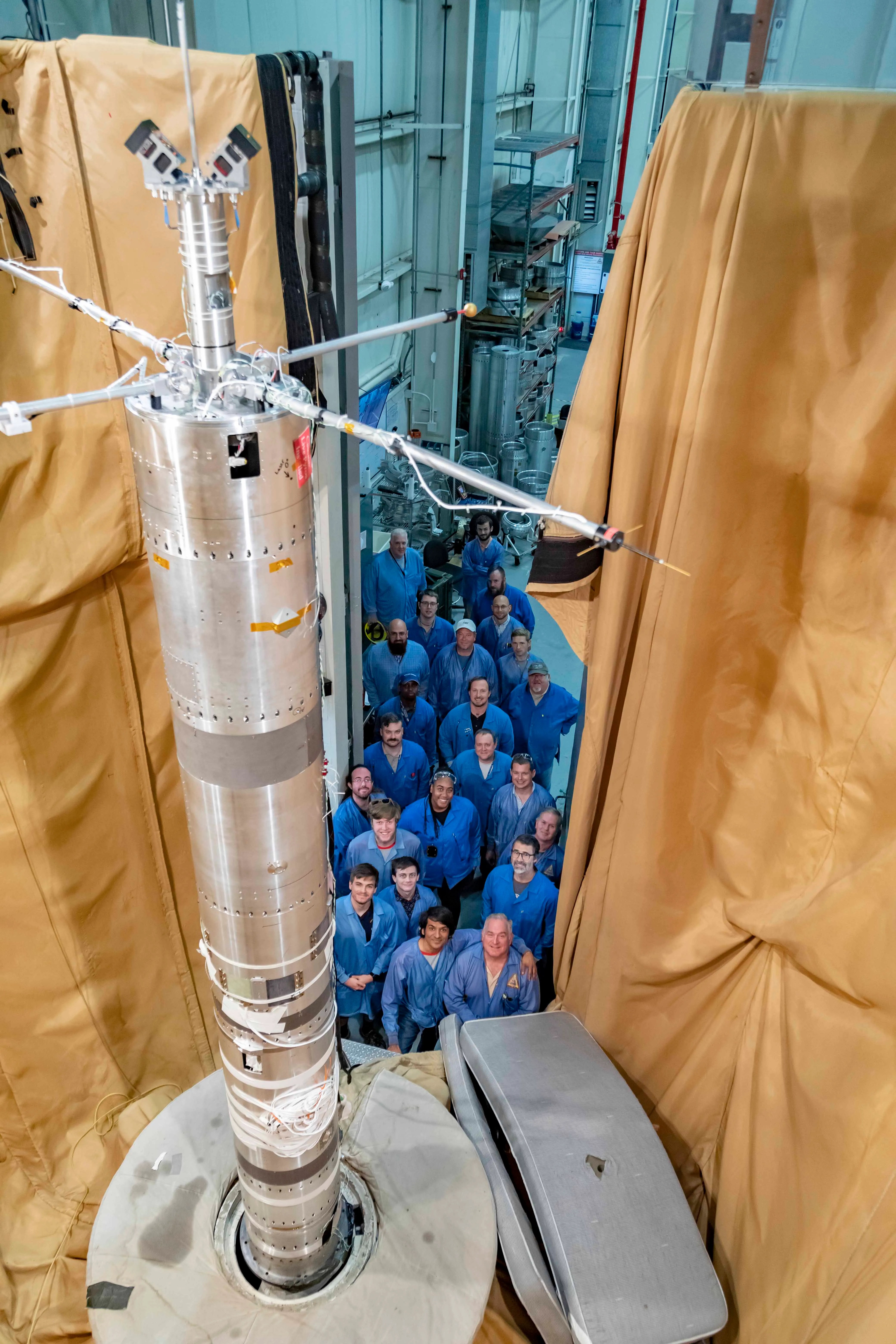
SpEED Demon 任务改变了这一点。该任务首次在偶发E层内部署了可弹出的探测器,称为投掷式探空仪(dropsondes)。进入该层后,火箭释放了四个投掷式探空仪,它们远离主载荷并相互分离,每个探测器沿各自的轨道测量等离子体,并将测量数据传回地面站(ground station)。连同主载荷,这些探测器在同一时刻总共在五个位置对该层进行了采样。
The SpEED Demon mission changed that. The mission was the first to deploy ejectable probes, called dropsondes, inside a sporadic E layer. Once inside, the rocket released four dropsondes that flew away from the main payload and from one another, each measuring the plasma along its own track and beaming its measurements back to ground stations. Together with the main payload, the probes sampled the layer in a total of five places at the same moment.
“现在有了多个传感器,我们已经把那条裂缝变成了一排栅栏,”Barjatya 说。
“Now with multiple sensors, we’ve turned that crack into a picket fence,” Barjatya said.
数据揭示了偶发E层内部令人惊讶的复杂性。SpEED Demon 穿过的这一层并非平滑、致密的金属粒子薄饼,而是显得不均匀且具有结构性,由穿过其周围中性大气的湍流风塑造而成。
The data revealed surprising complexity inside the sporadic E layer. Rather than a smooth, dense pancake of metallic particles, the layer that SpEED Demon flew through appeared uneven and structured, shaped by turbulent winds moving through the neutral air around it.
“很多时候你认为偶发E层是单一的尖锐密度层,但我们在观测中看到它正在与中性风和这些旋转的大气湍流(atmospheric turbulence)相互作用,”Valentine 说。“与其说它是一个平坦的薄饼,不如说它更像一个肉桂卷。”
“A lot of times you think of sporadic E as this single sharp density layer, but what we saw in ours is it’s interacting with neutral wind and these swirling atmospheric turbulences,” Valentine said. “Rather than a flat pancake, it’s closer to a cinnamon roll.”
在下降过程中,该层甚至分裂成两个明显的峰值。研究小组发现,这种形状与开尔文-亥姆霍兹卷云(Kelvin-Helmholtz billows)的调制一致,这是一种卷曲的、波状的不稳定性,会在普通云层中产生破碎的波图案(wave pattern)。由于飞行无法直接测量局部风场和电场,研究人员谨慎地称这种卷云解释为合理而非已证实。
On the way down, the layer even split into two distinct peaks. The team found that shape was consistent with modulation by Kelvin-Helmholtz billows, the curling, wave-like instability that produces breaking-wave patterns in ordinary clouds. Because the flight was unable to measure the local winds and electric fields directly, the researchers are careful to call the billow explanation plausible rather than confirmed.
SpEED Demon 任务被设计为一项技术演示——测试投掷式探空仪技术是否可行。事实证明它是可行的,团队很快再次应用了它。Barjatya 的团队使用类似的多元探测策略,将火箭发射到2023年10月环食(annular eclipse)和2024年4月日全食(total solar eclipse)的路径上,研究突如其来的黑暗如何扰动高层大气。2025年6月,他们将 SpEED Demon 最直接的后继者“偶发E电动力学”(SEED)送入了马绍尔群岛夸贾林环礁上空的偶发E层,研究了低纬度地区的这些层。来自这些任务的论文正在准备中。
The SpEED Demon mission was designed as a technology demonstration — a test of whether the dropsonde technique would work at all. It did, and the team was quick to apply it again. Barjatya’s team used a similar multi-probe strategy to launch rockets into the paths of the October 2023 annular eclipse and April 2024 total solar eclipse, studying how the sudden darkness disturbed the upper atmosphere. In June 2025, they flew SpEED Demon’s most direct descendant, Sporadic-E ElectroDynamics, or SEED, into sporadic E layers from Kwajalein Atoll in the Marshall Islands, studying them at lower latitudes. Papers from those missions are in preparation.
经过多年的研究,偶发E层不再像过去那样不可预测。“它们具有季节性,在当地夏季出现频率最高,”Barjatya 说。
After years of study, sporadic E layers are no longer as unpredictable as they once were. “They have a seasonality to them, with peak occurrence happening in the local summer,” Barjatya said.
关于它们如何以及何时形成的问题正变得越来越精细。新的可部署多点火箭传感器方法,连同地面测量,很可能会使这一图景更加完整。“整个科学界现在正处于完全理解这些天空中巨大射频镜子的最后阶段,”Barjatya 说。
Questions about how and when they form are increasingly fine-grained. The new deployable multi-point rocket sensor methodology, along with ground-based measurements, is likely to bring the picture even closer to completion. “The science community as a whole is now in its final stretches of fully understanding these giant radio frequency mirrors in the sky,” Barjatya said.
作者:Miles Hatfield
By Miles Hatfield
美国国家航天局(NASA)戈达德航天中心(Goddard Space Flight Center),马里兰州格林贝尔特。
NASA’s Goddard Space Flight Center, Greenbelt, Md.
来源与许可
原文来自公共领域来源;译文由机器生成,请以原文为准。 原始页面