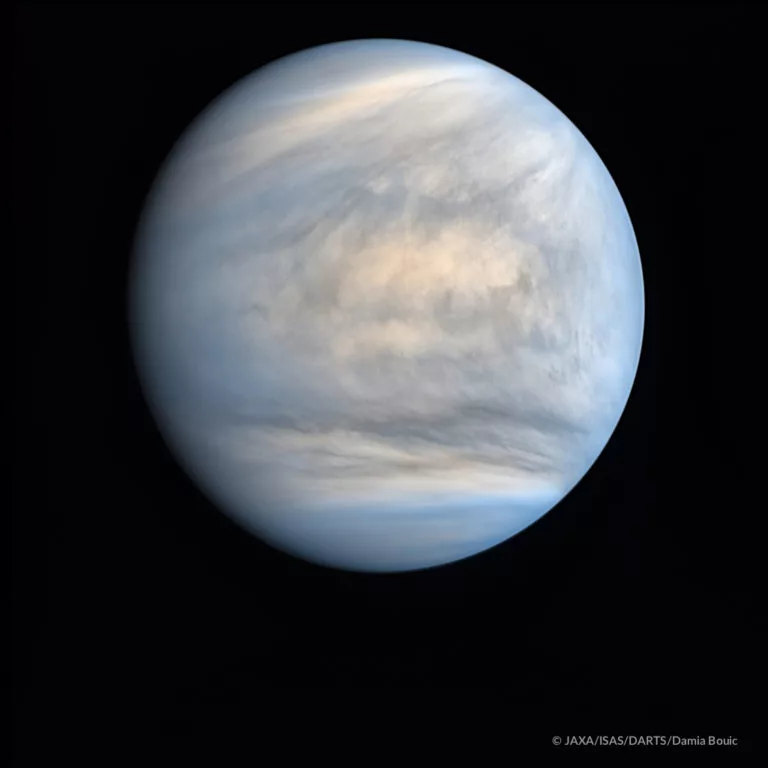
金星在紫外波段呈现出神秘的条纹状特征,其成因长期困扰着科学界。研究人员通过模拟金星云层样本的吸光特性,试图揭示这一被称为“紫外线吸收体”的物质本质。这项研究旨在通过量化云层暗度,为解开这一百年谜题提供新思路。
As any amateur astronomer can tell you, Venus is famous for its yellow coloration in visible light. But, ask a professional planetary scientist and they will tell you the strangest thing about Venus is how it appears in ultraviolet. In this spectrum, stark, high-contrast streaks are splattered across the planet’s cloud cover, and rotate on its four-day atmospheric rotation period. For over 100 years, scientists have wondered what could be causing those patterns, referring to an unknown “UV absorber”. A new paper, published in Astrobiology from Jan Spacek and an international team of researchers, hopes to answer that long-standing question by answering a simpler one - if you scooped Venus’ clouds into a test tube, how dark would they be?
来源与许可
本站仅展示标题与摘要,正文版权归原作者及原发布机构所有。 原作者:Andy Tomaswick (https://www.universetoday.com/authors/andy-tomaswick)。 原始页面