查看原文全部插图(11 幅)

内容提要
本月天象包括利用月球寻找天蝎座与人马座的恒星,观测达到亮度巅峰的金星,以及迎接秋分。此外,获月(harvest moon)将在月底与土星和海王星相伴出现。
原文全文译文
璀璨的金星与获月(harvest moon)
Brilliant Venus and a Harvest Moon
利用月球(Moon)寻找心宿二(Antares)和茶壶星群,观测璀璨的金星(Venus),迎接秋分,并观赏靠近土星(Saturn)和海王星(Neptune)的获月。
Use the Moon to find Antares and the Teapot, spot brilliant Venus, welcome the equinox, and see the Harvest Moon near Saturn and Neptune.
观星亮点
Skywatching Highlights
- 9月14日至20日:利用月球寻找心宿二和茶壶星群;在黑暗的夜空中或许能看到银河(Milky Way)中心
- Sept. 14-20: Use the Moon to find Antares and the Teapot; dark skies may reveal the Milky Way center
- 9月18日:金星在本次傍晚现身期间达到亮度巅峰
- Sept 18: Venus reaches peak brilliance for this evening appearance
- 9月22日:9月秋分;北半球(northern hemisphere)进入秋季,南半球(southern hemisphere)进入春季
- Sept. 22: September equinox; fall begins in the Northern Hemisphere and spring in the Southern Hemisphere
- 9月26日:获月在土星和海王星附近升起
- Sept. 26: Harvest Moon rises near Saturn and Neptune
文字记录
Transcript
月球加入了一场茶会……金星调高了亮度……季节正式更替……获月与一些行星邻居相遇。
The Moon joins a tea party… Venus cranks up the brightness… the seasons officially change… and the Harvest Moon meets up with some planetary neighbors.
这就是9月的“天象预告”。
That's What's Up for September.
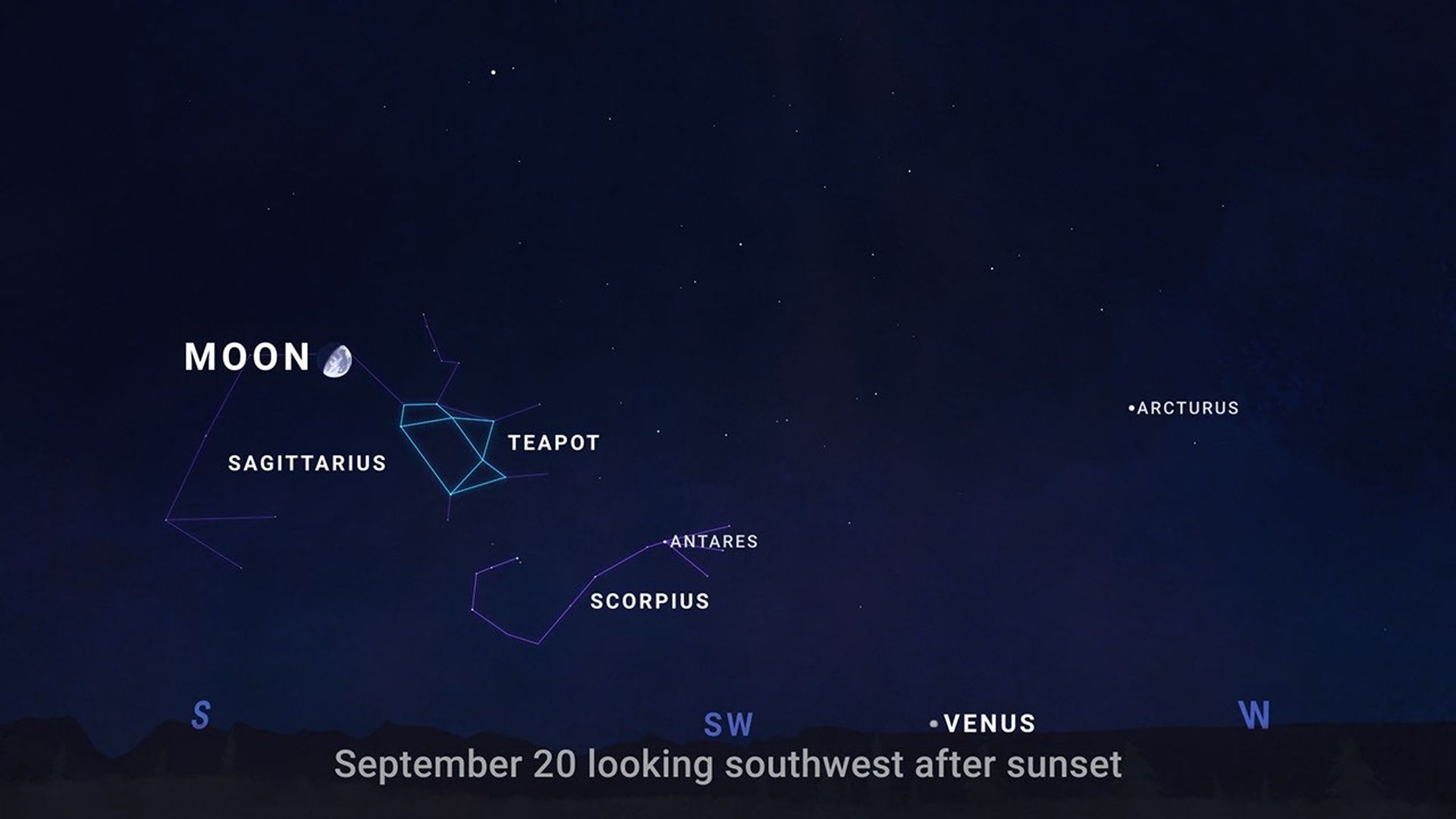
从9月14日到20日,让月球引导你寻找一些天体地标。日落后约一小时,向南看,在夜空中找到月球。
From September 14 through 20, let the Moon guide you to a few celestial landmarks. About an hour after sunset, look south to find the Moon in the evening sky.
夜复一夜,月球在背景星(background star)中移动位置,经过心宿二附近。
Night by night, the Moon shifts position against the background stars, passing near Antares.
这颗明亮的红色恒星标志着天蝎座(Scorpius)的心脏。
This bright, reddish star marks the heart of the constellation Scorpius.
接下来你会看到茶壶星群,这是一个位于邻近人马座(Sagittarius)的恒星群(group of stars),它看起来确实像一个茶壶,壶柄、壶盖和壶嘴一应俱全。
Next you'll see the Teapot, a group of stars in neighboring Sagittarius that really does resemble a teapot, complete with a handle, lid, and spout.
如果你身处特别黑暗的夜空下……你可能会看到朦胧的“蒸汽”从茶壶的壶嘴升起。
If you are under an especially dark sky… you may see hazy steam rising from the Teapot's spout.
顺着那股“蒸汽”最浓厚的部分看去,你正对着我们银河系(Milky Way galaxy)的中心。
Follow that steam to its thickest part, and you'll be looking toward the center of our Milky Way galaxy.
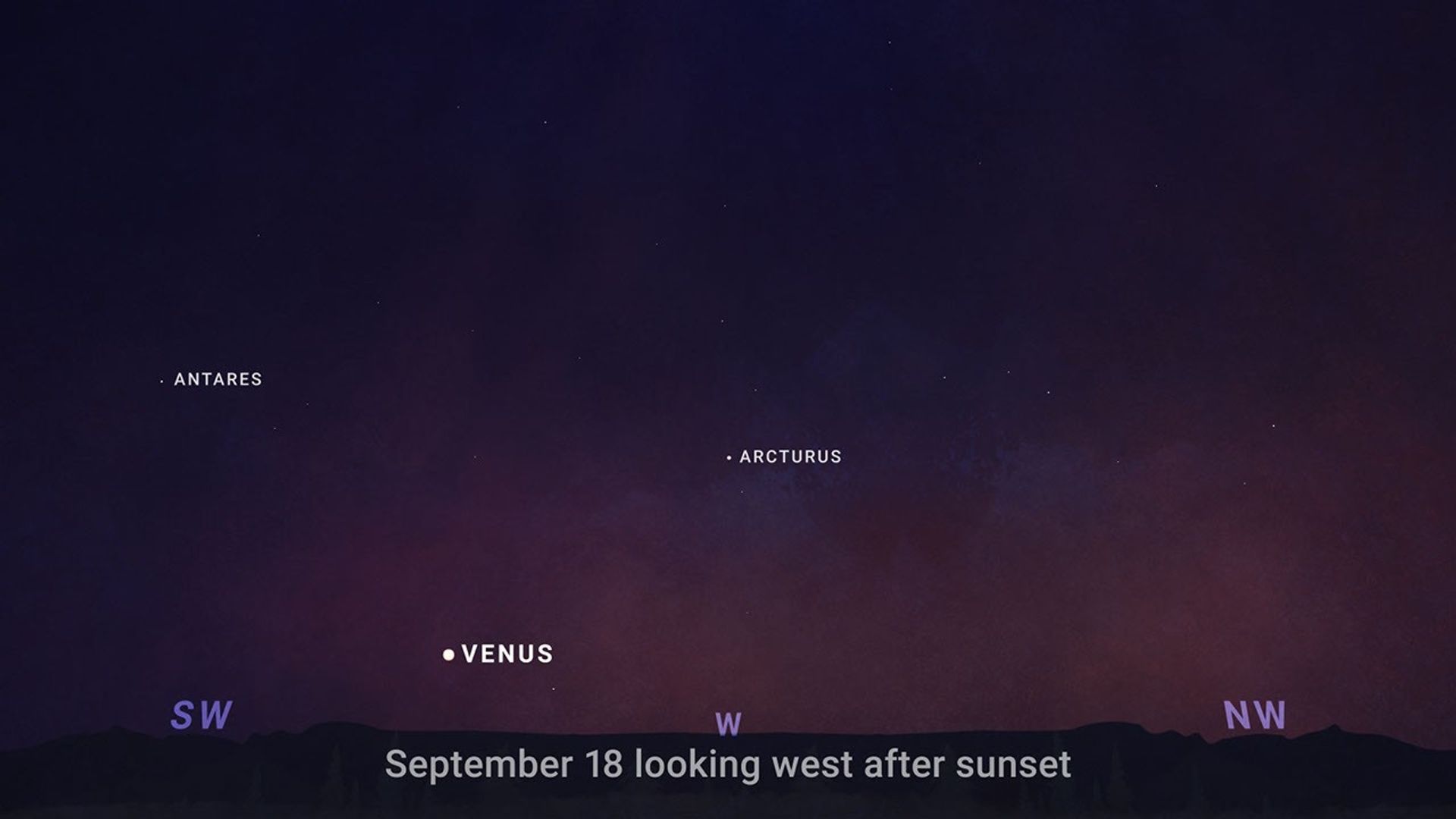
9月18日向西看,金星达到亮度巅峰,在本次傍晚现身期间最为明亮。
Look west on September 18 as Venus hits peak brilliance, shining at its brightest of this evening appearance..
你不需要费力寻找它。日落后不久,金星将作为西方地平线上方低处一个璀璨的光点脱颖而出,其光芒盖过周围所有的恒星(star)。视野开阔的地平线将让你有最好的机会在它落下前捕捉到它。
You won't have to search hard to find it. Shortly after sunset, Venus will stand out as a brilliant point of light low above the western horizon, outshining every star around it. A clear view of the horizon will give you the best chance to catch it before it sets.
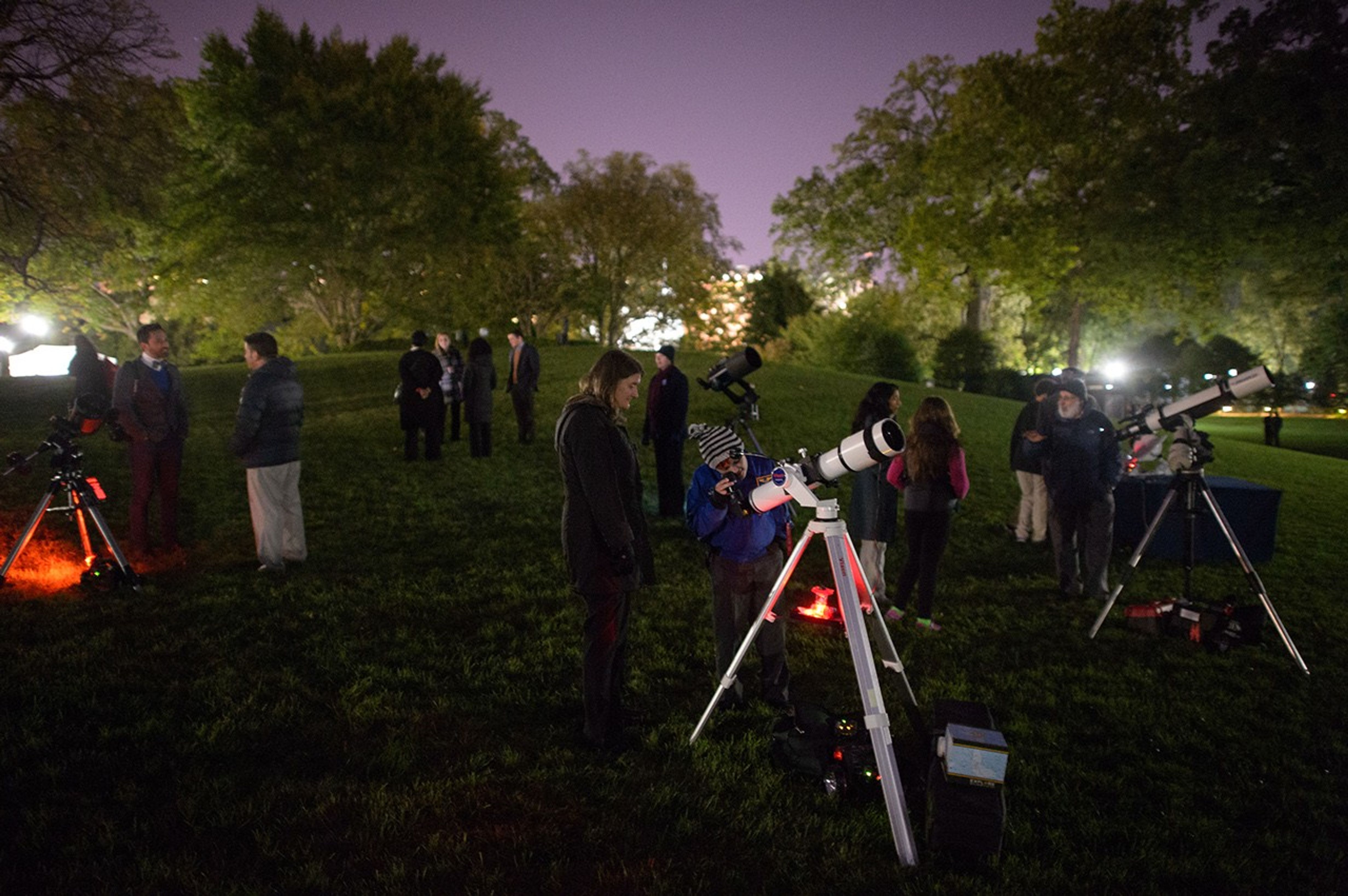
9月19日,庆祝国际观月夜!
On September 19, celebrate International Observe the Moon Night!
世界各地的人们都被邀请抬头仰望,与我们最近的天体邻居建立联系,同时了解更多关于月球科学、探索以及月球塑造世界各地文化的多种方式。请访问 go.nasa.gov/ObserveTheMoon 查找你附近的活动,或了解如何参与。
People around the world are invited to look up and connect with our nearest celestial neighbor while learning more about lunar science, exploration, and the many ways the Moon has shaped cultures around the world. Find an event near you — or learn how to participate from wherever you are — at go.nasa.gov/ObserveTheMoon.
然后在9月22日,北半球正式进入秋季……而南半球则开始春季。
Then on September 22, it's officially fall in the Northern Hemisphere …while spring begins in the Southern Hemisphere.
这就是9月秋分,此时太阳直射地球(Earth)赤道,世界各地的昼夜长度几乎相等。
That's the September equinox, when the Sun is directly above Earth's equator and day and night are close to equal in length around the world.
从那时起,北半球的白昼时间持续缩短,而南半球则持续变长。
From there, daylight keeps getting shorter in the Northern Hemisphere and longer in the Southern Hemisphere.
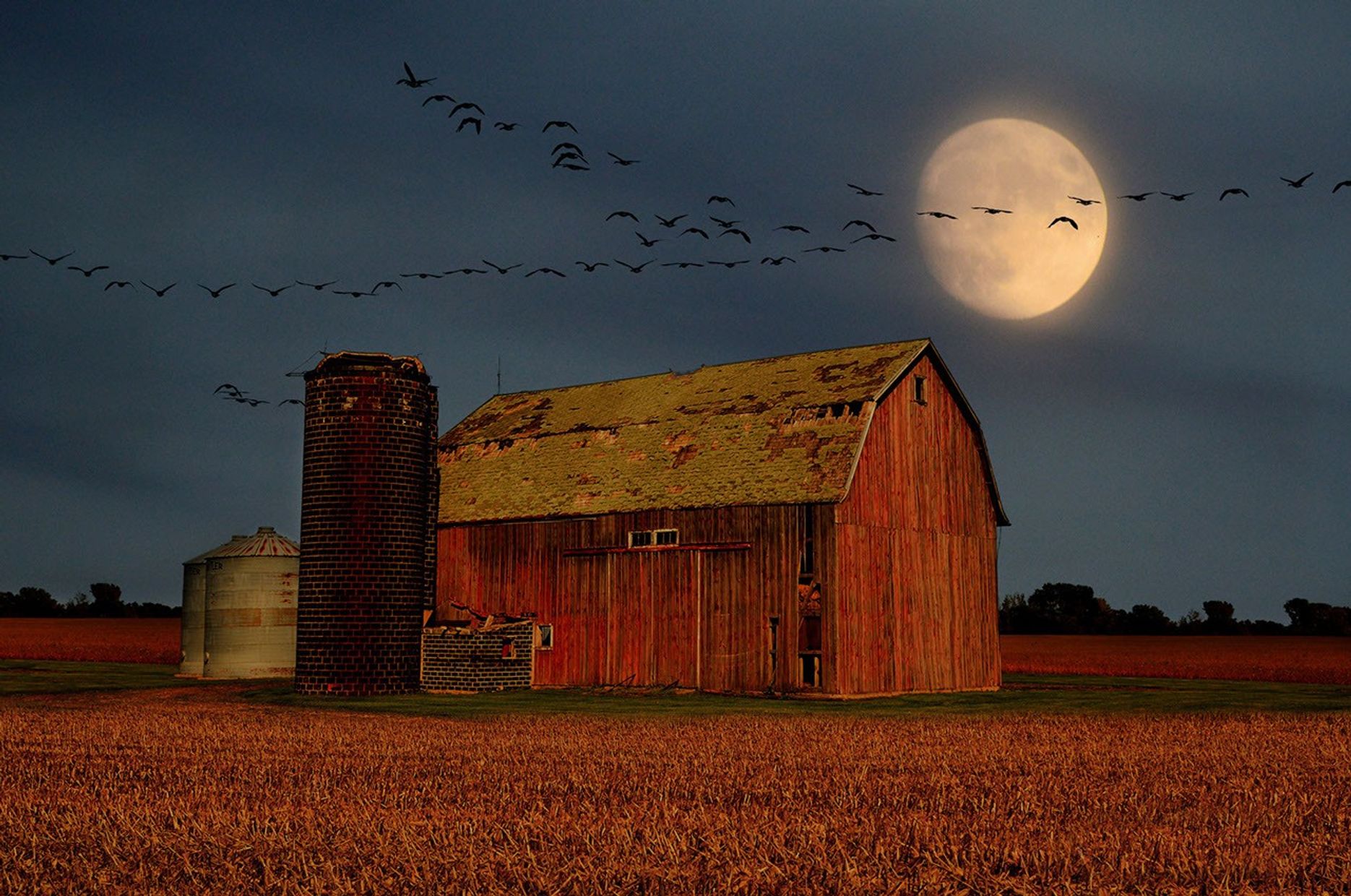
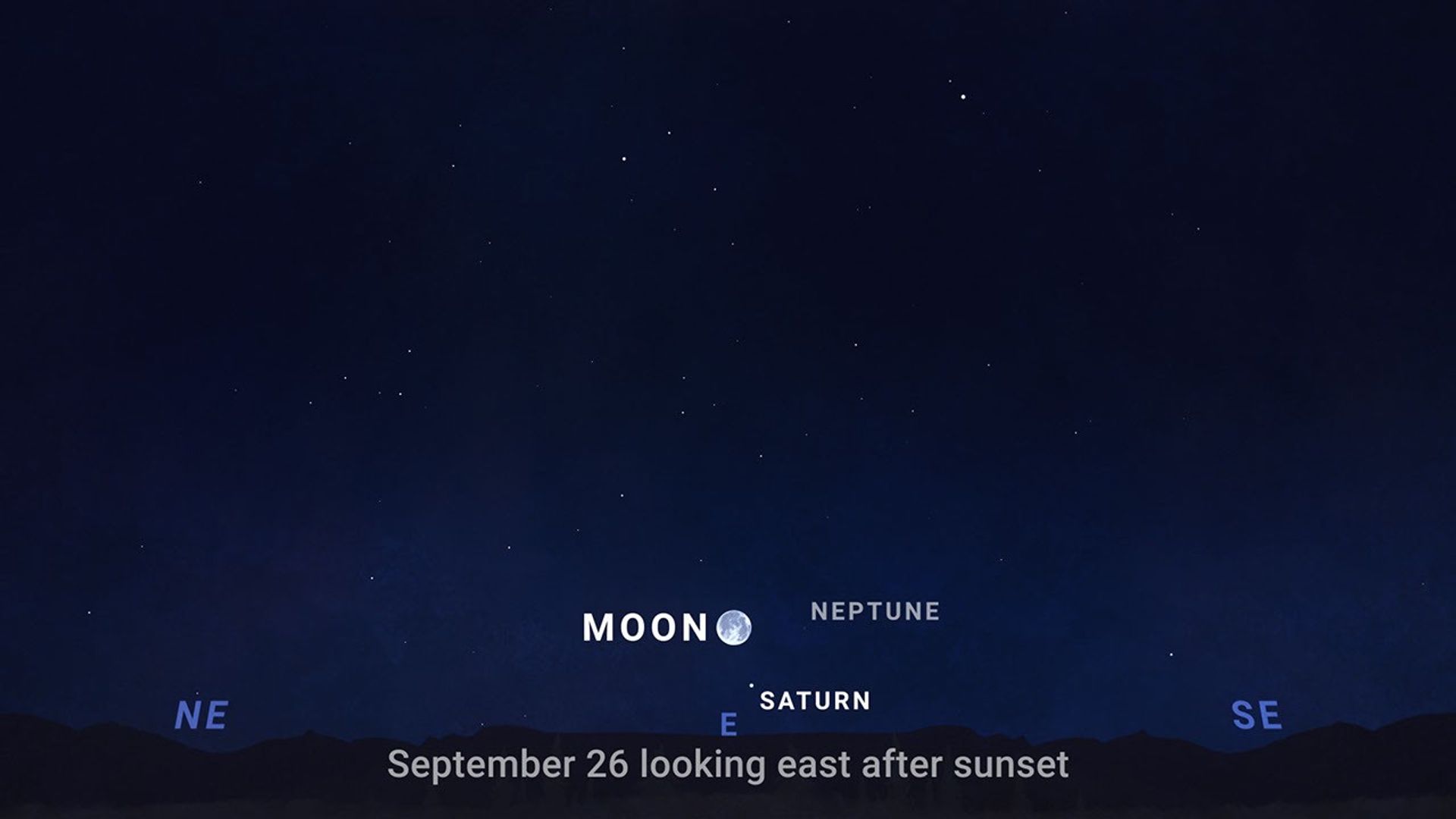
9月26日,获月成为主角,在日落后不久从东方升起。
And on September 26, the Harvest Moon takes center stage, rising in the east shortly after sunset.
它不会孤单。土星出现在附近,暗淡的海王星在天空中构成了一个宽大的三角形。
It won't be alone. Saturn appears nearby, with faint Neptune completing a wide triangle in the sky.
土星很容易辨认——你仅用肉眼就能看到它。海王星则更具挑战性。它的星等(magnitude)约为8,太暗了,肉眼无法看到……所以你需要双筒望远镜或望远镜(telescope)才能发现它。更黑暗的夜空和良好的观测条件有助于将其带入视野。
Saturn is the easy one-you can see it with just your eyes. Neptune is a bit more challenging. At around magnitude 8, it's too faint to see with the unaided eye …so you'll need binoculars or a telescope to spot it. Darker skies and good observing conditions can help bring it into view.
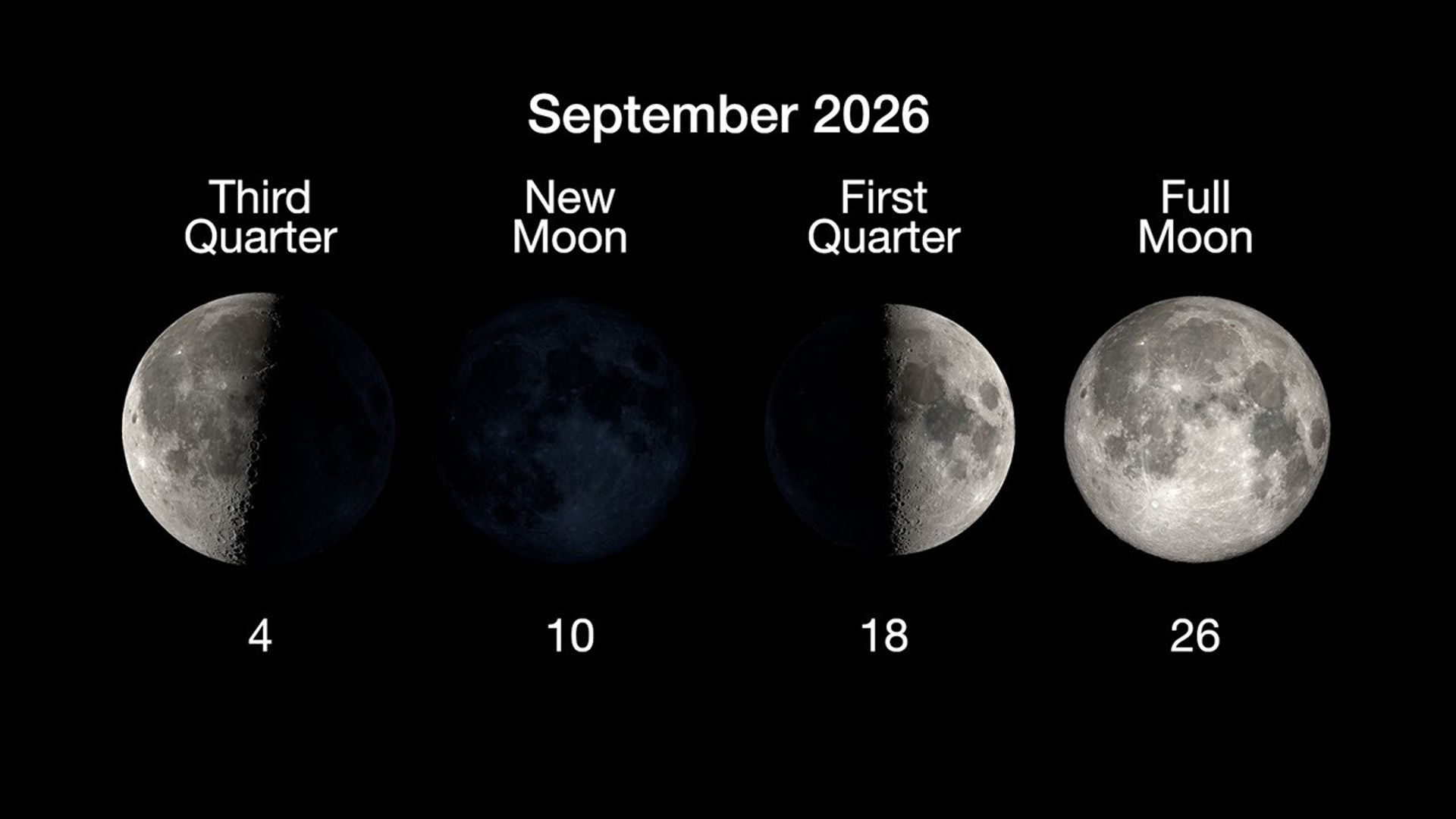
以下是9月的月相。
Here are the phases of the Moon for September.
你可以在“NASA科学”网站上随时了解美国国家航天局(NASA)探索太阳系(solar system)及更远区域的所有任务。我是来自喷气推进实验室(Jet Propulsion Laboratory)的Raquel Villanueva,这就是本月的天象预告。
You can stay up to date on all of NASA's missions exploring the solar system and beyond at NASA Science. I'm Raquel Villanueva from NASA's Jet Propulsion Laboratory, and that's What's Up this month.
其他来源报道(1)
NASA 科学:What’s Up: September 2026 Skywatching Tips from NASA来源与许可
原文来自公共领域来源;译文由机器生成,请以原文为准。 原始页面