查看原文全部插图(5 幅)

内容提要
Roman 正在经历为期三个月的调试过程,以确保其系统在抵达日地拉格朗日点 2(L2)后能够正常运行。在此期间,工程师将对望远镜的各项系统进行启动、校准和测试,为后续的科学观测做好准备。
原文全文译文
Roman 正在经历从地球(Earth)到日地拉格朗日点 2(Sun-Earth Lagrange Point 2,简称 L2)为期三个月的旅程。在此过程中,Roman 正在进行一项名为“调试”的流程,即对系统进行启动、调整、校准,并为科学运行做好准备。调试是科学家和工程师确保 Roman 按预期运行的关键时期。随着团队根据需要进行评估和调整,时间表可能会有所变动。
Roman is making its three-month journey from Earth to Sun-Earth Lagrange Point 2, or L2. Along the way, Roman is undergoing a process called commissioning, where systems are turned on, adjusted, calibrated, and prepared for science operations. Commissioning is the time for scientists and engineers to make sure that Roman is performing as expected. The schedule is subject to change as the team assesses and adjusts as needed.
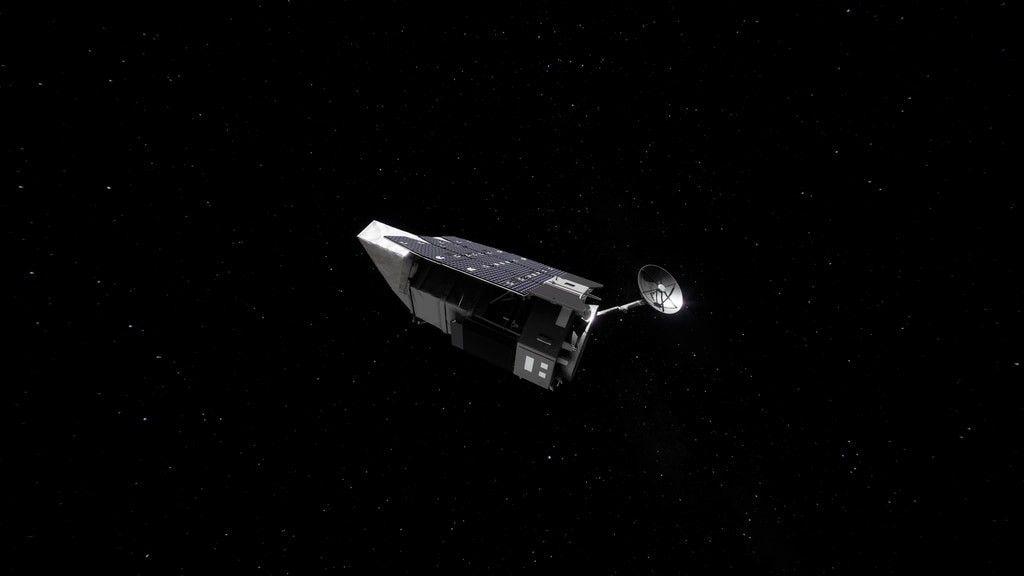
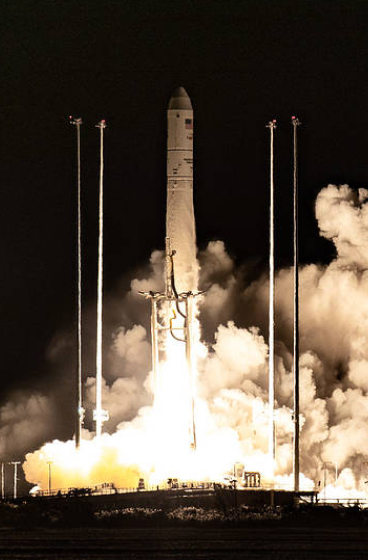
发射后 1 小时 23 分钟,Roman 开始从使其能够装入火箭整流罩的紧凑构型中展开。太阳能电池板(solar panel)和遮阳罩已部署完毕,为天文台其余部分提供遮蔽,并为系统提供电力。在接下来的几天内,天线将摆动展开,遮阳板式的可展开孔径盖将移动到位,以永久性地露出并遮蔽主镜(primary mirror)。
An hour and 23 minutes after launch, Roman began to emerge from the tight configuration that allowed it to fit in the rocket fairing. The solar panels and sunshade deployed, shading the rest of the observatory and providing power to the systems. Within the upcoming days, the antenna will swing out and the visor-like deployable aperture cover will move into place to permanently reveal and shade the primary mirror.
Roman 的轨道
Roman's Orbit
该可视化图像展示了 Roman 在 L2 周围将要运行的稳定晕轨道(halo orbit)。在这一位置,太阳和地球的引力,连同物体绕太阳的运动,使其在绕日公转时能够与地球保持对齐,从而使 Roman 无需消耗大量燃料即可保持相对稳定的轨道。该位置还提供了极其稳定的光学性能,以及对大片天空持续且无遮挡的视野;由于距离遥远,地球不会遮挡 Roman 的大部分视线。此外,在 L2 点,来自地球、太阳和月球(Moon)的热量对红外望远镜(infrared telescope)的影响较小,因为这些望远镜能够“看到”热量。
This visualization shows the stable, halo orbit that Roman will have around L2. At this location, the gravity of the Sun and Earth, together with an object’s motion around the Sun, let it stay lined up with Earth as they orbit, allowing Roman to have a relatively steady orbit without using much fuel. This location also offers exceptionally stable optical performance and a constant, unobstructed view of a wide swath of the sky; Earth won’t block much of Roman’s view since it will be so distant. And at L2, heat from Earth, the Sun, and the Moon have less effect on infrared telescopes, which “see” heat.
探索 Roman 系统
Explore the Roman Systems
了解更多关于正在启动、测试和校准的系统信息。
Learn more about the systems that are getting turned on, tested and calibrated.
来源与许可
原文来自公共领域来源;译文由机器生成,请以原文为准。 原始页面