查看原文全部插图(5 幅)



内容提要
本文介绍了位于加利福尼亚州戈德斯通的深空探测网(DSN)综合体,重点展示了新落成的34米束波导天线DSS-23。该天线是DSN孔径增强项目的一部分,旨在通过增加多频段天线来提升深空任务的通信与数据接收能力。
原文全文译文
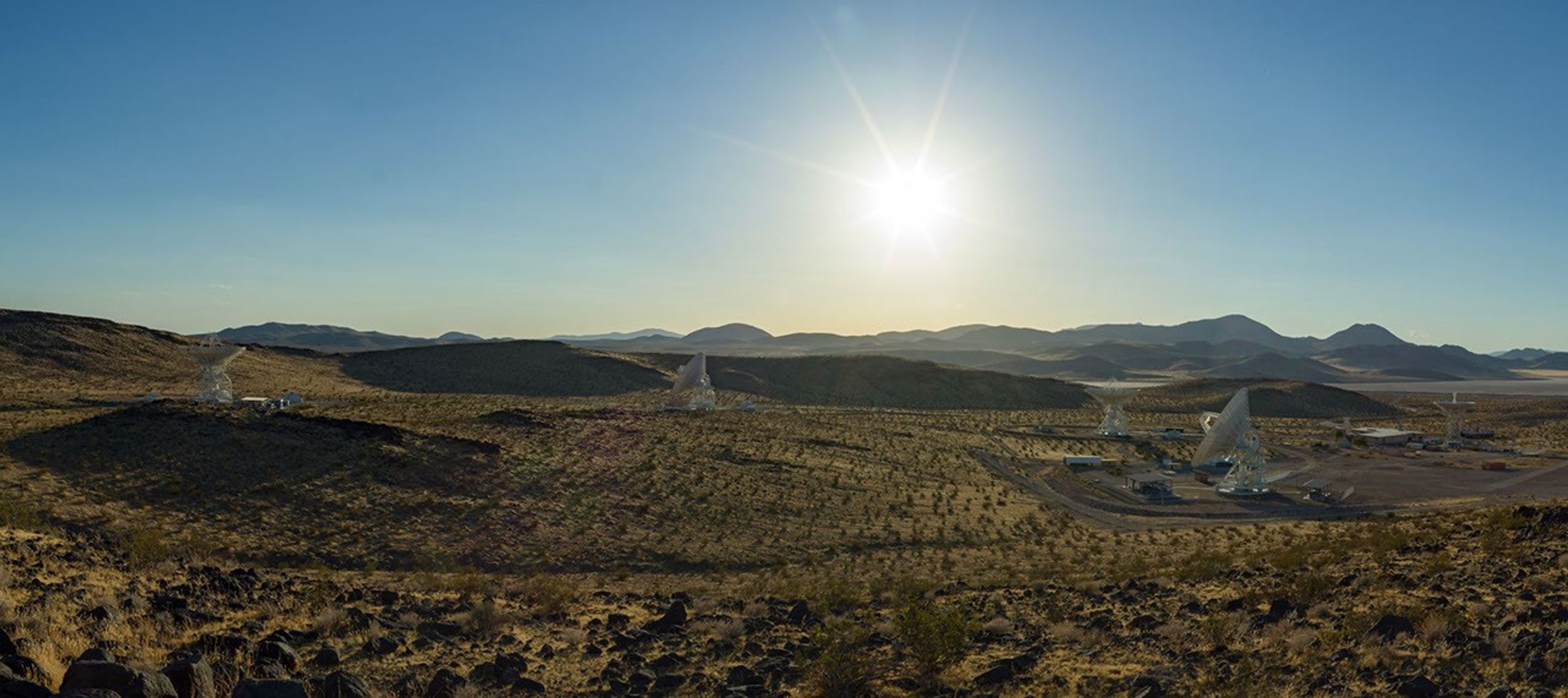
图注:2026年8月,五座天线在加利福尼亚州巴斯托附近的深空探测网(Deep Space Network, DSN)戈德斯通综合体沐浴在夏日的阳光下。画面右侧前景中可以看到近期完工的深空探测站23号(Deep Space Station 23, DSS-23),这是一座34米(114英尺)的束波导(beam waveguide)天线。从左至右,另外三座34米天线分别是DSS-26、DSS-25和DSS-24。最右侧是一座较小的26米(85英尺)天线,即已退役的“阿波罗天线”(Apollo Antenna),它于1967年作为载人航天网(Manned Space Flight Network)的一部分建造,因曾为阿波罗计划(Apollo Program)提供跟踪服务而得名。
Description
2026年8月25日,美国国家航天局(NASA)的领导层、工作人员以及政要齐聚已完工的DSS-23天线处,举行了剪彩仪式。这是作为DSN孔径增强项目(Aperture Enhancement Project)一部分而新增的最新天线,该项目始于2009年,旨在通过增加六座全新的34米多频段束波导天线来升级和扩展该网络。这些功能多样的DSN碟形天线可以增强许多在不同射频(radio frequency)下运行的任务。
Five antennas soak in the summer sun at the Deep Space Network’s Goldstone complex near Barstow, California, in August 2026. The recently completed Deep Space Station 23, a 34-meter (114-foot) beam-waveguide antenna, can be seen to the right of the frame in the foreground. The other three 34-meter antennas are, from left, DSS-26, DSS-25, and DSS-24. At farthest right is a smaller 26-meter (85-foot) antenna, the retired “Apollo Antenna” that was built in 1967 as part of the Manned Space Flight Network and earned its nickname for providing tracking for the Apollo Program.
DSN使各项任务能够对遥远的航天器进行跟踪、发送指令并接收科学数据。该网络由位于南加州的美国国家航天局喷气推进实验室(Jet Propulsion Laboratory, JPL)管理,该实验室是加州理工学院(Caltech)的一个部门,负责为该局位于研究与技术任务理事会(Research and Technology Mission Directorate)内的空间通信与导航(SCaN)项目提供服务。
NASA leadership and personnel as well as dignitaries gathered at the complete DSS-23 antenna for a ceremonial ribbon-cutting on Aug. 25, 2026. It’s the latest antenna to be added as part of the Deep Space Network’s Aperture Enhancement Project, which began in 2009 to upgrade and expand the network by adding six new 34-meter multifrequency beam-waveguide antennas. These versatile Deep Space Network (DSN) dishes can enhance many missions operating over different radio frequencies.
欲了解更多关于DSN的信息,请访问:
The DSN allows missions to track, send commands to, and receive scientific data from faraway spacecraft. It is managed by NASA’s Jet Propulsion Laboratory in Southern California, a division of Caltech, for the agency’s Space Communications and Navigation (SCaN) Program, which is located at NASA Headquarters within the Research and Technology Mission Directorate.
For more information about the DSN, visit:
其他来源报道(1)
NASA 科学:Panorama Showcasing the 34-Meter Antennas of the DSN’s Goldstone Complex来源与许可
原文来自公共领域来源;译文由机器生成,请以原文为准。 原始页面