内容提要
美国国家航天局(NASA)宣布麻省理工学院(MIT)团队获得“月球回收挑战赛”第二阶段一等奖。该赛事旨在开发回收织物、塑料和金属等材料的技术,以减少月球或深空任务中的废弃物。
原文全文译文
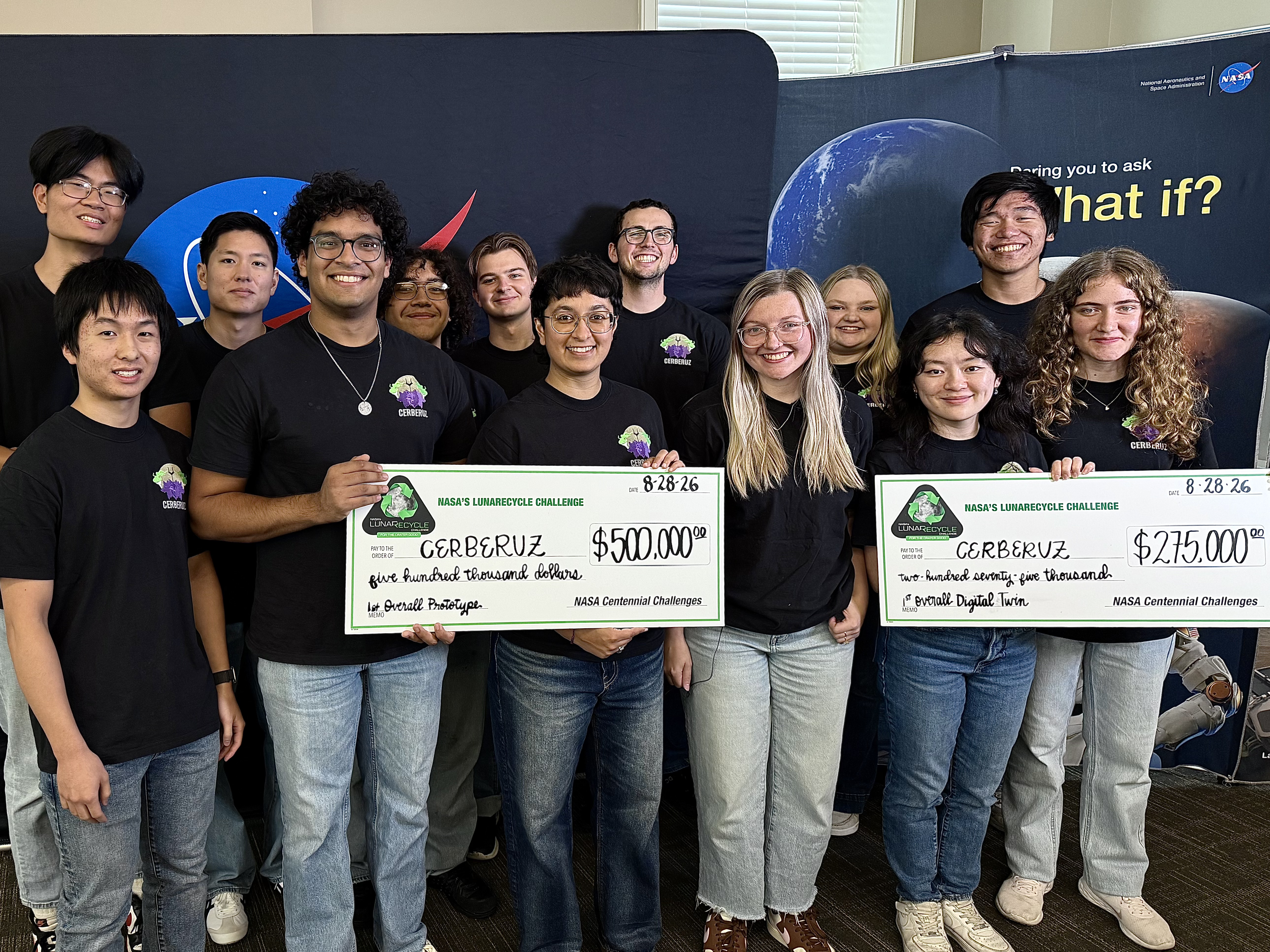
美国国家航天局(NASA)宣布,来自麻省理工学院(Massachusetts Institute of Technology, MIT)的一个团队获得了该机构“月球回收挑战赛”(LunaRecycle Challenge)第二阶段的一等奖。该赛事专注于开发在月球(Moon)或深空(deep space)任务中通过回收织物、塑料、泡沫和金属等常见材料来减少废弃物的解决方案。
NASA named a team from the Massachusetts Institute of Technology (MIT) as the first prize winner for Phase 2 of the agency’s LunaRecycle Challenge, which focused on developing solutions for reducing waste during missions to the Moon or deep space by recycling common materials, like fabrics, plastics, foam, and metals.
由麻省理工学院本科生、研究生和博士生组成的“通过工程化再利用和升级改造Zotek实现地外回收复合材料”(Composites for Extraterrestrial Recycling By Engineering the Reuse and Upcycling of Zotek, CERBERUZ)团队共获得了775,000美元的奖金。
The Composites for Extraterrestrial Recycling By Engineering the Reuse and Upcycling of Zotek (CERBERUZ) team, comprised of undergraduate, graduate, and doctoral students at MIT, received a total of $775,000 in awards.
该技术将混合垃圾研磨成细粉,将Zotek泡沫等材料重新用作增强材料,而不是将其视为需要分拣的污染物。这种粉末可作为注塑成品零件或3D打印长丝的原料。麻省理工学院团队在比赛的原型开发赛道以及专注于开发回收系统虚拟模型(即“数字孪生”)的赛道中均获得了优胜。
The technology grinds mixed trash into a fine powder, repurposing materials such as Zotek foam as reinforcement rather than treating it as contamination that needs to be sorted out. The powder becomes feed for use as injection-mold finished parts or 3D-printing filament. The MIT team won in both the competition’s prototype development track and in the track focused on developing virtual models, known as “digital twins,” of recycling systems.
“‘月球回收挑战赛’决赛是这项比赛激发出的两年创新成果的结晶,”NASA马歇尔空间中心(Marshall Space Flight Center)百年挑战赛项目经理Jennifer Edmunson表示,“在这一时间内,看到这些技术从概念走向原型和数字孪生演示,真是令人难以置信。推动快速且富有创意的创新正是NASA挑战赛的意义所在。”
“The LunaRecycle Challenge finale is the culmination of two years of innovation spurred by this competition,” said Jennifer Edmunson, program manager for Centennial Challenges at NASA’s Marshall Space Flight Center in Huntsville, Alabama. “It’s incredible to see these technologies go from concept to prototype and digital twin demonstrations in that time. Driving rapid and creative innovation is what NASA challenges are all about.”
“月球回收挑战赛”是一项总奖金为300万美元、分两个阶段进行的比赛,由阿拉巴马大学李·J·斯泰斯林格工程学院(The University of Alabama Lee J. Styslinger Jr. College of Engineering)合作举办。比赛第二阶段要求美国团队提交原型,并可选择提交作为其虚拟模型的数字孪生。
LunaRecycle is a $3 million, two-phase competition in partnership with The University of Alabama Lee J. Styslinger Jr. College of Engineering. Phase 2 of the competition required U.S. teams to submit a prototype, with an optional digital twin serving as a virtual model of it.
在第二阶段,来自美国各地的14支决赛入围团队于8月24日至8月28日齐聚位于塔斯卡卢萨的阿拉巴马大学李·J·斯泰斯林格工程学院,展示他们的技术原型。部分团队提交的数字孪生模型也与其各自的原型一同进行了展示。
For Phase 2, 14 finalist teams from across the United States gathered at The University of Alabama’s Lee J. Styslinger Jr. College of Engineering, in Tuscaloosa, from Aug. 24 to Aug. 28 to demonstrate their technology prototypes. The digital twin models submitted by some teams were also presented alongside their respective prototypes.
参赛者的背景涵盖了大学生、教职员工、企业家以及空间技术(space technology)爱好者。团队被鼓励构想出不仅能解决深空回收问题,还能在地球(Earth)上得到应用的解决方案。
The competitors’ backgrounds ranged from university students and faculty to entrepreneurs and space technology enthusiasts. Teams were encouraged to envision solutions that not only addressed recycling in deep space, but that also could have applications on Earth.
除一等奖获得者外,另有九支团队获奖:
Along with the first prize winner, nine teams received prizes:
原型赛道获奖者:
Prototype track winners:
- 总成绩第二名(225,000美元):来自佛罗里达州奥兰多的Terasynth团队,作品为“月球重铸系统”(Lunar Re-Forge System)
- Second place overall ($225,000): Terasynth from Orlando, Fla. with Lunar Re-Forge System
- 最具创新奖(50,000美元):来自宾夕法尼亚州立大学的RECLAIM团队,作品为“利用微波进行月球人为输入资源提取与转化”(Resource Extraction and Conversion from Lunar Anthropogenic Inputs with Microwaves, RECLAIM)系统
- Most Innovative ($50,000): RECLAIM from Penn State University with the Resource Extraction and Conversion from Lunar Anthropogenic Inputs with Microwaves (RECLAIM) system
- 最高质量效率奖(50,000美元):来自加利福尼亚州罗斯米德的Cislune团队,作品为“地外再利用碳回收与原料转化”(Carbon Recovery and Feedstock Transformation for Extraterrestrial Reuse, CRAFTER)系统
- Highest Mass Efficiency ($50,000): Cislune from Rosemead, Calif. with the Carbon Recovery and Feedstock Transformation for Extraterrestrial Reuse (CRAFTER) system
- 回收垃圾种类最多奖(50,000美元):来自南卡罗来纳州格林维尔鲍勃琼斯大学的Team Lovegrove团队,作品为“月球砖”(LunaBrix)
- Most Trash Types Recycled ($50,000): Team Lovegrove from Bob Jones University in Greenville, S.C. with LunaBrix
数字孪生赛道额外获奖者:
Additional digital twin track winners:
- 总成绩第二名(125,000美元):来自科罗拉多州博尔德的Moon Made团队,作品为“纤维锻造”(Fiber Forge)
- Second place overall ($125,000): Moon Made from Boulder, Co. with Fiber Forge
- 最具创新奖(25,000美元):来自宾夕法尼亚州立大学的RECLAIM团队,作品为RECLAIM系统
- Most Innovative ($25,000): RECLAIM from Penn State University with the RECLAIM system
- 最佳可视化奖(25,000美元):来自纽约州纽约市的Waste Parrot Technologies团队
- Best Visualization ($25,000): Waste Parrot Technologies from New York, N.Y.
大众选择奖(25,000美元):
People’s choice winner ($25,000):
- 来自佛罗里达州奥兰多的Terasynth团队,作品为“月球重铸系统”
- Terasynth from Orlando, Fla. with Lunar Re-Forge System
“这场比赛突显了合作如何带来令人难以置信的解决方案,”通过Amentum空间探测部门(Amentum Space Exploration Division)签约支持NASA百年挑战赛并负责管理“月球回收挑战赛”的Chris Frangione说道,“在参赛团队、阿拉巴马大学和NASA之间,这场决赛展示了当我们为了共同目标汇集资源和伟大创意时所能取得的成就。”
“This competition highlights how collaborations can lead to incredible solutions,” said Chris Frangione, who manages the LunaRecycle Challenge in support of NASA Centennial Challenges contracted through Amentum Space Exploration Division. “Between the solver teams, The University of Alabama, and NASA, this finale showcases what can be achieved when we bring together resources and great ideas towards a common goal.”
第二阶段的奖项延续了该比赛第一阶段的成功。第一阶段吸引了全球创新者社区创纪录的关注,注册数超过1,200个,超过了NASA百年挑战赛20年历史中的任何一场比赛。第一阶段于2025年结束,来自世界各地的参与者可以提交原型或数字孪生赛道的设计,或两者兼有。由50名评委组成的评审团评估了近200份第一阶段的参赛作品,选出了代表五个国家和美国九个州的17支获胜团队。第二阶段的参赛作品要求与第一阶段无关。
The Phase 2 awards follow the success of the competition’s Phase 1, which received record-breaking interest from the global innovator community with more than 1,200 registrations – more than any competition in the 20-year history of NASA Centennial Challenges. For Phase 1, which concluded in 2025, participants from around the world could submit designs in either or both of the prototype or digital twin tracks. A panel of 50 judges evaluated nearly 200 Phase 1 submissions, selecting 17 teams representing five countries and nine U.S. states as winners. Phase 2 entries were required to be unrelated to Phase 1.
“月球回收挑战赛”由NASA马歇尔空间中心的百年挑战赛项目管理,该项目隶属于NASA研究与技术任务局(Research and Technology Mission Directorate)旗下的奖项、挑战与众包项目。NASA百年挑战赛拥有超过20年的历史,致力于动员公众解决有益于NASA更广泛倡议的复杂问题。过去的挑战赛推动了机器人技术、增材制造、动力与能源、纺织品、化学和生物学领域的进步。
The LunaRecycle Challenge is managed at NASA’s Marshall Space Flight Center by Centennial Challenges, part of the Prizes, Challenges, and Crowdsourcing program within NASA’s Research and Technology Mission Directorate. NASA’s Centennial Challenges have a legacy of more than 20 years engaging the public to solve complex problems that benefit NASA’s broader initiatives. Past challenges have spurred advances in robotics, additive manufacturing, power and energy, textiles, chemistry, and biology.
“月球回收挑战赛”还得到了位于佛罗里达州的NASA肯尼迪空间中心(Kennedy Space Center)、位于加州硅谷的NASA艾姆斯研究中心(Ames Research Center)以及位于弗吉尼亚州汉普顿的NASA兰利研究中心(Langley Research Center)的学科专家的支持。
LunaRecycle is also supported by subject matter experts at NASA’s Kennedy Space Center in Florida, NASA’s Ames Research Center in California’s Silicon Valley, and NASA’s Langley Research Center, in Hampton, Virginia.
欲了解更多关于“月球回收挑战赛”的信息,请访问:
To learn more about LunaRecycle, visit:
其他来源报道(1)
NASA 科学:NASA Awards First Prize in Phase 2 of Agency’s LunaRecycle Challenge来源与许可
原文来自公共领域来源;译文由机器生成,请以原文为准。 原作者:Bailey G. Light。 原始页面