![The Traffic Management Advisor [TMA] tool utilized by air traffic controllers to manage departures and arrivals.](https://www.nasa.gov/wp-content/uploads/2026/08/tma-timelines-v3-330px.jpg)
查看原文全部插图(3 幅)
内容提要
美国国家航天局(NASA)通过空中交通管理技术演示 1 (ATD1) 项目,开发了一系列先进的自动化工具以提升空域运行效率。这些技术通过整合实时信息与精准调度,旨在减少航空对环境的影响并应对日益增长的空中交通需求。
原文全文译文
空中交通管理技术演示 1 (ATD1)
Air Traffic Management Technology Demonstration 1 (ATD1)
拥挤的天空
Crowded Skies
在任何特定时刻,有多达 5,000 架飞机挤在美国的天空中。2010 年,国家空域系统(NAS)管理了近 1,000 万次航班的飞行。这种高空中交通需求,在很大程度上沿用商业航空早期制定的程序下运行,并不总是能带来最高效或最协调的运行。结果,航空运输系统经常经历严重的延误和生产力损失,并且比运行更高效时产生了更多的噪音污染、二氧化碳(carbon dioxide)和其他温室气体排放。由于预计到 2030 年空中交通需求将翻一番,我们旧的空中交通控制系统(control system)将进一步承压,环境也将受到不利影响。
At any given moment, up to 5,000 aircraft crowd U.S. skies. In 2010, the National Airspace System (NAS) managed the progress of nearly 10 million flights. Such high air traffic demand, operating with procedures that were largely in place from the earliest days of commercial aviation, does not always result in the most efficient or coordinated operations. As a result, the air transportation system often experienced significant delays and lost productivity, and produced greater amounts of noise pollution, carbon dioxide, and other greenhouse gas emissions than if operations were more efficient. As air traffic demand is projected to double by 2030, our old air traffic control system will be further strained and the environment adversely affected.
提高终端区域的效率是一项特别复杂的任务,因为其运行特性与航路环境截然不同;终端区域是指机场周围半径约 50 英里范围内的空域。终端区域管制员需要管理上升和下降的飞机、更频繁的转弯、更广泛的间隔标准,以及在更短的时间范围内应对地形和增加的交通密度。
Improving the efficiency of the terminal area, which is the volume of airspace surrounding airports to a radius of about 50 miles, is an especially complex task due to operating characteristics that are quite distinct from the en route environment. Terminal area controllers manage both ascending and descending aircraft, more frequent turns, a wider range of separation standards, as well as terrain and increased traffic density within shorter time horizons.
NextGen:未来的空域系统
NextGen: The Airspace System of the Future
美国国家航天局(NASA)与联邦航空管理局(FAA)及其他行业合作伙伴合作,开发了几种先进的自动化工具,为空中交通管制员、飞行员和其他空域用户提供了关于国家交通流、天气和航线的更准确的实时(real time)信息。这些信息更高的精确度是下一代航空运输系统(简称 NextGen)的关键推动因素。NextGen 是对 NAS 的全面转型,它将更安全、更可靠、更高效,并将减少航空对环境的影响。向 NextGen 的过渡对于提高系统性能、满足空中交通的持续增长以及增加国家流动性以支持经济进步至关重要。ATM 技术演示-1 (ATD-1) 展示了一套集成的 NextGen 技术,为管理从下降顶点前夕一直到跑道的飞机提供了高效的进场解决方案。
NASA collaborated with the Federal Aviation Administration (FAA) and other industry partners to develop several advanced automation tools that provided air traffic controllers, pilots, and other airspace users with more accurate real-time information about the nation’s traffic flow, weather, and routing. The greater precision of this information was a key enabler of the Next Generation Air Transportation System (referred to as NextGen). NextGen is a comprehensive transformation of the NAS, which will be safer, more reliable and more efficient, and will reduce the impact of aviation on the environment. The transition to NextGen was vital to improving system performance, meeting continued growth in air traffic, and increasing the Nation’s mobility to support economic progress. The ATM Technology Demonstration-1 (ATD-1) showcased an integrated set of NextGen technologies that provided an efficient arrival solution for managing aircraft beginning from just prior to top-of-descent and continuing down to the runway.
这些技术包括:
These technologies were:
- 广播式自动相关监视 (ADS-B)
- Automatic Dependent Surveillance – Broadcast (ADS-B)
- 区域导航 (RNAV) 进场航线
- Area Navigation (RNAV) Arrival Routes
- 优化剖面下降 (OPD) 程序
- Optimized Profile Descent (OPD) Procedures
- 终端计量
- Terminal Metering
- 驾驶舱间隔管理 (FIM)
- Flight Deck Interval Management (FIM)
- 管制员管理间隔 (CMS) 工具
- Controller Managed Spacing (CMS) tools
这些 ATM 技术经过了单独测试,每一项都证明了在吞吐量、延误和/或燃油效率方面的益处。这些技术共同证明了在终端区域高峰交通条件下实现高效进场运行的高吞吐量的可行性。简而言之,这些终端进场工具的集成使进场飞机能够更安全地在更省油的航线上靠得更近,从而增加容量、减少延误,并最大限度地减少燃油消耗、噪音和温室气体排放。
These ATM technologies were tested separately and each has demonstrated throughput, delay, and/or fuel-efficiency benefits. Together, the technologies demonstrated the feasibility of high throughput of efficient arrival operations during peak traffic conditions in the terminal area. Simply put, the integration of these terminal arrival tools allowed arrival aircraft to safely fly closer together on more fuel-efficient routes to increase capacity, reduce delay, and minimize fuel burn, noise, and greenhouse gas emissions.
使用 ATD-1 技术,飞行员和管制员都能获得更准确、更及时的信息和建议,从而减少了他们之间为实现更高效运行而进行大量协调和协商的需要。终端计量(基于对交通管理顾问 [TMA] 的精确调度增强)根据机场条件、机场容量、所需间隔(spacing interval)和天气条件确定进场时间表,并利用从航路空域延伸并穿过终端空域到达跑道的新型、更直接的 RNAV 航线。该时间表在执行前很久就已确定,并传达给管制员和飞行机组。飞行机组将知道他们的预定飞行路径、他们应该跟随的飞机,以及在指定 RNAV 航线上某些点所需的间隔,以安全且按时到达目的地机场。管制员将不再需要对合并和进场时隙做出战术性的、最后一秒的决定,也不太可能需要像在繁忙交通条件下那样提供那么多的干预。
Using the ATD-1 technologies, both pilots and controllers have more accurate and timely information and advisories, thus reducing the need for extensive coordination and negotiation between them to achieve more efficient operations. Terminal Metering (based on precision scheduling enhancements to the Traffic Management Advisor [TMA]) determines an arrival schedule based on airport conditions, airport capacity, required spacing, and weather conditions and utilizes new, more direct RNAV routes that extend from en route airspace and continue through terminal airspace to the runway. The schedule, determined well in advance of when it is executed, is communicated to both controllers and flight crews. Flight crews will know their intended flight path, which aircraft they ought to be following, and the desired spacing interval at certain points along their designated RNAV route to reach the destination airport safely and on schedule. Controllers will no longer have to make tactical, last second decisions concerning merges and arrival slots, and will not likely need to provide as many interventions as they did in busy traffic conditions.
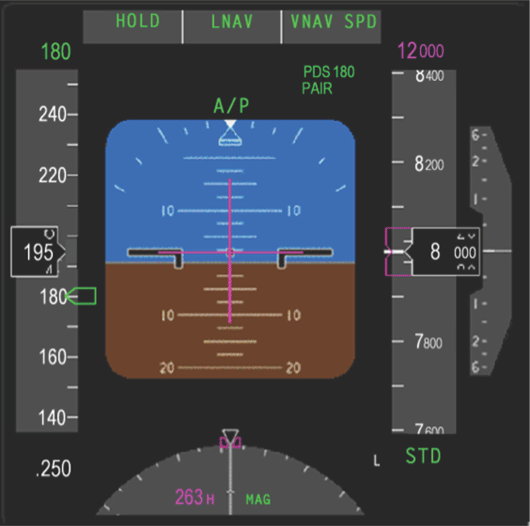
为了实现 TMA 设定的精确时间表,一些驾驶舱现在配备了复杂的机载航空电子设备。驾驶舱间隔管理 (FIM) 工具为飞行员提供关于加速或减速的指导,以相对于其他飞机精确地合并和间隔他们的飞机。FIM 工具使用飞机上 ADS-B 技术提供的信息计算速度建议,该信息比传统雷达更准确。飞行机组能够对速度进行更精细的调整,并更快地做出反应以实现理想的间隔。FIM 实现的更严格控制减少了多余的间隔缓冲,并带来了更高的终端吞吐量。
To achieve the precise schedule set by TMA, some flight decks are now equipped with sophisticated onboard avionics. Flight Deck Interval Management (FIM) tools provide guidance to pilots on whether to speed up or slow down to precisely merge and space their aircraft relative to others. The FIM tools calculate speed advisories using information provided by ADS-B technology aboard the aircraft that is more accurate than traditional radar. Flight crews are able to make finer adjustments to their speed and react more quickly to achieve ideal spacing. The tighter control enabled by FIM reduce excess spacing buffers and result in higher terminal throughput.
NextGen 利用了 FAA 实施的 ADS-B 基础设施。ADS-B 使用飞机上的全球定位卫星(GPS)系统接收器来确定该飞机的确切位置。ADS-B 系统将位置数据与飞机的识别码、航向、速度和高度相结合,然后连续向在该区域飞行的其他配备 ADS-B 的飞机广播这些信息。这些信息也被广播到 ADS-B 地面站(ground station)网络,进而反馈给管制员显示器和其他空中交通控制技术。ADS-B 信息为飞行机组提供了更好的态势感知,并允许将间隔责任从地面转移到空中,减轻了管制员的工作量。
NextGen leveraged the ADS-B infrastructure that was implemented by the FAA. ADS-B uses a Global Positioning Satellite (GPS) System receiver aboard the aircraft to determine that aircraft’s exact position. The ADS-B system combines the position data with the aircraft’s identifier, course, speed, and altitude, then continuously broadcasts the information to other ADS-B equipped aircraft flying in the area. The information is also broadcast to a network of ADS-B ground stations, which in turn feed controller displays and other air traffic control technologies. ADS-B information provides greater situational awareness to flight crews and allows spacing responsibility to be shifted from the ground to the air, alleviating controller workload.
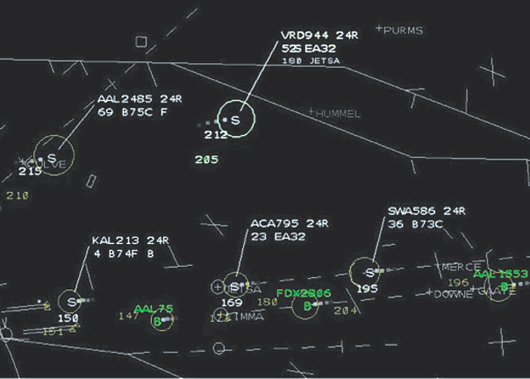
对于在中气(mid-term)阶段未配备 FIM 和 ADS-B 技术的飞机,新的控制器管理间距(Controller Managed Spacing, CMS)决策支持工具为管制员提供了必要信息,以合理安排飞机间距,从而满足由 TMA 创建的终端计量时刻表。CMS 显示增强功能向管制员指示飞机沿其 RNAV 航线的预定位置,并计算维持该时刻表所需的建议速度。
For aircraft not equipped with FIM and ADS-B technologies in the mid-term, new Controller Managed Spacing (CMS) decision support tools provide controllers with the information needed to properly space aircraft to meet terminal metering schedules created by TMA. CMS display enhancements indicate to the controller where an aircraft is scheduled to be along its RNAV route, and calculate the speed advisories needed to maintain this schedule.
优化剖面下降(Optimized Profile Descent, OPD)程序允许飞机以低发动机功率进行连续的滑翔下降。与典型的“俯冲并平飞”程序(即飞机以阶梯式下降方式飞行动力恒定高度段)相反,OPD 被视为“绿色下降”,因为它们减少了燃油消耗、环境排放和噪音污染。决策支持工具同步了所有进场飞机的下降过程,并向管制员建议所需的 RNAV 航线和速度剖面,以便每架飞机都能保持高效下降,并与前后飞机保持适当的间隔。OPD 增强功能使得在更多交通状况下(即使是严重拥堵时)实现绿色下降成为可能,同时满足终端计量时刻表并实现精确的航迹间距,从而最大化终端吞吐量。
Optimized Profile Descent (OPD) Procedures allow aircraft to fly a continuous, gliding descent at low engine power. Contrary to the typical “dive and drive” procedures in which aircraft fly powered constant-altitude segments in a step-down fashion, OPDs are considered “green descents” because they reduce fuel consumption, environmental emissions, and noise pollution. Decision support tools synchronize the descents of all arrival aircraft and advise controllers of the RNAV route and speed profile needed so that each can maintain an efficient descent and remain properly separated from preceding and following aircraft. OPD enhancements make green descents possible during more traffic conditions, even heavy congestion, all while satisfying terminal metering schedules and achieving precise in-trail spacing to maximize terminal throughput.
由 ATD-1 技术实现的更有序、精确和直接的交通流,使国家空域系统(National Airspace System, NAS)整体上更具可预测性。这将使空域用户能够更好地应对由对流天气和其他空域限制引起的意外延误。与其在机场附近战术性地吸收延误(传统上使用航迹拉伸和等待航线来处理),现在可以在从巡航高度到着陆的过程中应用细微的速度变化,将少量的延误分散到更长的飞行过程中。以这种方式战略性地吸收延误,缓解了通常会在机场附近积聚的拥堵,进一步提高了终端区交通流的效率。
The more orderly, precise, and direct traffic flow enabled by the ATD-1 technologies make the National Airspace System more predictable overall. This will allow airspace users to better respond to unexpected delays caused by convective weather and other airspace constraints. Instead of tactically absorbing delay close to the airport, where it is traditionally handled using path stretching and holding patterns, subtle variations in speed can now be applied from cruise altitude to landing to distribute small amounts of delay over a longer portion of the flight. Strategically absorbing delay in this way relieves congestion that would normally build up near the airport, further increasing the efficiency of terminal area traffic flows.
实现 NextGen 的额外步骤
Additional Steps to Achieve NextGen
ADS-B 现在作为 NAS 的监视源。为了进一步推广 ADS-B 的广泛实施,航空规则制定委员会建议应利用诸如 ATD-1 之类的演示项目,帮助政府和行业评估此类实施的潜在收益和成本,并了解必要的设备标准、飞机认证指南和运行批准。美国国家航天局(NASA)与美国联邦航空管理局(FAA)及其他行业合作伙伴合作,在 2014-2015 年通过实地运行试验演示了集成终端区调度能力。实地演示的目标是验证终端区集成进场解决方案的收益、系统互操作性以及技术转让要求。
ADS-B now serves as the surveillance source for the NAS. To further the widespread implementation of ADS-B, the Aviation Rulemaking Committee recommended that demonstrations, such as ATD-1, should be used to help both the government and industry evaluate potential benefits and costs of such implementation, as well as to understand the necessary equipment standards, aircraft certification guidance, and operational approvals. NASA teamed with the FAA and other industry partners to demonstrate the capabilities of integrated terminal area scheduling with an operational field trial in 2014-2015. The goals of the field demonstration were to validate the benefits of the terminal area integrated arrival solution, system interoperability, and requirements for technology transfer.
演示活动的初相(first phase)涉及原型系统的开发、所有技术的集成以及在 NASA 实验室进行的初步人在回路仿真。下一阶段涉及演示系统的开发、使用 FAA 设施和人员进行的后续仿真、航空电子设备的飞行测试以及集成系统的影子测试。最后阶段确定了演示计划,并在美国主要机场受控但真实的运行环境中进行了实地试验。
The first phase of demonstration activities involved development of prototype systems, integration of all of the technologies, and initial human-in-the-loop simulations in NASA laboratories. The next phase involved development of the demonstration systems, follow-on simulations using FAA facilities and personnel, flight testing of avionics, and shadow testing of the integrated system. The last phase finalized the demonstration plans and culminated in a field trial in a controlled, yet realistic operational environment at a major U.S. airport.
ATD-1 是政府与行业之间真正的合作努力。它涉及 NASA 和 FAA 的支持、合作和财政承诺,以及关键的行业和商业航空合作伙伴。NASA 在终端区调度、控制器决策支持工具和驾驶舱自动化方面的基础研究和技术,积极利用了 FAA 的 NextGen 基础设施。空域用户、航空电子设备和飞机制造商以及系统集成商的参与,有助于在运行环境中评估这些集成的终端区 ATM 技术。此次演示是 NASA NextGen 研究与开发过程中的下一个重大步骤,它使我们离实现未来的航空运输系统更近了一步。
ATD-1 was truly collaborative endeavor between government and industry. It involved the support, cooperation, and financial commitment of NASA and the FAA, as well as key industry and commercial aviation partners. NASA foundational research and technologies in terminal area scheduling, controller decision support tools, and flight deck automation actively leveraged the FAA’s NextGen infrastructure. The participation of airspace users, avionics and aircraft manufacturers, and system integrators helped enable these integrated terminal area ATM technologies to be evaluated in an operational environment. The demonstration was the next major step in NASA’s NextGen research and development process, and it brought us one step closer to realizing the air transportation system of the future.
ATD-1 集成终端区调度技术的收益:
Benefits of ATD-1’s Integrated Terminal Area Scheduling Technologies:
系统收益
System Benefits
- 更高效的延误处理
- More efficient handling of delay
- 减少多余的间距缓冲
- Reduced excess spacing buffers
- 提高吞吐量
- Increased throughput
- 更具秩序的终端区交通流
- More orderly flow of terminal area traffic
- 更好的可预测性
- Better predictability
- 降低管制员工作负荷
- Decreased controller workload
用户收益
User Benefits
- 更少的延误
- Fewer delays
- 更高的燃油效率
- Greater fuel-efficiency
- 增加对先进 RNAV 进场程序的使用
- Increased use of advanced RNAV arrival procedures
环境收益
- Environmental Benefits
- 更少的温室气体排放
- Fewer greenhouse gas emissions
- 更少的噪音污染
- Less noise pollution
经济收益
- Economic Benefits
- 提高流动性以支持经济增长
- Increased mobility to support economic progress
来源与许可
原文来自公共领域来源;译文由机器生成,请以原文为准。 原始页面