查看原文全部插图(9 幅)

内容提要
本文回顾了好奇号火星车在火星着陆 14 周年的纪念活动,并介绍了其在夏普山攀登过程中的科学探测工作。团队通过多种仪器对岩石层理及地质特征进行了详细观测,以揭示火星数十亿年前的环境演变。
原文全文译文
作者:Susanne P. Schwenzer,英国开放大学行星矿物学教授
By Susanne P. Schwenzer, Professor of Planetary Mineralogy at The Open University, UK
地球规划日期:2026 年 8 月 7 日,星期五
Earth planning date: Friday, Aug. 7, 2026
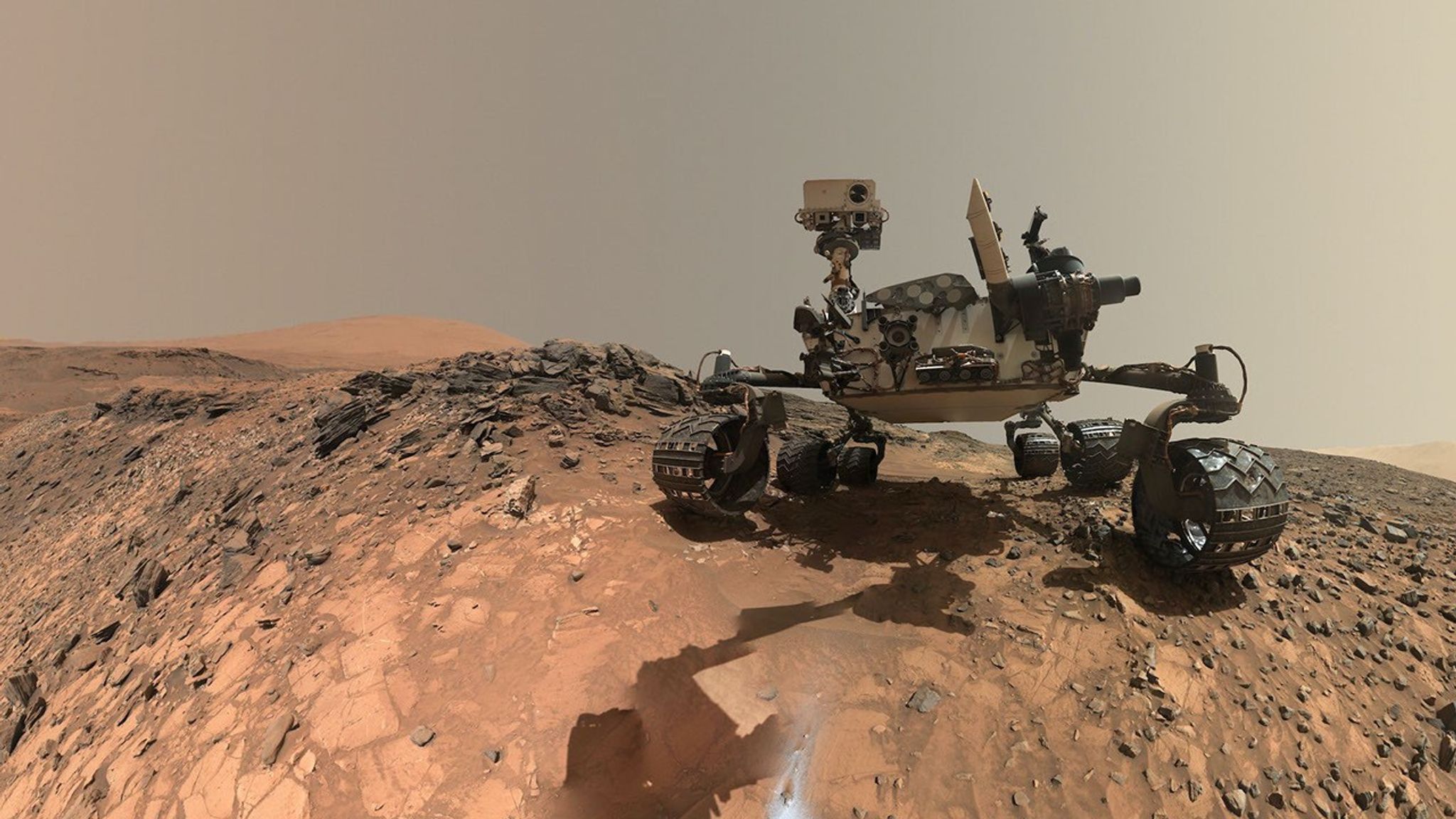
对于地球上的好奇号(Curiosity)团队来说,本周非常特别,因为我们庆祝了着陆 14 周年。我还记得在“太阳系之眼”(Eyes on the Solar System)上观看进入阶段倒计时的时候,之后的事情我就记不清了,直到我听到那句“我们在火星(Mars)上安全着陆了”。当时我太紧张了,但我喜欢每年庆祝我们在火星上又度过一个(地球)年时,重温那些时刻。如果你想回顾这一切,可以访问美国国家航天局(NASA)的交互式工具“太阳系之眼”,使用菜单在航天器列表中找到火星科学实验室(Mars Science Laboratory)火星车。好奇号于 2011 年 11 月 26 日 15:02 UTC 发射;你可以将时钟拨回那天,看着航天器离开地球,并跟随它逐渐前往火星轨道,在恰当的时机与火星会合。好奇号于 2012 年 8 月 6 日 05:17 UTC 着陆。对我而言,最重大的时刻是看到着陆后控制室里的喜悦和庆祝。这段视频我看了无数遍;它太精彩了,让人难以忘怀:好奇号已着陆 - NASA 科学。
This week was very special for the Curiosity team here on Earth as we celebrated the 14th landing anniversary. I still remember watching the buildup to the entry phase on “Eyes on the Solar System” and then I don’t remember much until I heard the words, “We are safe on Mars.” I was just too tense and nervous, but I love to re-live the moments each year when we celebrate another (Earth) year on Mars. If you want to remember it all, you can go to NASA's interactive tool “Eyes on the Solar System” use the menu and find the Mars Science Laboratory Rover in the list of spacecraft. Curiosity launched Nov. 26, 2011, 15:02 UTC; you can wind back the clock to that day as the spacecraft leaves Earth and follow as it gradually makes its way to Martian orbit, where it meets Mars at just the right moment. Curiosity landed Aug. 6, 2012, 05:17 UTC. The big moment to me, though, is to see the joy and celebrations in the control room after landing. I have watched this video more times than I can count; it’s just too good to not remember: Curiosity Has Landed - NASA Science.
但是,在标志着从第 14 年过渡到第 15 年的这个特殊周里,我们做了什么呢?当然,对于火星车来说,一切照常进行,而我们许多人则交流着回忆,并对我们迄今为止的发现感到惊叹。如果你对好奇号在着陆周年纪念时刻的具体工作感兴趣,我们已经为你准备好了——在帕萨迪纳喷气推进实验室(JPL)科学与工程团队的帮助下,我可以告诉你,那是在火星上的第 4976 太阳日,当地时间 19:47,当时火星车的机械臂正部署在目标“Tunas Khasa”处进行 APXS 测量。
But what did we do in that very special week that marked the transition from year 14 to year 15? Of course it was business as usual for the rover while many of us exchanged memories and also marveled at what we have found to date. If you are interested what exactly Curiosity did at the moment in time that marked the landing anniversary, we’ve got you covered — with the help of the science and engineering team at JPL in Pasadena, I can tell you that this was on Sol 4976 at 19:47 LMST on Mars, and at that very moment the rover’s arm was deployed at the target “Tunas Khasa” doing an APXS measurement.
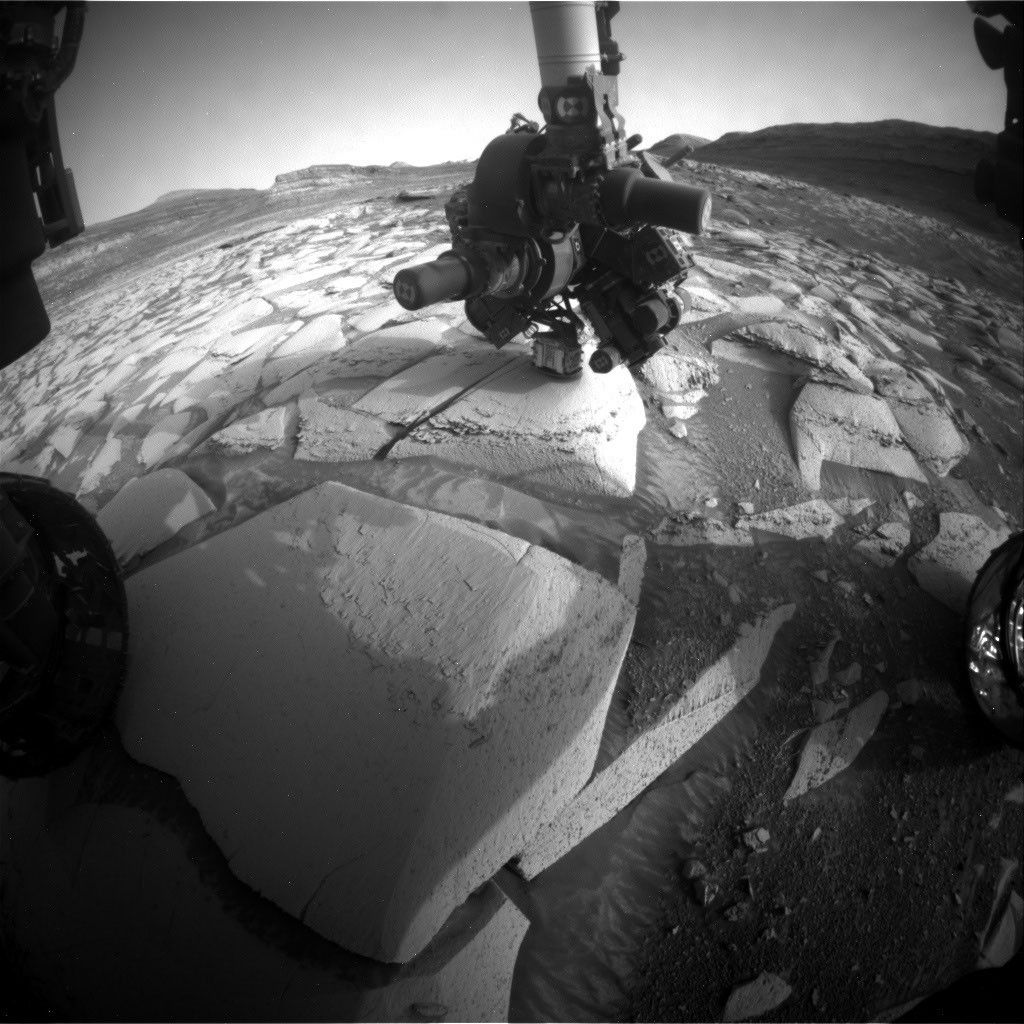
火星车继续沿着夏普山(Mount Sharp)向上行驶,调查沿途不同的岩层。这段攀爬可能相当陡峭,周一的计划也不例外。上周五的某个时刻,火星车的倾斜度达到了 24 度。但工程师们非常清楚好奇号的能力,所以我们在周一顺利到达了预定位置。在本周的第一站,APXS 测量了“Tunas Khasa”和“Villarrica”,它们也用我们的火星手持透镜成像仪(MAHLI)进行了成像。化学相机(ChemCam)通过调查目标“Lago Rupanco”和“Chulipa Punta”提供了更多化学数据。ChemCam 还利用其远程显微成像仪(RMI)获取了目标区域的高分辨率(high resolution)图像。我们特别寻找的是交错层理(地质学家用来描述倾斜并相互交叉的岩层的术语),以及不同岩层之间如何相互关联。桅杆相机(Mastcam)在计划中有五个不同的拼接图,调查了近场目标并观察了远方。目标范围从火星车周围孤丘墙壁上的岩层到近场的基岩目标。“La Linea”是一个显示出侵蚀迹象的表面,“Tiraque”则提供了关于基岩分层的见解,这仅是 Mastcam 目标的两个例子。当然,未来的行驶方向和未来的工作空间也在行驶后进行了成像。除了科学任务外,计划中还有一些“内务”活动。这些包括 SAM 柱清洗活动和对 REM UV 传感器的 MAHLI 成像。保持对这些事项的关注也很重要!
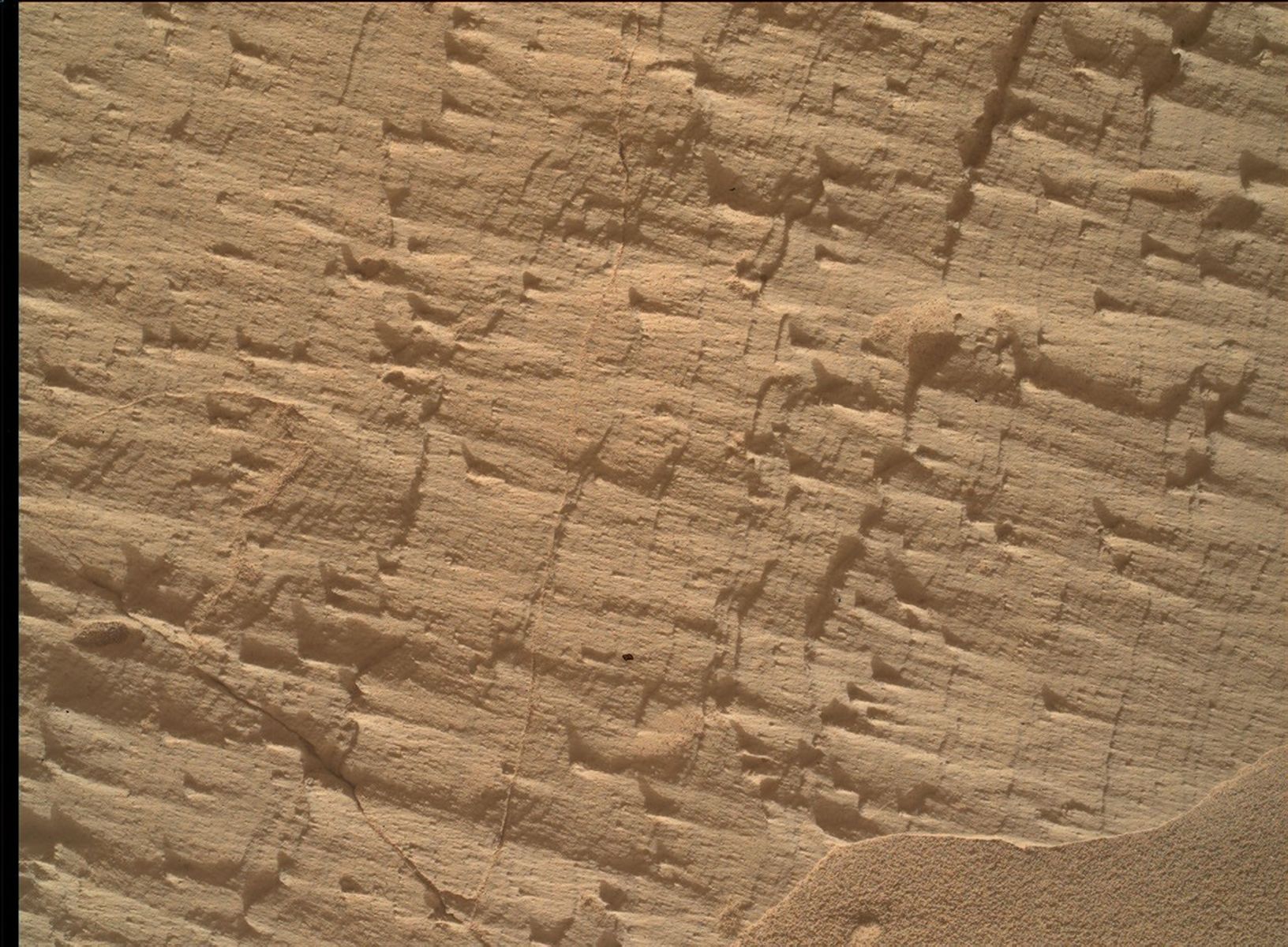
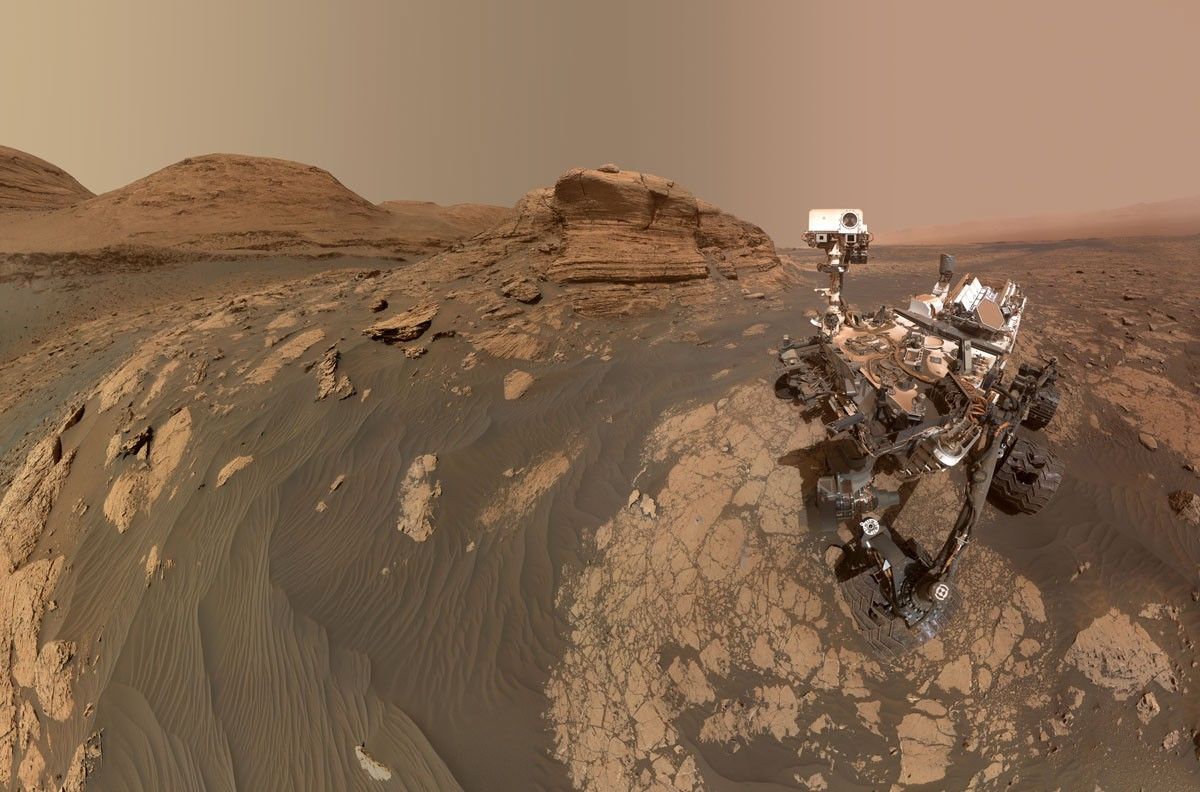
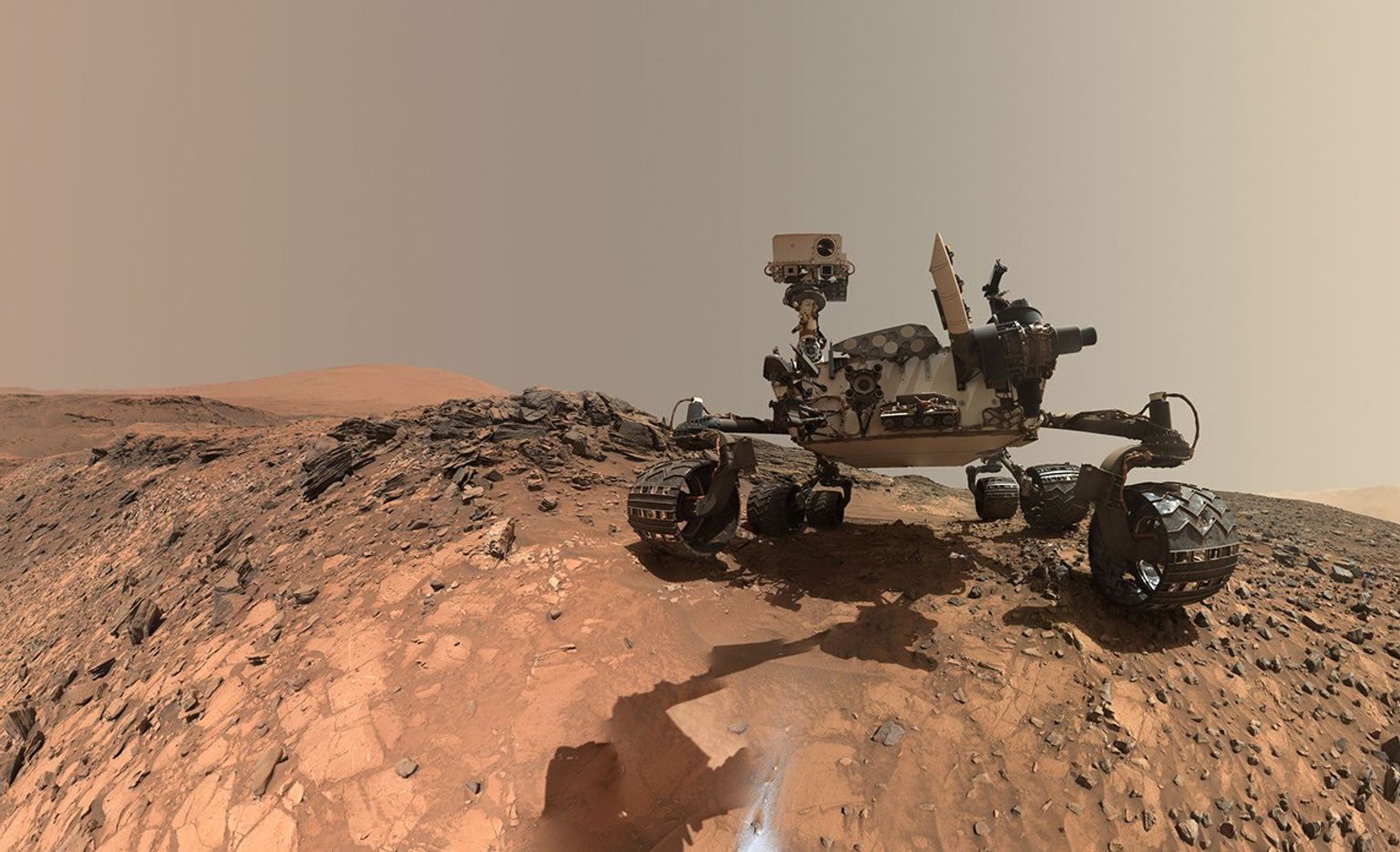
The rover continued its way up Mount Sharp investigating the different layers of rock along the way. This climb can be quite steep and coming into Monday’s plan was no different. At one point last Friday the rover’s tilt was 24 degrees. But the engineers know exactly what Curiosity can do, so we arrived safely at our planned location coming into Monday. At this first stop of the week, the APXS measured “Tunas Khasa” and “Villarrica,” which were also imaged with our Mars Hand Lens Imager (MAHLI). More chemistry came from ChemCam investigating the targets “Lago Rupanco” and “Chulipa Punta.” ChemCam also used its Remote Micro Imager to acquire high-resolution images of targets of interest. We are specifically looking for the cross-bedding, a term geologists use to describe rock layers that tilt and intersect each other, and how the different layers of rock relate to each other. Mastcam had five different mosaics in the plan, investigating targets in the nearfield and looking into the distance, too. The targets range from layers of rocks in the walls that make up the buttes around the rover to bedrock targets in the nearfield. “La Linea" is a surface that displays signs of erosion, and “Tiraque” gives insights into the layering of the bedrock, just to name two of the Mastcam targets. Of course, the future drive direction and the future workspace were also imaged after the drive. In addition to the science, there were some “housekeeping” activities in the plan, too. Those were a SAM column-cleaning activity and MAHLI images of the REM UV sensor. It’s important to keep on top of these things, too!
46 英尺(14 米)的行驶使我们处于那些非常特殊地点之一的前方,在那里不仅有两个不同的岩层交汇,而且交错层理的岩石也被其他层截断。正是这些特殊的地方让我们能够——一个接一个地——拼凑出谜题,展示数十亿年前这里发生了什么。有一点很清楚:它涉及风,大量的风,但也涉及一些水。由于这个位置是一个非常有趣的地方,我们将在这里停留到周一,并在这个位置进行两个规划周期。
The 46-foot (14-meter) drive put us into the perfect position in front of one of those very special places, where not only two different rock layers meet, but also where cross-bedded rocks are truncated by other layers. It is those special places that allow us – one by one – to put the pieces of the puzzle together, showing what happened here billions of years ago. One thing is clear: it involved wind, lots of wind, but also some water. As this location is an exceptionally interesting place, we will stay here through Monday and spend two planning cycles at this location.
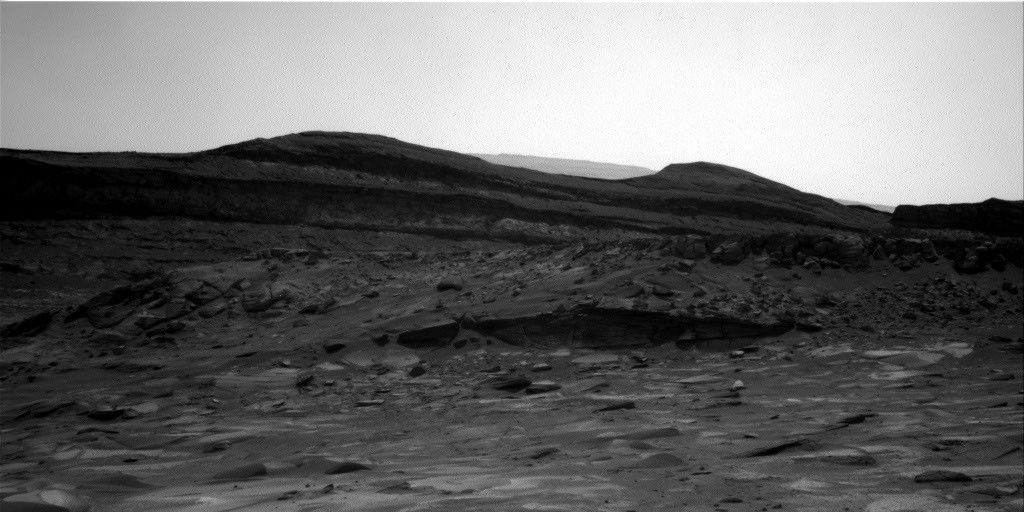
周五,我们计划在前方的一块基岩上进行两次 APXS 测量——同时考虑到另外两个目标供同事们在周一规划。这两个目标是“Salar de Gorbea”和“Uriondo”。MAHLI 记录了这两个目标,但计划中还有一个拼接图,是我见过最大的拼接图之一。它位于目标“Tres Morros”上,这是那些不同岩层如何精确交汇的绝佳范例。团队迫不及待地想看到高分辨率的 MAHLI 图像,并检查其中可见的每一个细节。Mastcam 也非常忙碌,调查了近场和更远处的代表性露头。特别需要注意的目标是“Laguna Del Eulogio”和“Laguna de Pozuelo”,因为它们对与岩层变化相关的露头以及前方名为 Mishe Mokwa 的孤丘进行了成像。你可能还记得后者,因为我们在沿着它行驶和绕行时多次提到过它,并使用重复图像来获得立体视图,同时也了解了地层学(岩石分层方式)的不同方面。ChemCam 观察了目标“Rio Tranquilo”,这是一个结节状目标,可能为形成这些岩石的环境中与水相关的部分提供见解。另一个 ChemCam 目标是“Rio Juncalito”,这是一个交错层理目标。ChemCam 在计划中还有两个 RMI,一个瞄准前方朝向 Valle Grande,另一个观察 Mishe Mokwa。
On Friday we planned two APXS on a bedrock block in front of us – keeping in mind two others for our colleagues to plan on Monday. The two targets are “Salar de Gorbea” and “Uriondo.” MAHLI documents those two, but also has a mosaic in the plan that is one of the largest I have ever seen. It’s on the target “Tres Morros,” which is an excellent example on how exactly those different rock layers meet. The team can’t wait to see the high-resolution MAHLI images and inspect every single detail visible in them. Mastcam also was very busy, investigating representative outcrops in the nearfield and further away. Targets to especially look out for are “Laguna Del Eulogio” and “Laguna de Pozuelo,” as they image outcrops related to the changes in the rock layers and further ahead on a butte called Mishe Mokwa. You might remember the latter from many mentions previously as we were driving along and around it, and using repeated images to get stereo views, but also understand different aspects of the stratigraphy (the way rocks are layered). ChemCam looks at target “Rio Tranquilo,” which is a nodular target, possibly giving insights into the water-related part of the environments that formed those rocks. The other ChemCam target is “Rio Juncalito,” which is a cross-bedded target. ChemCam also has two RMIs in the plan, one targeting forward toward Valle Grande and the other looking at Mishe Mokwa.
这两个计划都包含丰富的环境监测内容。除了测量大气不透明度和风力监测外,还有许多尘卷风调查。我们也在寻找云层,当然 RAD 仪器也在积极测量辐射环境。它在这里很少被提及,因为它安静地坐在火星车内的位置上,仰望天空并监测辐射——在过去的 14 年里,实际上时间更长,因为它是发射后第一个被开启的仪器,并且在前往火星的巡航阶段就已经开始了监测。
Both plans contain a rich set of environmental monitoring. There are many dust-devil surveys alongside measurements of the atmospheric opacity and wind monitoring. We are also looking for clouds, and of course the RAD instrument is actively measuring the radiation environment. It rarely gets a mention here, because it sits quietly in its place within the rover, looking out to the sky and monitoring the radiation — for all those 14 years, and in fact a little longer, because it was the first instrument to be switched on after launch and already started its monitoring during the cruise phase to Mars.
祝好奇号着陆 14 周年快乐!
Happy 14th Landing Anniversary, Curiosity!
来源与许可
原文来自公共领域来源;译文由机器生成,请以原文为准。 原始页面