查看原文全部插图(6 幅)
内容提要
美国国家航天局(NASA)在弗吉尼亚州兰利研究中心启动了一系列羽流-表面相互作用测试,旨在研究着陆器引擎羽流对月尘和月壤的影响。这些测试将为改进预测模型、保障载人登月及未来火星任务的安全性提供关键数据。
原文全文译文
编者注:本文最初发表于12月,于2026年8月26日修订,更新了测试新阶段的内容,包括近期测试运行的视频和新图像。
EDITOR’S NOTE: This story, originally published in December, was revised Aug. 26, 2026 with an update on a new phase of testing, including video from a recent test run and new images.
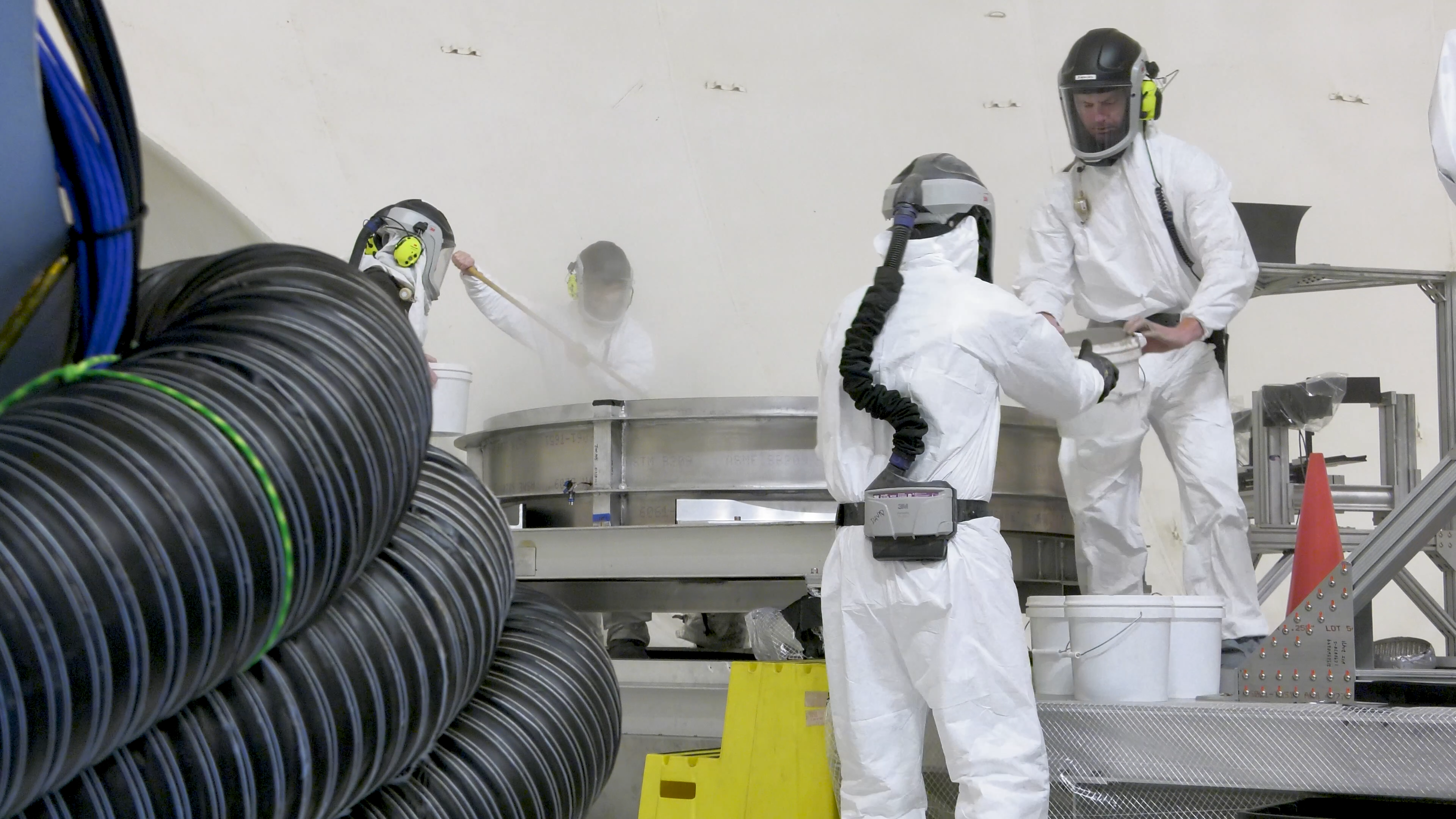
为了帮助美国国家航天局(NASA)及其商业合作伙伴更好地理解月球着陆的科学原理,特别是着陆器引擎羽流喷射月尘(lunar dust)、土壤和岩石时可能产生的危险,位于弗吉尼亚州(Virginia)汉普顿的NASA兰利研究中心(NASA Langley Research Center)的一个团队,在一个巨大的60英尺球形真空室内启动了一系列羽流-表面相互作用测试。
To help NASA and commercial partners better understand the science of lunar landings, specifically the hazards that may occur when a lander’s engine plumes blast away at lunar dust, soil, and rocks, a team at NASA’s Langley Research Center in Hampton, Virginia, has initiated a series of plume-surface interaction tests inside a massive 60-foot spherical vacuum chamber.
随着NASA致力于从2028年的Artemis IV任务开始将人类送回月球(Moon)并开发月球基地,这些测试将为研究人员提供大量数据,用于改进预测模型并影响航天硬件的设计。
As NASA works to return humans to the Moon starting with Artemis IV in 2028 and develop a Moon Base, the tests will provide a trove of data for researchers to use to improve predictive models and influence the design of space hardware.
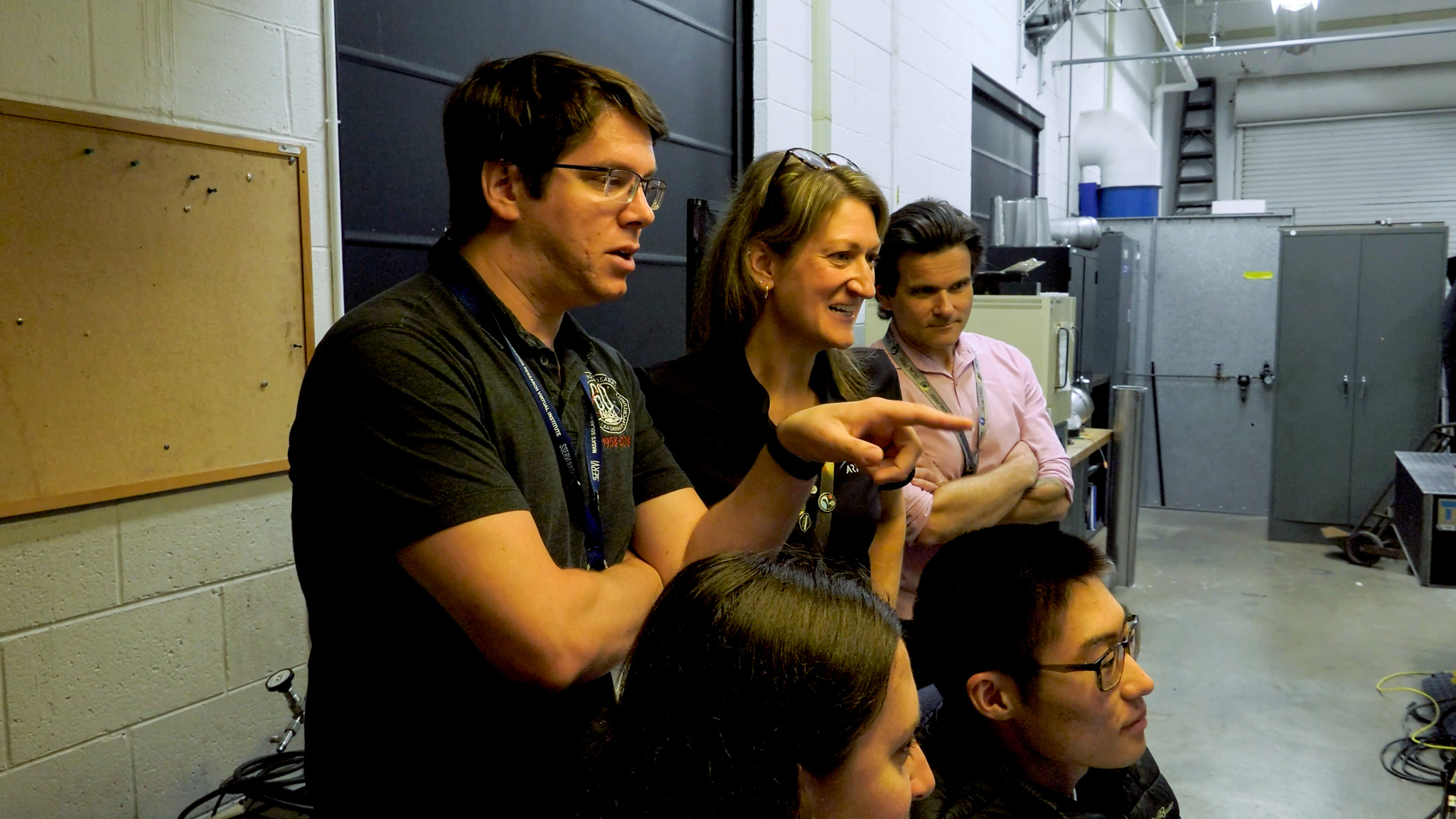
“这项羽流-表面相互作用地面测试是在真空室内进行的最复杂的同类测试,”NASA兰利研究中心测试负责人Ashley Korzun表示。“如果我身处航天器中,在着陆时移动了所有这些月壤,其中一些会撞击我的着陆器。另一些则会向其他物体喷射——比如有效载荷、科学实验设备,最终还有月球车和其他资产。理解这些物理特性对于确保乘员安全和任务成功至关重要。”
“This plume-surface interaction ground test is the most complex test of its kind to be undertaken in a vacuum chamber,” said Ashley Korzun, testing lead at NASA Langley. “If I’m in a spacecraft and I’m going to move all that regolith while landing, some of that’s going to hit my lander. Some of it’s going to go out toward other things — payloads, science experiments, eventually rovers and other assets. Understanding those physics is pivotal to ensuring crew safety and mission success.”
该活动涉及多个NASA中心、学术机构以及大中型商业实体。
The campaign involves multiple NASA centers, academic institutions, and commercial entities both small and large.
Korzun的团队将在真空球体内测试两种类型的推进系统。在第一轮测试中,他们使用了由密西西比州圣路易斯湾附近的NASA斯坦尼斯航天中心(Stennis Space Center)设计,并由普渡大学(Purdue University)建造和操作的乙烷羽流模拟系统。该乙烷系统产生最大约100磅的推力——想象一下举起或支撑一个100磅重的人所需的力。它会发热但不会燃烧。
Korzun’ s team will test two types of propulsion systems in the vacuum sphere. For the first round of tests, they are using an ethane plume simulation system designed by NASA’s Stennis Space Center near Bay St. Louis, Mississippi, and built and operated by Purdue University. The ethane system generates a maximum of about 100 pounds of thrust — imagine the force necessary to lift or support a 100-pound person. It heats up but doesn’t burn.
该团队最近开始将该系统喷射到一个直径约6.5英尺、深1英尺的模拟月壤箱中,该模拟月壤被称为Black Point-1,具有与实际月壤相似的锯齿状内聚特性。
The team recently began firing the system into a roughly six-and-a-half-foot diameter, one-foot-deep bin of simulated lunar regolith, called Black Point-1, that has jagged, cohesive properties similar to actual lunar regolith.
包括“月球羽流表面研究立体相机”(Stereo Cameras for Lunar Plume Surface Studies)系统的一个版本在内的多种仪器正在捕捉测试的数据和图像,这些测试每次仅持续约6秒。该系统曾在2025年Firefly公司的Ghost(Ghost)Mission-1着陆月球时对羽流-表面相互作用进行了成像。这些仪器正在测量诸如陨石坑形成、喷射物层角度和高度、固体喷射物的空间分布(spatial distribution),以及月壤颗粒被喷出箱体时的速度等指标。
A number of different instruments, including a version of the Stereo Cameras for Lunar Plume Surface Studies system that imaged the plume-surface interaction when Firefly’s Blue Ghost Mission-1 landed on the Moon in 2025, are capturing data and imagery from the tests, which will only last about six seconds each. The instruments are measuring things such as crater formation, angle and height of the ejecta sheet, spatial distribution of solid ejecta, and the speed of the regolith particles as they get blasted out of the bin.
今年晚些时候,第二轮测试将涉及一个由犹他州洛根市犹他州立大学(Utah State University)开发,并在位于阿拉巴马州亨茨维尔的NASA马歇尔空间中心(Marshall Space Flight Center)进行测试的14英寸3D打印混合火箭发动机。它产生约35磅的推力,通过点燃固体推进剂和气态氧流产生炽热、强劲的火箭尾焰,模拟真实的火箭发动机,但在此次测试系列中采用了较小的规模。
Later this year, a second round of tests will involve a 14-inch, 3D-printed hybrid rocket motor developed at Utah State University in Logan, Utah, and tested at NASA’s Marshall Space Flight Center in Huntsville, Alabama. It produces around 35 pounds of thrust, igniting both solid propellant and a stream of gaseous oxygen to create a hot, powerful stream of rocket exhaust, simulating a real rocket engine but at smaller scale for this test series.
研究人员将在不同高度测试这两种推进系统。
Researchers will test both propulsion systems at various heights.
“这为我们提供了广泛的测试条件,”Korzun说,“使我们能够讨论各种前往月球的航天器,并让我们了解它们在着陆或尝试从月面(lunar surface)补偿(back-off)起飞时会发生什么。”
“It gives us a huge range of test conditions,” Korzun said, “to be able to talk about spacecraft of all different kinds going to the Moon, and for us to understand what they’re going to do as they land or try to take back off from the surface.”
Korzun认为这项测试活动不仅仅是一次针对月球的单一任务。整个操作在设计上是模块化的,也可以为NASA的火星(Mars)任务做准备。月壤模拟物可以替换为更像沙子的火星模拟物。硬件和仪器部件可以拆卸并更换,以代表未来的火星着陆器。真空球体无需降至像月球上那样的极低压力,而是可以调整到模拟红色星球大气的压力。
Korzun sees this test campaign as more than a one-shot, Moon-specific thing. The entire operation is modular by design and also can prepare NASA for missions to Mars. The lunar regolith simulant can be replaced with a Mars simulant that’s more like sand. Pieces of hardware and instrumentation can be unbolted and replaced to represent future Mars landers. Rather than take the vacuum sphere down to really low pressure like on the Moon, it can be adjusted to a pressure that simulates the atmosphere on the Red Planet.
“火星一直都在我们的路线图中,”Korzun说。
“Mars has always been in our road maps,” Korzun said.
但就目前而言,月球的影响力巨大。
But for now, the Moon looms large.
“这项测试活动是NASA有史以来进行的最具飞行相关性且仪器化程度最高的羽流-表面相互作用测试系列之一,”NASA马歇尔空间中心人类着陆系统羽流与航空环境团队的工程师Daniel Stubbs表示。“来自NASA兰利研究中心的这些测试数据,对于开发和验证预测月球甚至火星着陆羽流-表面相互作用影响的模型至关重要,从而确保人类着陆系统的任务成功以及我们宇航员的安全。”
“This test campaign is one of the most flight-relevant and highly instrumented plume-surface interaction test series NASA has ever conducted,” said Daniel Stubbs, an engineer with the Human Landing Systems plume and aero environments team at NASA Marshall. “The data from these tests at NASA Langley will be critical in developing and validating models to predict the effects of plume-surface interaction for landing on the Moon and even Mars, ensuring mission success for the human landing systems and the safety of our astronauts.”
通过Artemis计划,NASA将派遣宇航员执行日益复杂的任务,探索月球以进行科学发现、获取经济利益、在月面建立持久的人类存在,并为首次载人火星任务奠定基础。
Through the Artemis program, NASA will send astronauts on increasingly complex missions to explore the Moon for scientific discovery, economic benefits, establish an enduring human presence on the lunar surface, and to build on our foundation for the first crewed missions to Mars.
有关Artemis的更多信息,请访问:
For more information about Artemis, visit:
来源与许可
原文来自公共领域来源;译文由机器生成,请以原文为准。 原作者:Joseph Atkinson。 原始页面