查看原文全部插图(13 幅)



内容提要
美国国家航天局举办了“与美国国家航天局一起摇滚”(Rock and Roll with NASA)挑战赛,旨在征集下一代月球车轮设计。来自全球的五个入围团队在约翰逊空间中心对其原型进行了实地测试,以评估其在月面环境下的性能。
原文全文译文
随着美国国家航天局(NASA)准备建立月球基地,提升表面机动性将成为帮助乘组和机器人系统在月面更远距离移动的关键。
As NASA prepares to establish the Moon Base, advancing surface mobility will be key to helping crews and robotic systems travel farther across the lunar surface.
为了推动这一能力的发展,“与美国国家航天局一起摇滚”(Rock and Roll with NASA)挑战赛邀请公众创新者设计并制造下一代月球车轮。
To help advance that capability, the Rock and Roll with NASA Challenge invited public innovators to design and build next-generation lunar rover wheels.
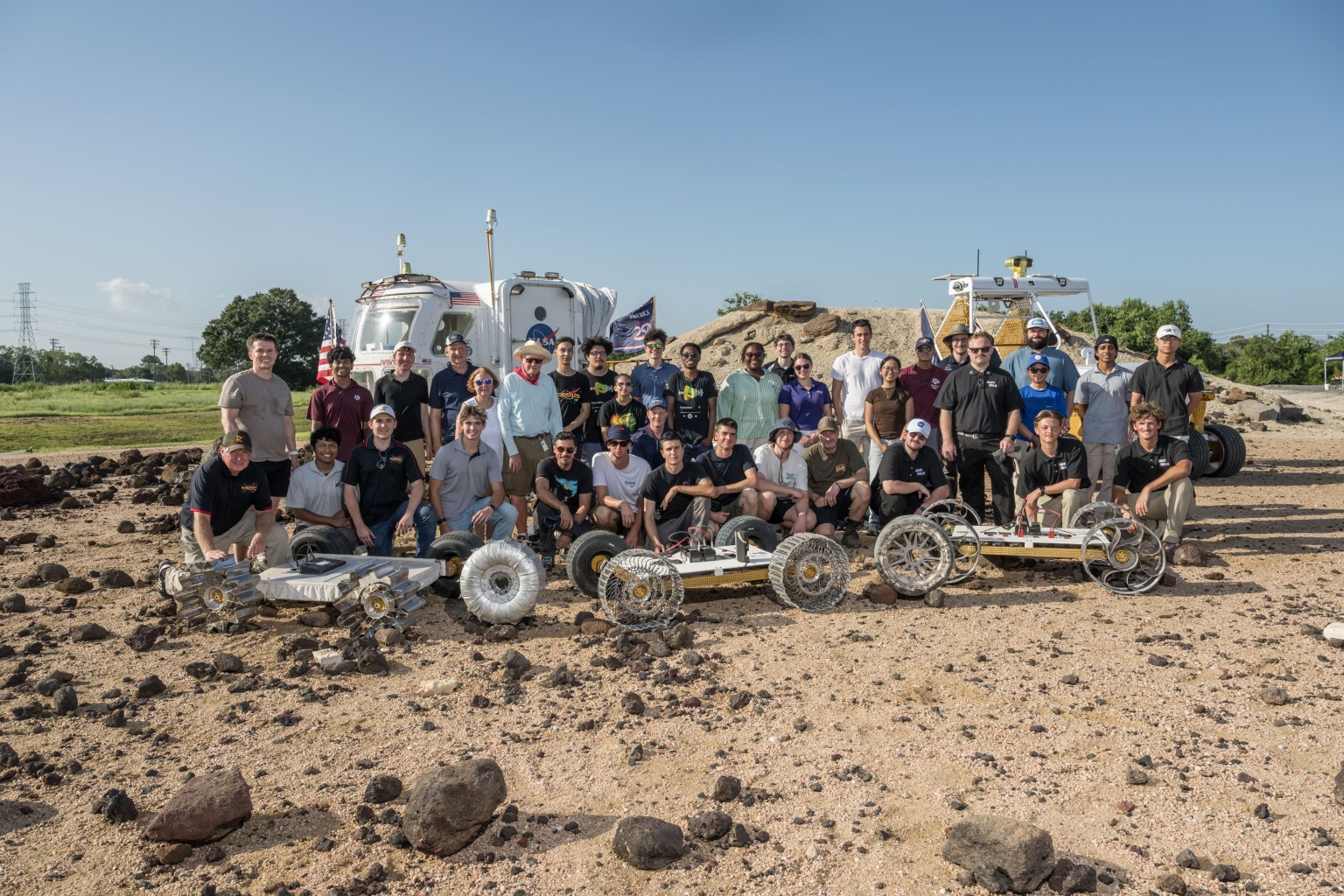
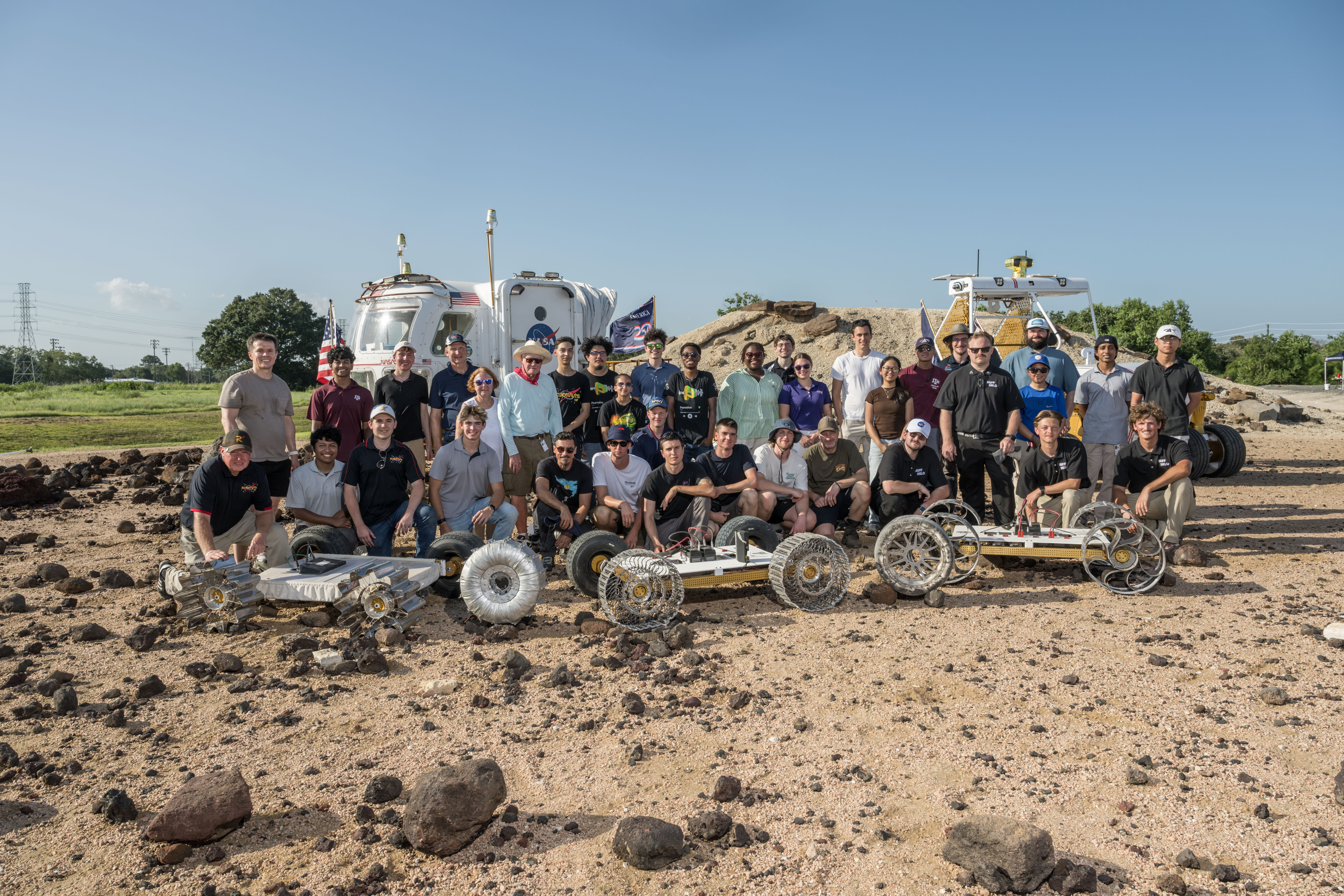
来自49个国家的128份参赛作品中,有五个团队进入了比赛的最后阶段,并于7月31日在位于休斯敦的美国国家航天局约翰逊空间中心(Johnson Space Center)测试了他们的原型。
Five teams from 128 submissions and 49 countries advanced to the final phase of the competition, where they tested their prototypes on July 31 at NASA’s Johnson Space Center in Houston.
此次挑战赛旨在寻找轻便、耐用且可扩展的车轮,以支持更长时间的月面作业。这些设计还需要具备足够的柔韧性以吸收冲击、在高速下保持牵引力,并能承受严酷的月面环境。
The challenge sought lightweight, durable, and scalable wheels that could support longer-duration lunar surface operations. The designs also needed to be compliant enough to absorb impacts, maintain traction at higher speeds, and withstand the harsh lunar environment.
“月球车每多行驶一公里,都能扩大我们的探索范围、提升科学产出并增加基础设施建设能力,”约翰逊空间中心机器人工程师兼挑战赛项目联合负责人Ed Herrera表示。
“Every additional kilometer a rover can reliably travel will expand how far we can explore, what science we can achieve, and what infrastructure we can build,” said Ed Herrera, robotics engineer at Johnson and co-leader of the challenge project.
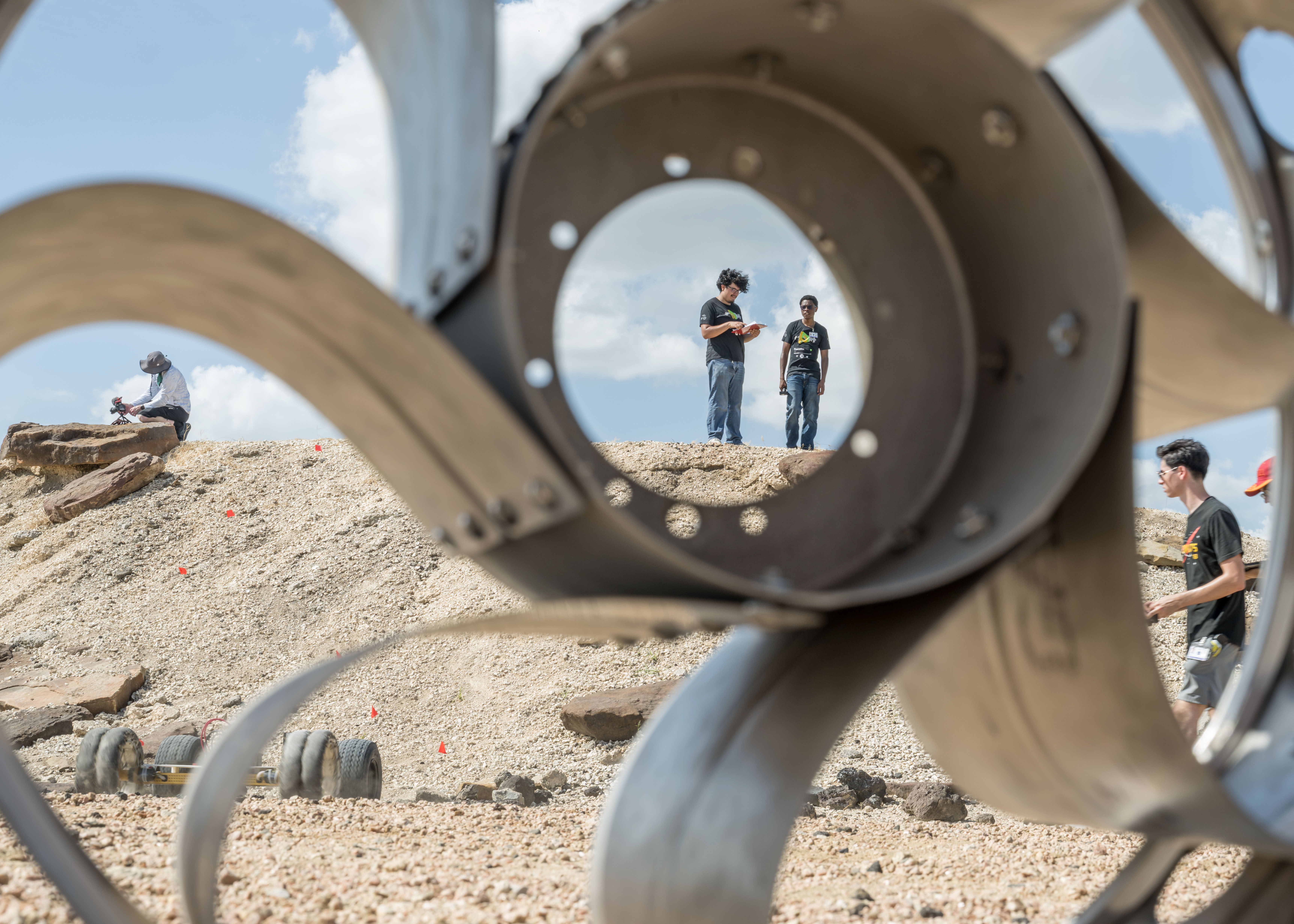
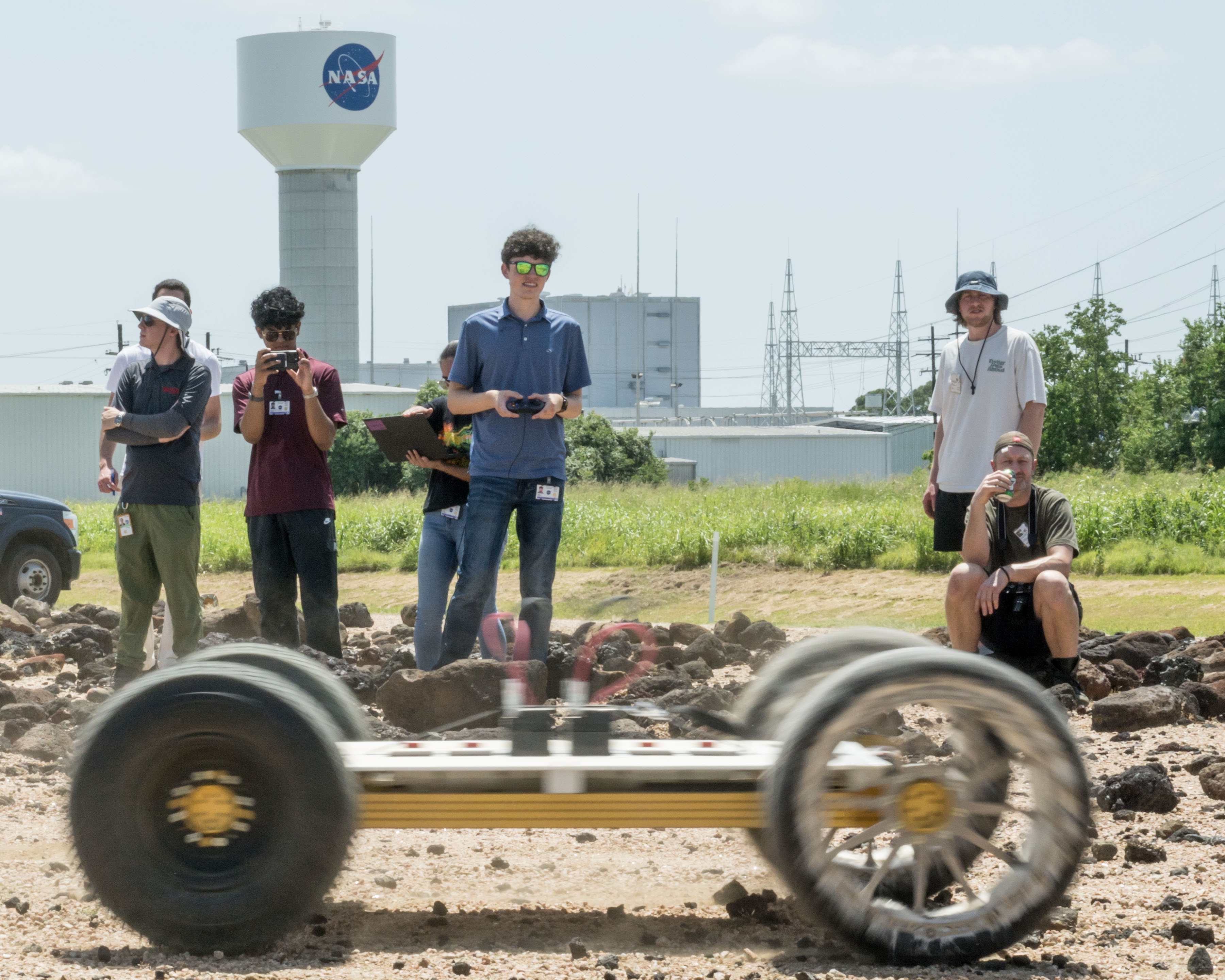
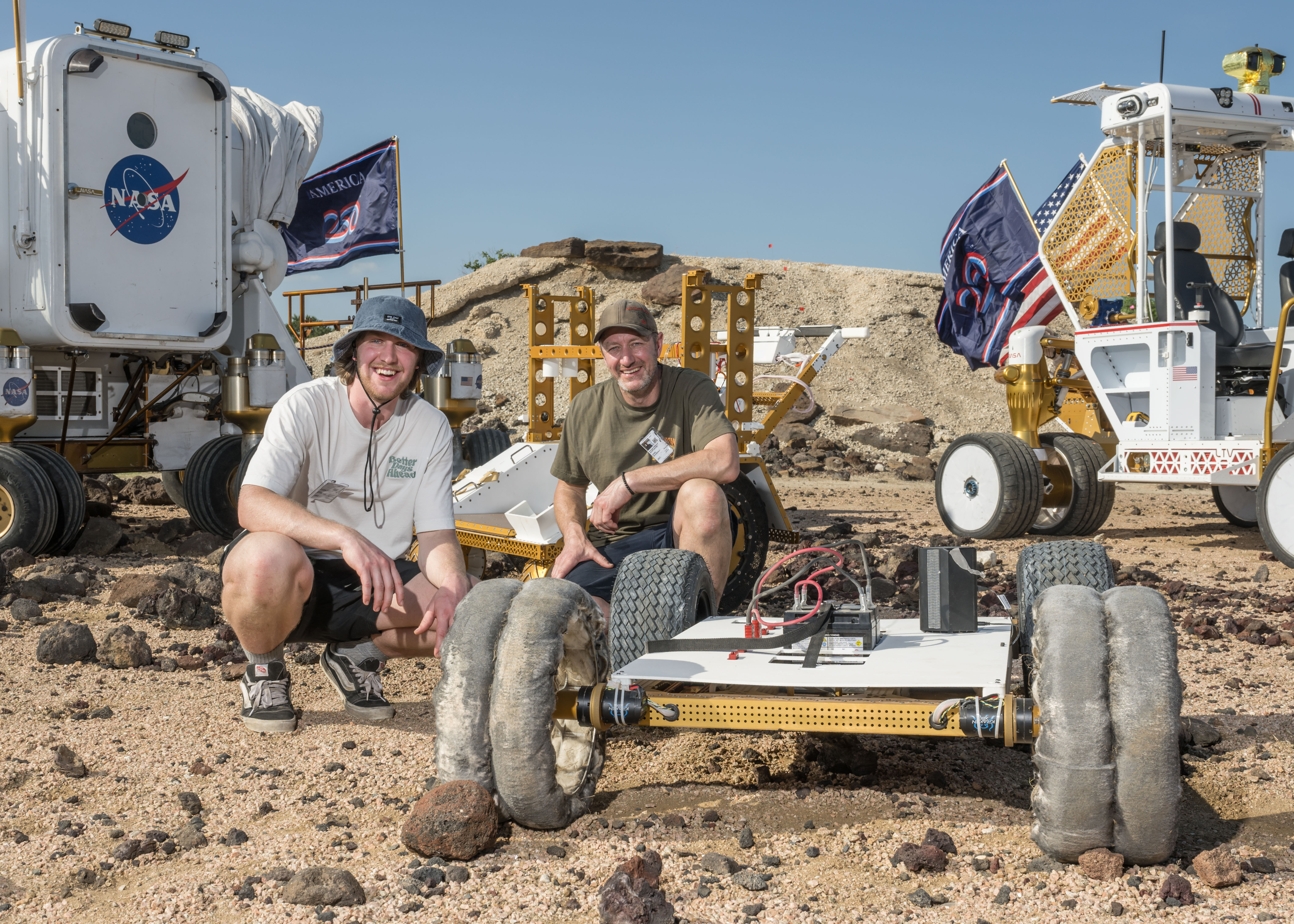
美国国家航天局约翰逊空间中心利用地面原型来测试机动技术,而月球地形车将通过“商业月球载荷服务”(Commercial Lunar Payload Services)计划运送到月面。在本次挑战赛中,这些车轮被安装在45公斤重的测试月球车MicroChariot上,并在约翰逊空间中心的“岩石场”(Rock Yard)通过了一系列测试,以评估其在不同地形下的性能。
NASA Johnson uses ground prototypes to test mobility technologies, while lunar terrain vehicles will be delivered to the lunar surface through the Commercial Lunar Payload Services initiative. For the challenge, the wheels were fitted to MicroChariot, a 45-kilogram test rover, and put through a series of courses at Johnson’s Rock Yard to evaluate their performance across different types of terrain.
“众包为我们提供了一个跳出传统思维来设计月球车轮的机会,”Herrera说,“我们开发的轮式技术越多,对它们的理解越深,我们在满足月球和火星上不同车辆、地形和任务需求时就拥有越多的选择。”
“Crowdsourcing gives us an opportunity to look beyond traditional approaches for lunar wheel design,” Herrera said. “The more wheel technologies we can develop and understand, the more options we have to meet the needs of different vehicles, terrains, and missions on the Moon and Mars.”
这些理念在五个截然不同的设计中得到了体现。
Those ideas were reflected in five distinctly different designs.
由Hellenic Technology of Robotics SA公司创造的HTR可变柔性月球车轮(HTR Variable Flex Lunar Wheel),使用了一套内部系统,旨在根据地形和车辆需求改变车轮的刚度。该团队采用了他们开发了约十年的地面车轮技术。
The HTR Variable Flex Lunar Wheel created by Hellenic Technology of Robotics SA uses an internal system designed to vary the wheel’s stiffness depending on terrain and vehicle needs. The team adapted technology it had been developing for terrestrial wheels for about a decade.
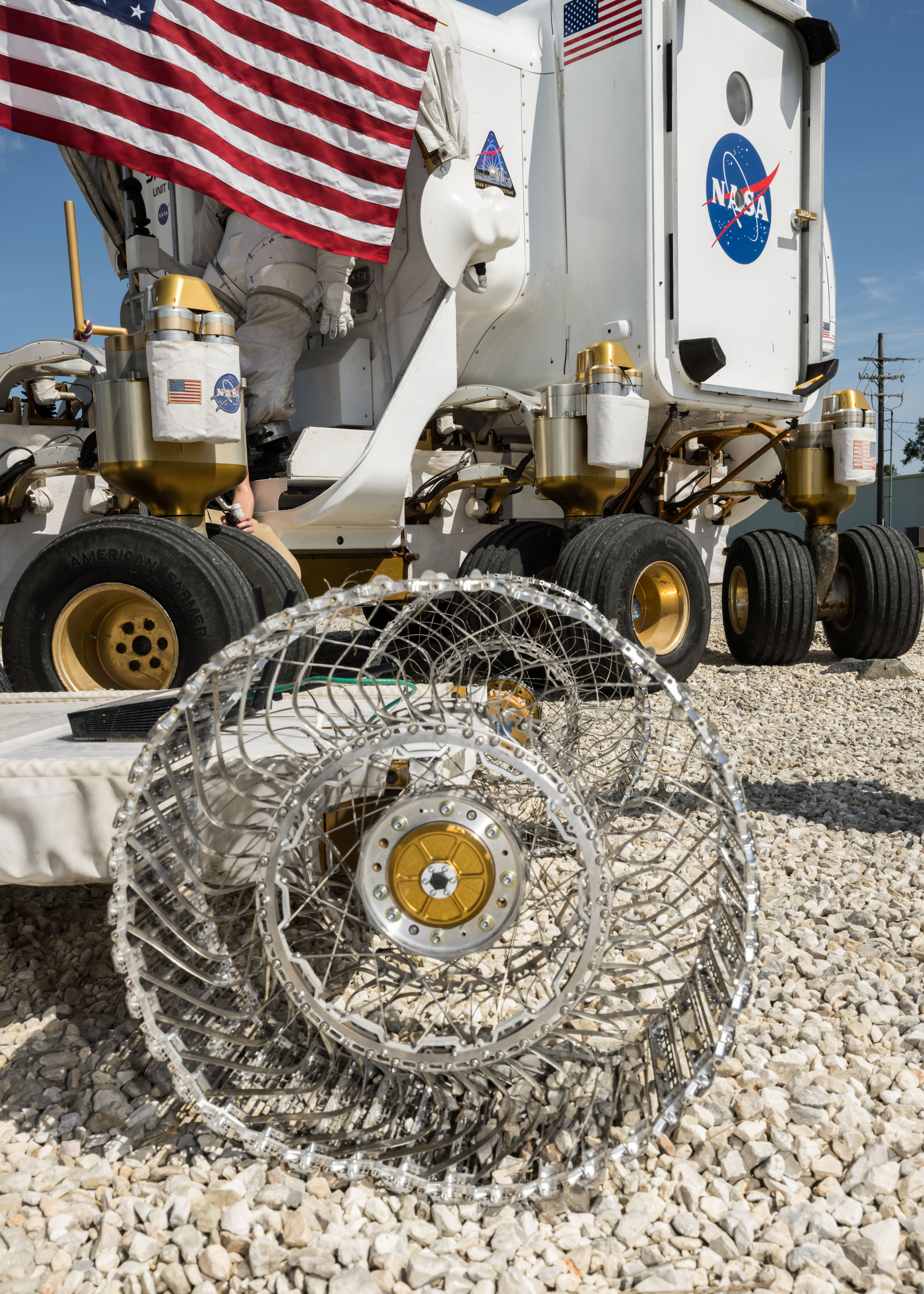
由Hyperbola公司创造的Hiper车轮(Hiper Wheel),使用了张紧电缆和波纹结构,提供了类似弹簧的性能,使车轮无需依赖传统的径向辐条即可实现弯曲。
The Hiper Wheel created by Hyperbola uses tensioned cables and a corigated structure that provides spring-like behavior, allowing the wheel to flex without relying on traditional radial spokes.
由Huff Helo Inc.公司创造的Huff Helo柔性钛合金车轮(Huff Helo Flexible Titanium Wheel),使用成型的钛金属板作为结构和弹簧。在测试过程中,团队发现该设计的强度也使车轮变得更加刚硬,导致其在遇到某些障碍物时会发生弹跳,而不是贴合地形。
The Huff Helo Flexible Titanium Wheel created by Huff Helo Inc. uses formed titanium sheet metal as both structure and spring. During testing, the team found that the strength of the design also made the wheel more rigid, causing it to bounce over some obstacles rather than conform to the terrain.
由Deborah和Craige Payne创造的Payne航空车轮(Payne Aviation Wheel),从航空和历史中汲取了灵感。其设计者是一名飞机机械师,将充气式方法与早期汽车轮胎设计的理念相结合。
The Payne Aviation Wheel created by Deborah and Craige Payne took inspiration from aviation and history. Its designer, an aircraft mechanic, combined a pneumatic approach with ideas from early automobile tire designs.
获胜的Scotch Pad轮胎概念来自澳大利亚机械工程师Daniel Bloomfield及其子Isaac Bloomfield。他们的原型使用了一种围绕铝制轮毂支撑的Nomex基轮胎结构。柔软的材料使轮胎能够围绕地形变形,而内部支撑则有助于其保持形状。轮胎外表面经过环氧树脂和刚玉砂处理,以提高牵引力。
The winning Scotch Pad Tyres concept came from an Australian mechanical engineer Daniel Bloomfield and his son Isaac Bloomfield. Their prototype uses a Nomex-based tire structure supported around an aluminum hub. The soft material allows the tire to deform around terrain, while internal support helps it maintain its shape. A treated outer surface of epoxy and corundum grit was integrated to improve traction.
“岩石场”的测试也证明了为什么不同的地形可能需要不同的应对方案。松散的物质会影响牵引力,而岩石和斜坡则对车轮提出了不同的要求,例如车辆稳定性。
The Rock Yard testing also demonstrated why different terrains may require different approaches. Loose material can affect traction, while rocks and slopes place different demands on wheels such as vehicle stability.
随着月球探索的扩展,不同的车辆将需要速度、负载能力、耐用性和地形性能的不同组合。
As lunar exploration expands, different vehicles will require different combinations of speed, load capacity, durability, and terrain performance.
寻求这种多样性正是挑战赛设计的一部分。这些设计方案为工程师提供了不同的技术选择,并有望进一步推进。
Seeking that variety was part of the challenge design. The design options gave engineers different technologies to consider and potentially advance.
“这次挑战赛引入了传统行业之外的新想法,帮助我们确定了可能适用于更长时间表面作业的车轮技术,”约翰逊空间中心机器人工程师兼挑战赛项目联合负责人Lucien Junkin表示。
“This challenge brought in new ideas from outside traditional industries and helped us identify wheel technologies that may be suitable for longer-duration surface operations,” said Lucien Junkin, robotics engineer at Johnson and co-leader of the challenge project.
下一阶段可能会评估这些车轮在约翰逊空间中心的热真空室中,如何应对类似月球的尘埃、真空和极端温度。工程师还可以评估这些设计在更长距离、不同尺寸和负载下的表现。
The next phase could evaluate how the wheels respond to lunar-like dust, vacuum, and extreme temperatures in Johnson’s thermal vacuum chambers. Engineers could also assess the designs over longer distances and at different sizes and loads.
“机动性是我们想在月球上做的一切事情的关键,”Junkin说,“我们想要探索得越远,就越需要推进能够带我们到达那里的车轮技术。”
“Mobility is key to everything we want to do on the Moon,” Junkin said. “The farther we want to explore, the more we need to advance the wheel technologies that can get us there.”
约翰逊空间中心工程局下属机器人系统技术分部的通用机器人项目(Common Robotics Project)负责执行了“与美国国家航天局一起摇滚”挑战赛。美国国家航天局研究与技术任务局下属奖项、挑战与众包项目组的卓越协作创新中心管理了该挑战赛合同。美国国家航天局机器人学院的学生协助准备了硬件并支持了比赛,而来自克利夫兰美国国家航天局格伦研究中心(Glenn Research Center)的工程师则支持了概念和提案的评审。HeroX代表美国国家航天局管理了此次挑战赛。
The Common Robotics Project of the Robotic Systems Technology Branch within Johnson’s Engineering Directorate conducted the Rock and Roll with NASA Challenge. NASA’s Center of Excellence for Collaborative Innovation, part of the Prizes, Challenges, and Crowdsourcing Program within the Research and Technology Mission Directorate, managed the challenge contract. Students in NASA’s Robotics Academy helped prepare hardware and support the competition, while engineers from NASA’s Glenn Research Center in Cleveland supported reviews of concepts and proposals. HeroX administered the challenge on behalf of NASA.
来源与许可
原文来自公共领域来源;译文由机器生成,请以原文为准。 原作者:Sumer Loggins。 原始页面