内容提要
本图像结合了多个空间望远镜的观测数据,展示了位于大麦云中的蜘蛛星云。天文学家通过分析这些多波段数据,研究了该星云的能量损耗机制及其内部的年轻星环境。
原文全文译文
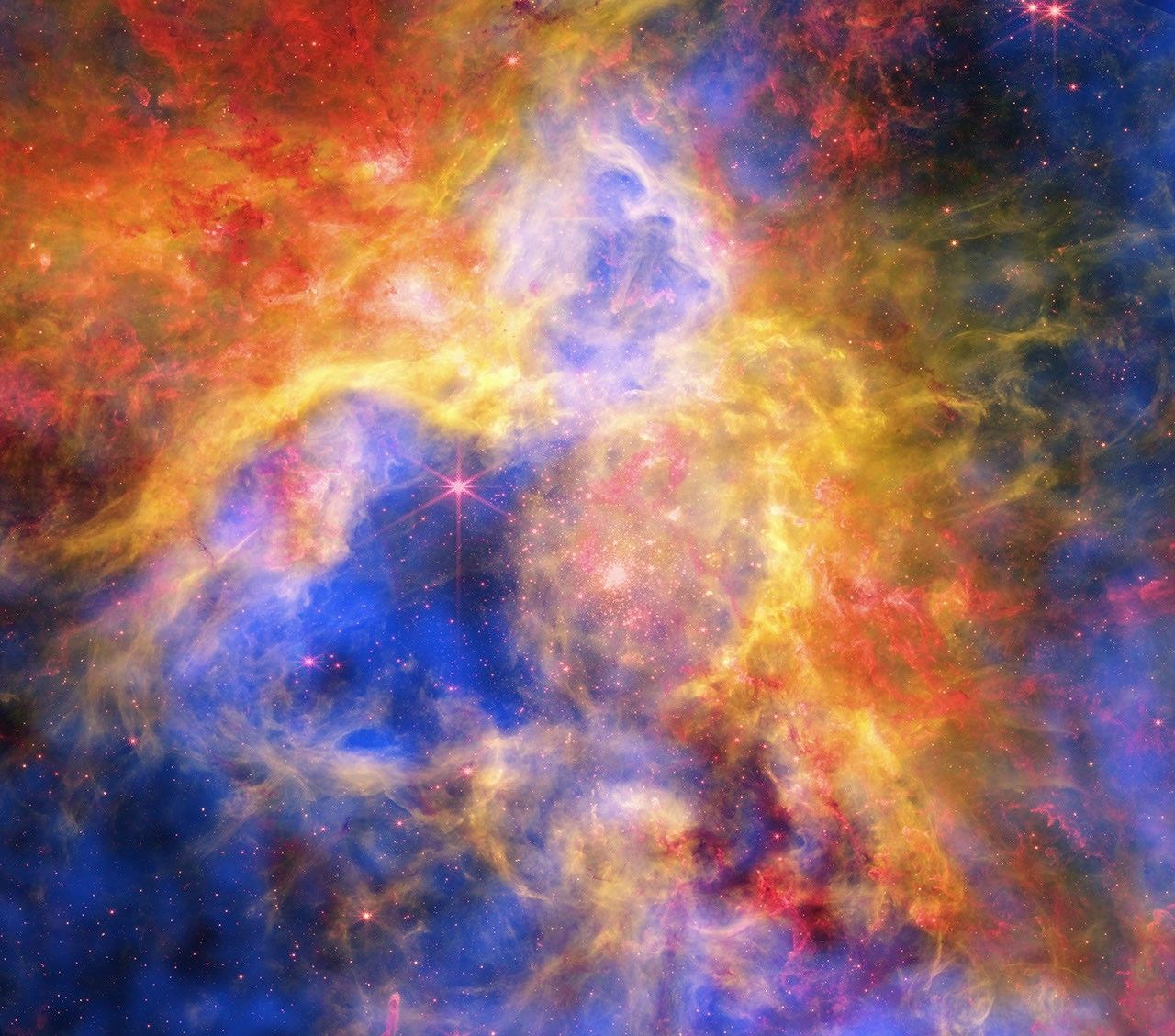
来自美国国家航天局(NASA)的钱德拉X射线天文台(Chandra X-ray Observatory)、韦布空间望远镜(James Webb Space Telescope)以及哈勃空间望远镜(Hubble Space Telescope)的数据,共同呈现了2026年8月11日这张30 Doradus(即蜘蛛星云(Tarantula Nebula))的绚丽影像。蜘蛛星云位于大麦云(Large Magellanic Cloud)中,这是一个距离地球(Earth)约160,000光年(light year)、邻近银河(Milky Way)的小型星系。在蜘蛛星云(Tarantula)内部,数以千计的年轻星(young star)嵌入在蜂窝状的气体与尘埃结构中。
Data from NASA’s Chandra X-ray Observatory, NASA’s James Webb Space Telescope, and NASA’s Hubble Space Telescope combine to reveal a vibrant view of 30 Doradus, or the Tarantula Nebula, in this Aug. 11, 2026, image. Located in the Large Magellanic Cloud, a small neighbor galaxy to the Milky Way about 160,000 light-years from Earth, the Tarantula has thousands of young stars embedded in a vibrant honeycomb-like structure of gas and dust.
通过研究来自钱德拉、哈勃和韦布的数据,并结合该机构已退役的斯皮策空间望远镜(Spitzer Space Telescope)的数据,天文学家(astronomer)确定蜘蛛星云可能正通过多种来源损失能量,其中包括从星云中逃逸出的高温气体。
By studying the data from Chandra, Hubble, and Webb, combined with data from the agency’s retired Spitzer Space Telescope, astronomers determined that the Tarantula may be losing energy from several sources, including hot gas escaping from the nebula.
图注:X射线:NASA/CXC/Ohio State Univ./J. Rodriguez et al;红外:NASA/ESA/CSA/空间望远镜研究所(STScI);光学:NASA/ESA/STScI;图像处理(image processing):NASA/CXC/SAO/P. Edmonds
Image credit: X-ray: NASA/CXC/Ohio State Univ./J. Rodriguez et al; Infrared: NASA/ESA/CSA/STScI; Optical: NASA/ESA/STScI; Image Processing: NASA/CXC/SAO/P. Edmonds
其他来源报道(1)
NASA 每日图片:Colorful Collage of Tarantula Nebula来源与许可
原文来自公共领域来源;译文由机器生成,请以原文为准。 原作者:HQ Web Team。 原始页面