查看原文全部插图(4 幅)
内容提要
南希·格雷丝·罗曼空间望远镜旨在探索宇宙深处的暗能量、暗物质及系外行星等重大课题。美国国家航天局艾姆斯研究中心通过开发先进的杂散光处理软件及多星波前控制技术,为提升该望远镜的观测能力做出了关键贡献。
原文全文译文
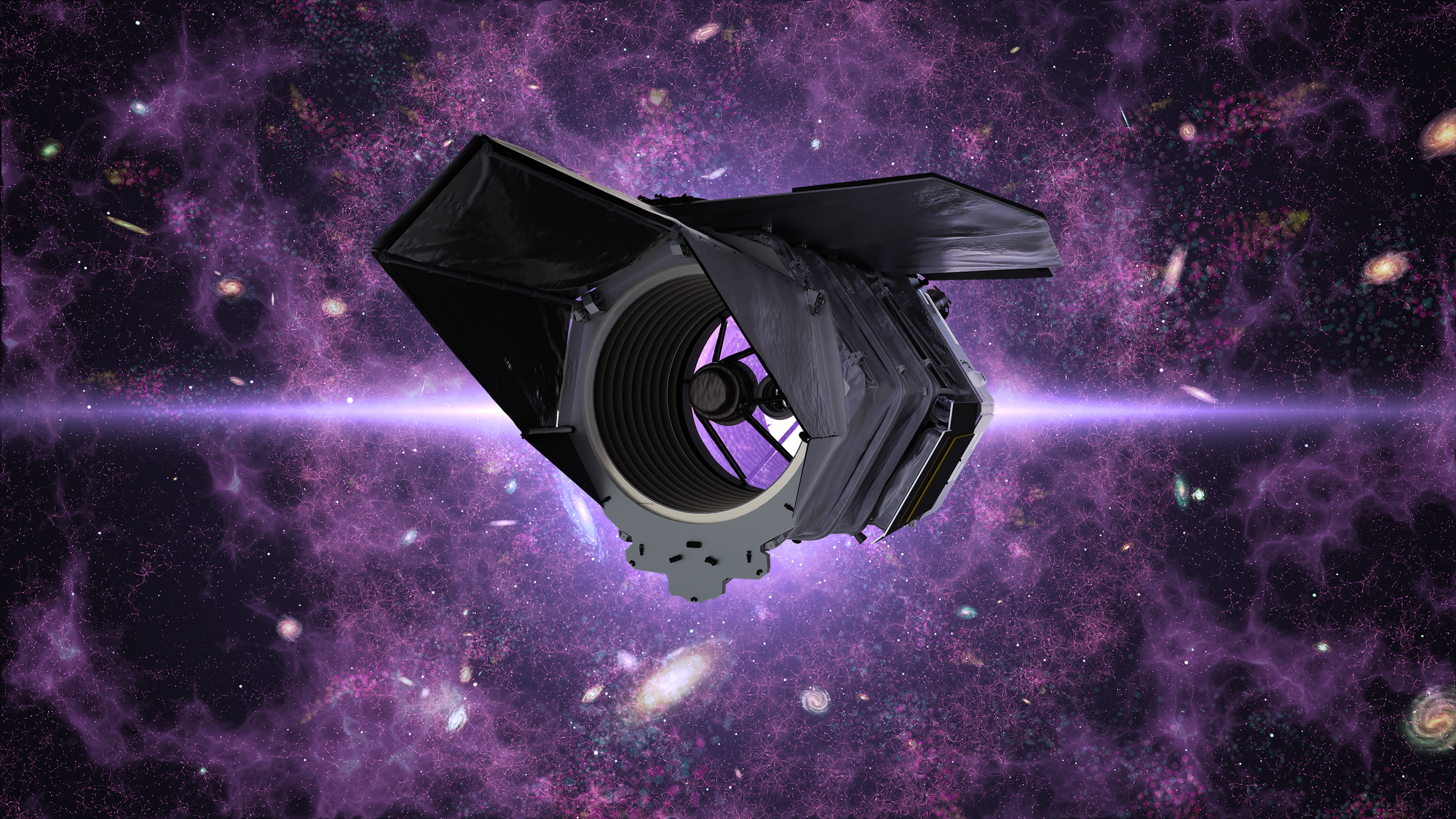
美国国家航天局(NASA)的南希·格雷丝·罗曼空间望远镜(Nancy Grace Roman Space Telescope)定于8月30日星期日发射,它将助力天文学家探索广袤的宇宙区域,并解决有关暗能量(dark energy)、暗物质(dark matter)、太阳系(solar system)外行星以及星系在宇宙时(cosmic time)内的形成与演化等核心问题。美国国家航天局艾姆斯研究中心(Ames Research Center)的研究人员利用该中心的设施、专业知识和创新成果,为罗曼任务做出了关键贡献,并将推动罗曼的科学研究。
Set to launch on Sunday, Aug. 30, NASA’s Nancy Grace Roman Space Telescope will empower astronomers to explore vast regions of the cosmos and settle essential questions in the areas of dark energy, dark matter, planets outside our solar system, and the formation and growth of galaxies over cosmic time. Key contributions to Roman’s mission made by researchers at NASA’s Ames Research Center in California’s Silicon Valley will advance Roman’s science using the center’s facilities, expertise, and innovations.
预测与消除眩光的工具
Tools to predict, remove glare
罗曼的主相机——宽视场仪器(Wide Field Instrument),将以光学和近红外(near-infrared)波段捕捉宇宙广阔的高分辨率(high resolution)图像。这些前所未有的图像将使天文学家能够解码宇宙中一些最深奥的谜团。
Roman’s main camera, the Wide Field Instrument, will capture expansive high-resolution pictures of the universe in optical and near-infrared light. These unprecedented images will enable astronomers to decode some of the deepest mysteries of the cosmos.
罗曼相机收集的各种眩光会降低图像质量,从而削弱天文学家表征某些宇宙结构的能力。由美国国家航天局艾姆斯研究中心的一个团队,与马里兰州格林贝尔特的美国国家航天局戈达德航天中心(Goddard Space Flight Center)以及加利福尼亚州帕萨迪纳的IPAC/加州理工学院的合作者共同开发的创新软件,将改善罗曼的图像并优化观测计划。该软件名为ROSALIA(用于低面亮度成像和天文学的罗曼天空分析器),旨在预测并消除罗曼宽视场仪器所捕获的天文图像中不需要的光线。
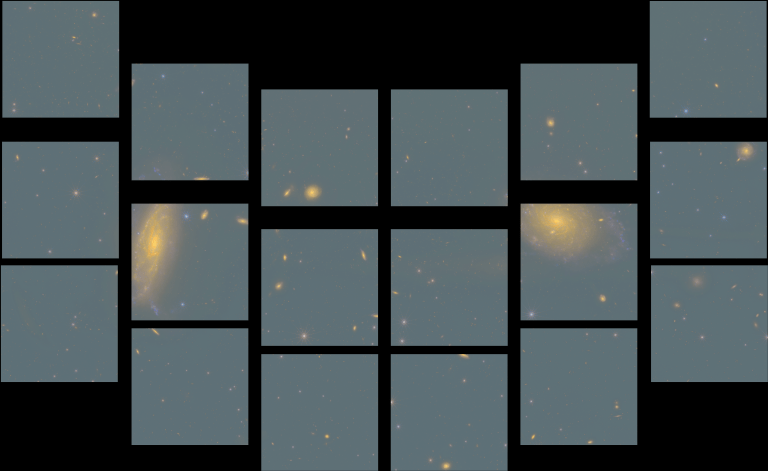
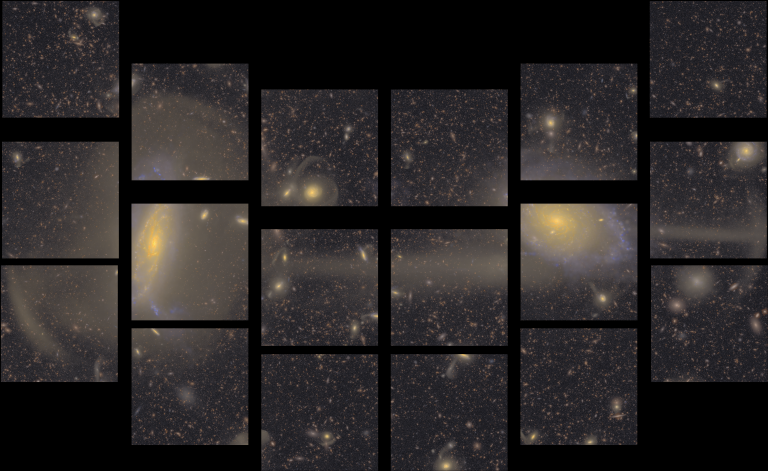
Forms of glare that Roman’s camera collects diminish image quality and thereby reduce the ability of astronomers to characterize certain cosmic structures. Innovative software developed by a team at NASA Ames, with collaborators at NASA’s Goddard Space Flight Center in Greenbelt, Maryland, and IPAC/Caltech in Pasadena, California, will improve Roman’s images and optimize observing plans. Called ROSALIA (Roman Sky Analyst for Low Surface Brightness Imaging and Astronomy), the software predicts and removes unwanted light from astronomical images captured by Roman’s Wide Field Instrument.
当光子在望远镜的光学系统(optical system)内散射时,会产生污染性的杂散光(stray light)。由此产生的光斑可能会制造出虚假的图像伪影,模仿真实行星或星云的外观。ROSALIA软件将使天文学家能够调整其观测计划,以限制光斑污染罗曼图像中的科学目标。
Contaminating stray light occurs when photons scatter inside the telescope’s optical system. Resulting light glints can produce deceptive image artifacts that mimic the appearance of real planets or nebulae. The ROSALIA software will allow astronomers to adjust their observation plans to limit glints from contaminating science targets in Roman’s images.
除了明亮的光斑外,杂散光也可能表现为弥散的背景。这种形式的杂散光会干扰对宇宙最暗区域的观测,而这对于理解宇宙中大型结构的形成至关重要。
In addition to bright glints, stray light can also appear as a diffuse background. This form of stray light interferes with observations of the darkest regions of the universe, which is critical to understanding how large structures in the universe were formed.
另一种导致背景光模糊的主要因素源于自然界本身:黄道光(zodiacal light)。黄道光辐射源于太阳系内的行星际尘粒(interplanetary dust particle)对太阳光的散射。ROSALIA软件可以预测并去除背景污染,包括图像中的黄道光和杂散光,从而显露出星系边缘微弱的弥散辐射,而宇宙演化史就隐藏在这些区域中。
Another major contributor to obscuring background light is produced by nature itself: zodiacal light. Zodiacal emission originates from the scattering of sunlight by interplanetary dust particles in our solar system. The ROSALIA software predicts and strips away background contamination, including zodiacal and stray light from images, exposing the faint, diffuse emissions at galaxy edges where cosmic evolutionary histories are hidden.
模拟,未处理
Simulated, unprocessed
模拟,处理后
Simulated, processed
图注:罗曼宽视场仪器的模拟视图
Simulated View From Roman’s Wide Field Instrument
用于观测系外行星的新型“聚星”技术
New ‘multi-star’ tech to see exoplanets
罗曼日冕仪(Roman Coronagraph Instrument)是罗曼搭载的两台仪器之一。它将展示有史以来在太空中运行的最先进技术,用于直接成像其他恒星周围的行星。罗曼日冕仪使用一系列掩模和反射镜,包括两面变形镜(deformable mirror),来抑制恒星光。通过精确控制变形镜的形状,它可以在恒星周围创造一个“暗区”,观测者可以在此看到来自轨道行星的微弱反射光。
The Roman Coronagraph Instrument is one of two instruments flying on Roman. It will demonstrate the most advanced technologies ever flown in space for directly imaging planets around other stars. The Roman Coronagraph uses a series of masks and mirrors, including two deformable mirrors, to suppress starlight. By precisely controlling the shape of the deformable mirrors, it creates a “dark zone” around the star where observers can see the faint reflected light from orbiting planets.
罗曼日冕仪的基准运行模式仅支持对单恒星系统中的系外行星进行观测,因为目前的日冕仪通常无法抑制聚星(multiple star)系统(如双星系统)中额外的污染性恒星光。
The baseline operating mode of the Roman Coronagraph Instrument supports observation of exoplanets only in single star systems, as current coronagraph instruments cannot typically suppress the additional contaminating starlight in multi-star systems, such as binary star systems.
我们的太阳系只有一颗恒星,即太阳。但大约一半的类太阳恒星(Sun-like star)都处于聚星系统中。拥有直接成像聚星系统中系外行星的能力,将提高在太阳系外探测到生命的可能性,并扩展我们对系外行星如何形成和演化的认识,因为这些过程在单恒星系统与聚星系统中的展开方式存在重大差异。消除来自多颗恒星的重叠眩光是成像此类系统中行星必须克服的关键挑战。
Our solar system has a single star, the Sun. But roughly half of Sun-like stars are in multi-star systems. Having the ability to directly image exoplanets in multi-star systems will increase the likelihood of detecting life beyond our solar system and will expand our knowledge about how exoplanets form and evolve, since there are major differences in how those processes unfold in single star versus multi-star systems. Eliminating overlapping glares from multiple stars is the key challenge that must be overcome to image planets in such systems.
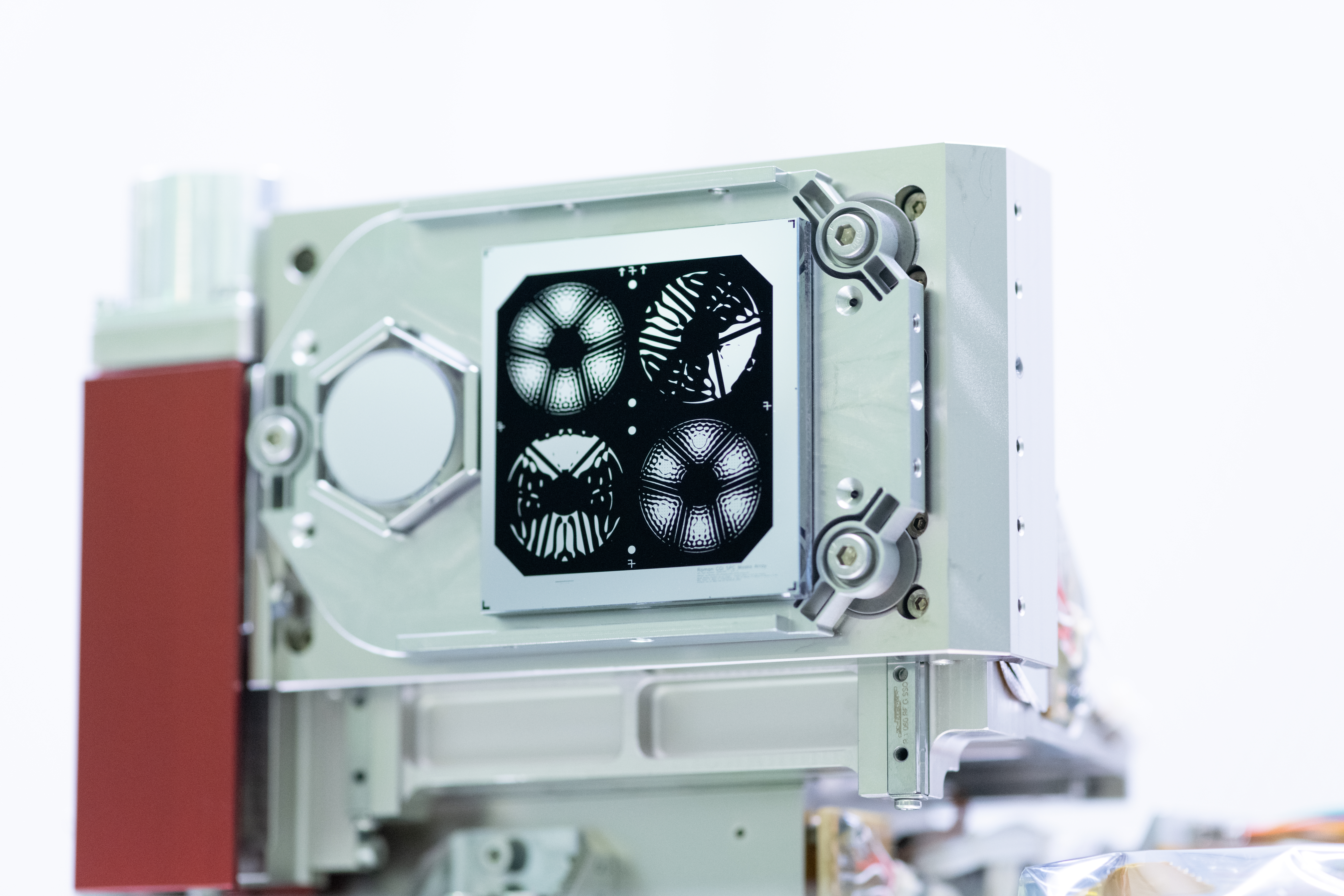
美国国家航天局艾姆斯研究中心的研究人员正在通过一项名为“多星波前控制”(Multi-Star Wavefront Control, MSWC)的创新技术来应对这一挑战。该技术包括定制的遮光掩模和配套软件,旨在抑制来自多颗恒星的光线并揭示隐藏的系外行星。通过与南加州的美国国家航天局喷气推进实验室(Jet Propulsion Laboratory)的合作,MSWC掩模被包含在罗曼日冕仪的飞行仪器中,作为罗曼基准观测模式之外的一项附加功能。如果日冕仪团队在主要技术演示阶段完成后获得额外的观测时间,这些掩模便可投入使用。
Researchers at NASA Ames are meeting that challenge with an innovative technology called Multi-Star Wavefront Control (MSWC). This technology includes custom light-blocking masks and accompanying software designed to suppress the light from multiple stars and reveal hidden exoplanets. Through a collaboration with NASA’s Jet Propulsion Laboratory in Southern California, the MSWC masks are included on the Roman Coronagraph’s flight instrument as an added capability beyond Roman’s baseline observation modes. They could be used if additional observation time is granted to the coronagraph team after the primary technology demonstration phase is completed.
距离我们太阳系最近的恒星系统是半人马座α星(Alpha Centauri),它是距离地球(Earth)最近的聚星系统之一,仅有四光年(light year)之遥。这个三合星(triple star)系统包含一对类太阳恒星——半人马座α星AB——以及一颗更小、更暗的恒星——[半人马]比邻星(Proxima Centauri)。尽管该系统中的类太阳恒星周围尚未确认存在系外行星,但美国国家航天局的韦布空间望远镜(James Webb Space Telescope)已在半人马座α星A的宜居带(habitable zone)内发现了一颗候选行星。包括艾姆斯MSWC团队在内的研究人员,正致力于开发观测该系统所需的能力。
The nearest star system to our solar system, Alpha Centauri, is one of the nearest multi-star systems to Earth, at only four light-years away. This triple-star system contains a binary of Sun-like stars – Alpha Centauri AB – orbited by a much smaller and dimmer star – Proxima Centauri. Although no exoplanets are confirmed around the Sun-like stars in this system, a planet candidate has been identified by NASA’s James Webb Space Telescope in the habitable zone of Alpha Centauri A. Researchers, including the Ames MSWC team, are working to develop the capabilities needed to observe this system.
作为罗曼日冕仪参与计划的一部分,美国国家航天局艾姆斯研究中心还为硬件工作组提供领导和支持。该计划允许国际研究团队为罗曼日冕仪启用基准模式之外的附加功能;这包括正在美国国家航天局艾姆斯研究中心开发的、使用基准模式之外的不同掩模或新的波前控制与传感算法的多星模式。
NASA Ames also provides leadership and support for the hardware working group as part of the Roman Coronagraph Participation Program. This program allows international teams of researchers to enable additional capabilities to the Roman Coronagraph beyond its baseline modes; this includes the multi-star modes being developed at NASA Ames that use different masks beyond the baseline or new wavefront control and sensing algorithms.
先进超级计算
Advanced supercomputing
美国国家航天局(NASA)艾姆斯研究中心(Ames Research Center)高级超级计算部门的专家们,通过在数据处理(data processing)和任务运营方面提供丰富的经验,为南希·格雷丝·罗曼空间望远镜(Nancy Grace Roman Space Telescope)项目在关键任务开发阶段提供建议和指导,从而推进了该望远镜的科学研究。这确保了地面系统和运营的可靠性能,使科学数据处理高效,并保证了所得科学数据产品的高质量和完整性。
Experts at NASA’s Advanced Supercomputing Division at Ames are advancing Roman’s science by bringing extensive experience in data pipelines and mission operations to provide advice and guidance to the Roman project through key mission development phases. This ensures reliable performance of ground-based systems and operations so that science data processing is efficient and the quality and integrity of the resulting science data products is high.
美国国家航天局高级超级计算研究人员与艾姆斯 MSWC 团队合作,开发了用于聚星(multiple star)波前控制模拟的高性能计算工具,并开展了评估 MSWC 技术可行性的研究。
NASA Advanced Supercomputing researchers collaborated with the Ames MSWC team to develop high-performance computing tools for multi-star wavefront control simulations and to conduct studies to assess the feasibility of the MSWC technique.
了解更多:
Learn more:
南希·格雷丝·罗曼空间望远镜任务:https://science.nasa.gov/mission/roman-space-telescope/
The Nancy Grace Roman Space Telescope mission: https://science.nasa.gov/mission/roman-space-telescope/
面向新闻媒体:
For news media:
Roman 媒体资源:https://science.nasa.gov/mission/roman-space-telescope/roman-media-resources/
Roman media resources: https://science.nasa.gov/mission/roman-space-telescope/roman-media-resources/
有兴趣报道此主题的新闻媒体成员应联系美国国家航天局艾姆斯研究中心新闻室。
Members of the news media interested in covering this topic should reach out to the NASA Ames newsroom.
其他来源报道(1)
NASA 科学:NASA Ames’ Contributions to Roman’s Mission来源与许可
原文来自公共领域来源;译文由机器生成,请以原文为准。 原作者:Gianine Figliozzi。 原始页面