查看原文全部插图(3 幅)
内容提要
美国国家航天局(NASA)在加利福尼亚州为其深空探测网(Deep Space Network)新增了一座34米宽的射频天线。该天线旨在增强深空通信与导航能力,支持包括月球探测及太阳系深空探索在内的多项航天任务。
原文全文译文
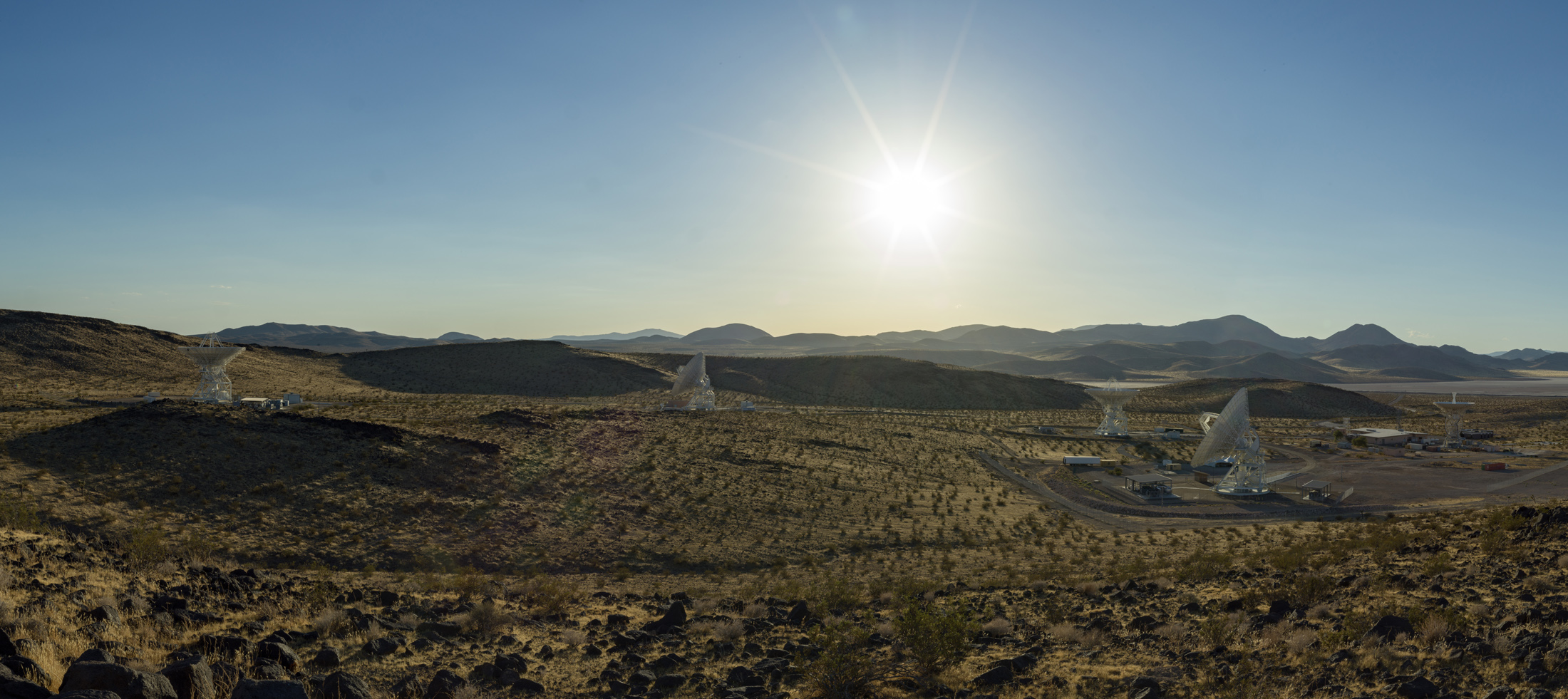
美国国家航天局(NASA)位于加利福尼亚州的深空探测网(Deep Space Network,简称DSN)设施正在庆祝一座全新的34米宽射频(radio frequency)天线加入该机构的深空(deep space)通信与导航系统。该网络利用分布在全球三个设施中的巨型碟形天线(dish antenna),为40多个探索太阳系(solar system)和星际空间(interstellar space)的航天器提供支持。
NASA’s Deep Space Network facility in California is marking the addition of a brand new 34-meter-wide (114-foot-wide) radio frequency antenna to the agency’s deep space communications and navigation system. The network uses giant dish antennas located at three global facilities to support more than 40 spacecraft exploring the solar system and interstellar space.
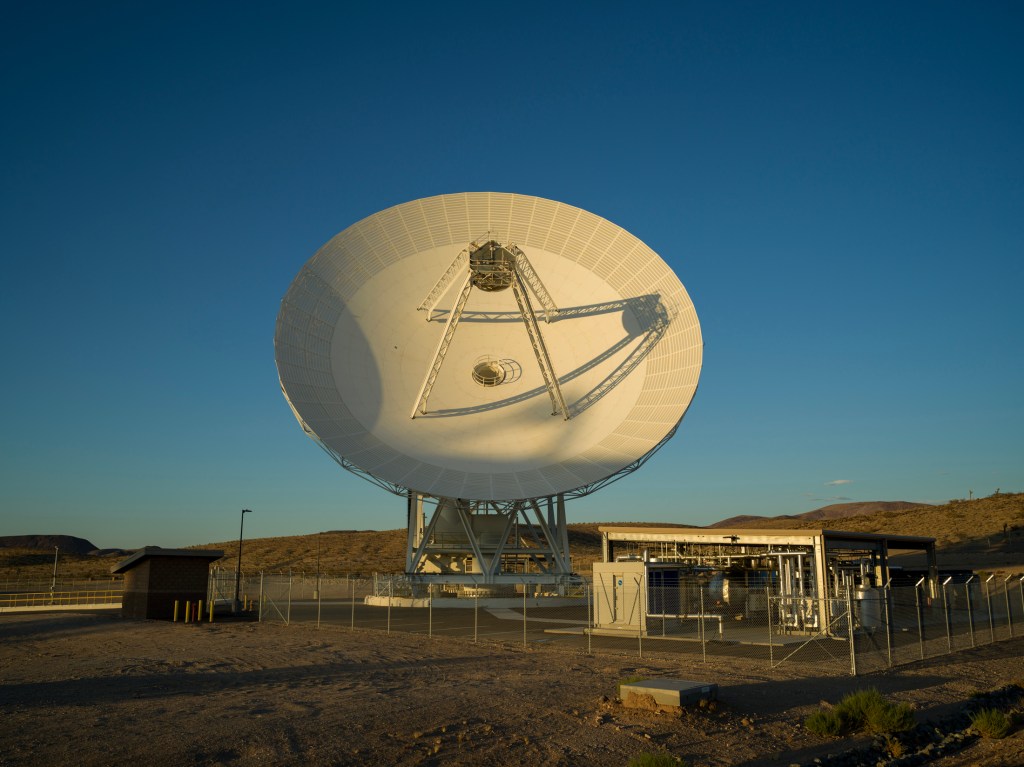
新建成的深空站23号(Deep Space Station 23,简称DSS-23)位于巴斯托附近的戈德斯通深空通信综合体,由美国国家航天局喷气推进实验室(Jet Propulsion Laboratory,简称JPL)管理。
The new Deep Space Station 23 (DSS-23) is located at the Goldstone Deep Space Communications Complex, near Barstow, and is managed by NASA’s Jet Propulsion Laboratory in Southern California.
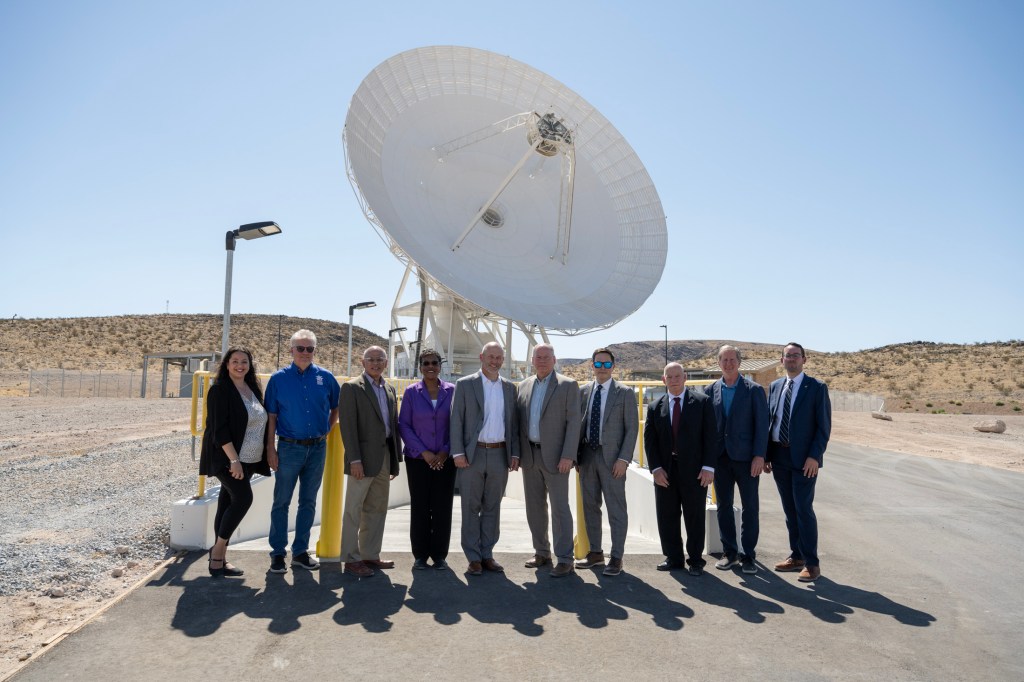
美国国家航天局的领导层、工作人员以及政要齐聚DSS-23天线现场,举行了剪彩仪式。这是深空探测网“孔径增强项目”(Aperture Enhancement Project)的最新成果,该项目始于2009年,旨在通过增加六座全新的34米多频束波导(beam waveguide)天线来升级和扩展网络。这些功能多样的碟形天线可以增强在不同射频下运行的许多航天任务(space mission)。
NASA leadership and personnel as well as dignitaries gathered at the complete DSS-23 antenna for a ceremonial ribbon cutting. It’s the latest to be added as part of the Deep Space Network’s Aperture Enhancement Project, which began in 2009 to upgrade and expand the network by adding six new 34-meter multifrequency beam-waveguide antennas. These versatile dishes can enhance many missions operating over different radio frequencies.
“通过扩展深空探测网,我们正在巩固美国国家航天局未来大胆任务所需的通信基础——从前所未有地探索更多月球(Moon)区域,到深入观测太阳系,”美国国家航天局华盛顿总部研究与技术任务理事会副局长James Kenyon表示。“这座新天线将帮助我们实现国家空间探测(space exploration)目标,并突破曾经看似不可能的极限。”
“By expanding the Deep Space Network, we are strengthening the communications foundation NASA needs for the bold missions ahead — from exploring more of the Moon than ever before to peering deeper into the solar system,” said James Kenyon, associate administrator of the Research and Technology Mission Directorate at NASA Headquarters in Washington. “This new antenna will help us deliver on our national goals for space exploration and push beyond the limits of what once seemed impossible.”
在完成5月至7月的测试以验证其性能后,新的DSS-23于8月3日开始运行,追踪美国国家航天局的钱德拉X射线天文台(Chandra X-ray Observatory)。自那时起,它已与包括美国国家航天局的火星勘测轨道飞行器(Mars Reconnaissance Orbiter)、灵神星(Psyche)、朱诺号(Juno)、旅行者号(Voyager)1号以及深空中的其他机器人航天器在内的数十项任务进行了通信。
After completing a testing campaign from May through July to demonstrate its capabilities, the new DSS-23 began operations on Aug. 3, tracking NASA’s Chandra X-ray Observatory. Since then, it has been communicating with dozens of missions such as NASA’s Mars Reconnaissance Orbiter, Psyche, Juno, Voyager 1, and other robotic spacecraft in deep space.
“这座新一代天线的加入,使我们离一个完全现代化的网络更近了一步,该网络采用先进技术,确保美国国家航天局在深空通信领域的领先地位,”JPL主任Dave Gallagher说。“在支持了60多年具有重大意义的任务并持续运行后,这些升级为网络开启了新的探索时代。设计、规划和建造DSS-23的团队应该感到自豪。”
“The addition of this next-generation antenna brings us closer to a completely modernized network that embraces advanced technology to ensure NASA’s leadership in deep space communications,” said Dave Gallagher, director of JPL. “After over 60 years of continuous operations supporting consequential missions, these upgrades prime the network for a new era of exploration. The teams that designed, planned, and built DSS-23 should be proud.”
增强功能
Enhanced capabilities
DSS-23的建设始于2020年2月。在133吨重的金属反射器框架于2024年12月被放置并固定在天线基座上后,工程师们将反射板安装到框架上,用于反射与航天器之间传输和接收的射频信号。随后,进行了精细的天线校准过程,使其能够与网络的其余部分协同工作。
Construction of DSS-23 began in February 2020. After the 133-ton metal reflector framework was placed and bolted atop the antenna’s pedestal in December 2024, engineers installed the panels to the framework that reflect radio frequency signals transmitted to and received from spacecraft. Then came the careful process of calibrating the antenna so it can work in concert with the rest of the network.
这是戈德斯通的第五座天线(此前已有三座34米天线和一座70米天线),也是加入该网络的第五座增强项目天线。该网络还包括位于DSN戈德斯通、马德里和澳大利亚堪培拉综合体的天线。多频束波导天线将信号引导至一个稳定的、温控的地下室,而不是将沉重且敏感的电子设备安置在移动的天线碟面上。除了提供多功能性外,这种设计还便于对系统进行维护和升级。
It is the fifth antenna at Goldstone (joining three 34-meter antennas and one 70-meter, or 230-foot, antenna) and the fifth enhancement project antenna to join the network, which includes antennas at the DSN’s Goldstone, Madrid, and Canberra, Australia, complexes. Multifrequency beam waveguide antennas direct signals down to a stable, climate-controlled underground room, rather than housing heavy, sensitive electronic equipment on the moving antenna dish. In addition to offering versatility, this design allows easy access for maintenance and upgrades to the system.
“最大的挑战其实不是建造天线。而是将机械、电气、软件、射频和基础设施系统的复杂集合转化为单一的、可执行任务的资产,”JPL深空探测网孔径增强项目经理Germaine Aziz说。“在支持美国国家航天局的深空任务之前,每个子系统都必须经过集成、校准和验证,以确保其运行具有极高的精度和可靠性。”
“The biggest challenge wasn’t actually constructing the antenna. It was transforming a complex collection of mechanical, electrical, software, radio frequency, and infrastructure systems into a single, mission-ready asset,” said Germaine Aziz, manager of the Deep Space Network Aperture Enhancement Project at JPL. “Every subsystem must be integrated, calibrated, and verified to operate with extraordinary precision and reliability before it can support NASA’s deep space missions.”
当第六座增强项目天线——深空站33号(Deep Space Station 33)于2029年在堪培拉设施上线时,增强项目将宣告完成,届时整个网络中34米天线的总数将达到13座。34米天线可以进行阵列化(组合并协同运行),为每个设施的单座70米天线提供等效的通信备份。这些70米天线在运行了50多年后,维护和修理成本正变得越来越高。
The enhancement project will be complete when a sixth enhancement-project antenna, Deep Space Station 33, comes online at the Canberra facility in 2029, bringing the total number of 34-meter antennas across the network to 13. The 34-meter antennas can be arrayed (combined and operated together) to provide an equivalent communications backup for each facility’s single 70-meter antenna, which, after more than 50 years of near-continuous operation, are getting increasingly costly to maintain and repair.
JPL由加州理工学院(Caltech)为美国国家航天局管理,并在美国国家航天局研究与技术任务理事会下属的空间通信与导航(SCaN)项目的监督下,管理着该机构的深空探测网。超过100个美国国家航天局及非美国国家航天局的任务依赖于深空探测网和近空网络(Near Space Network)。这些任务包括支持国际空间站(International Space Station)上的宇航员和未来的阿尔忒弥斯(Artemis)任务、监测地球(Earth)、探索月球以及探索太阳系及更远的地方。
Managed by Caltech for NASA, JPL manages the agency’s Deep Space Network with the oversight of NASA’s SCaN (Space Communications and Navigation) Program within NASA’s Research and Technology Mission Directorate. More than 100 NASA and non-NASA missions rely on the Deep Space Network and Near Space Network. They include missions that support astronauts aboard the International Space Station and future Artemis missions, monitoring Earth, exploring the Moon, and exploring the solar system and beyond.
欲了解更多关于深空探测网的信息,请访问:
For more information about the Deep Space Network, visit:
其他来源报道(1)
NASA 科学:New Next-Gen Dish Adds Muscle to NASA’s Deep Space Network来源与许可
原文来自公共领域来源;译文由机器生成,请以原文为准。 原作者:albarne1。 原始页面